
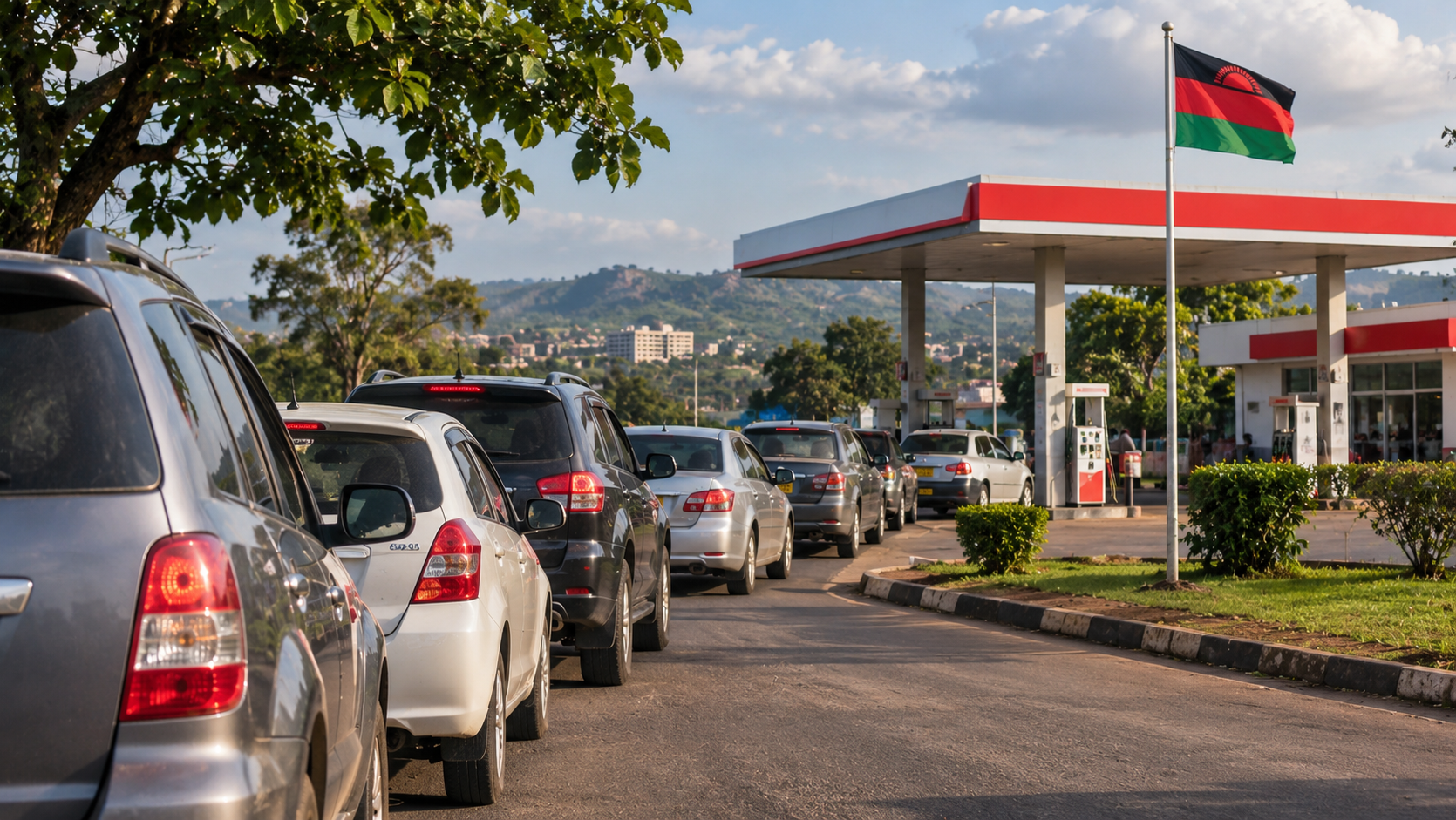
Malawi’s worsening fuel crisis has left motorists waiting hours at petrol stations, disrupted businesses and increased pressure on households already facing financial difficulties.
Lengthy queues, uncertain deliveries and rising tensions have become common across the country, Al Jazeera reported.
Meanwhile, shortages have pushed motorists towards expensive and potentially dangerous informal fuel markets.
Malawi fuel crisis disrupts daily life
Motorists in cities including Blantyre and Limbe have reported spending hours or entire nights searching for petrol.
Although the Malawi Energy Regulatory Authority publishes daily fuel delivery schedules, uncertainty over supplies continues to disrupt travel plans.
Ken Mhango, a Blantyre-based vehicle trader, told Al Jazeera that customers were struggling to reach his business because of fuel shortages.
Consequently, declining revenues have forced him to consider reducing employees’ salaries.
Motorcycle taxi operators have also reported falling earnings and difficulties supporting their families.
Black market fuel prices soar
Limited supplies at authorised petrol stations have increased demand for illegally traded fuel.
According to GlobalPetrolPrices, petrol in Malawi costs approximately $3.24 per litre, more than double the reported global average of $1.52.
However, motorists relying on informal sellers often face even higher prices and additional safety risks.
Unsafe fuel storage has also resulted in deadly fires and explosions.
Malawi’s Nation newspaper has documented at least six deaths linked to fuel explosions this year.
Authorities have intensified efforts to tackle illegal fuel sales. Nevertheless, shortages continue to drive demand for alternative supplies.
Government faces mounting pressure
The Human Rights Defenders Coalition has called for the energy minister’s resignation over persistent fuel shortages and electricity blackouts.
The organisation had planned nationwide demonstrations on November 17. However, it postponed the protests after police said they could not provide adequate security.
Coalition chairperson Michael Kaiyatsa warned that fuel shortages were restricting access to healthcare, education, employment and other essential services.
He also urged authorities to respect human rights and legal procedures when addressing illegal fuel trading.
Malawi government outlines supply challenges
Malawi’s Ministry of Energy acknowledged the difficulties facing households and businesses but rejected accusations of government inaction.
The ministry attributed the shortages to financial, foreign exchange and logistical constraints affecting petroleum imports.
It also said interventions were underway to restore fuel supplies.
However, continued uncertainty is placing increasing pressure on small businesses, transport operators and ordinary households.
Restoring reliable fuel supplies remains critical to protecting livelihoods and ensuring access to essential services across Malawi.