
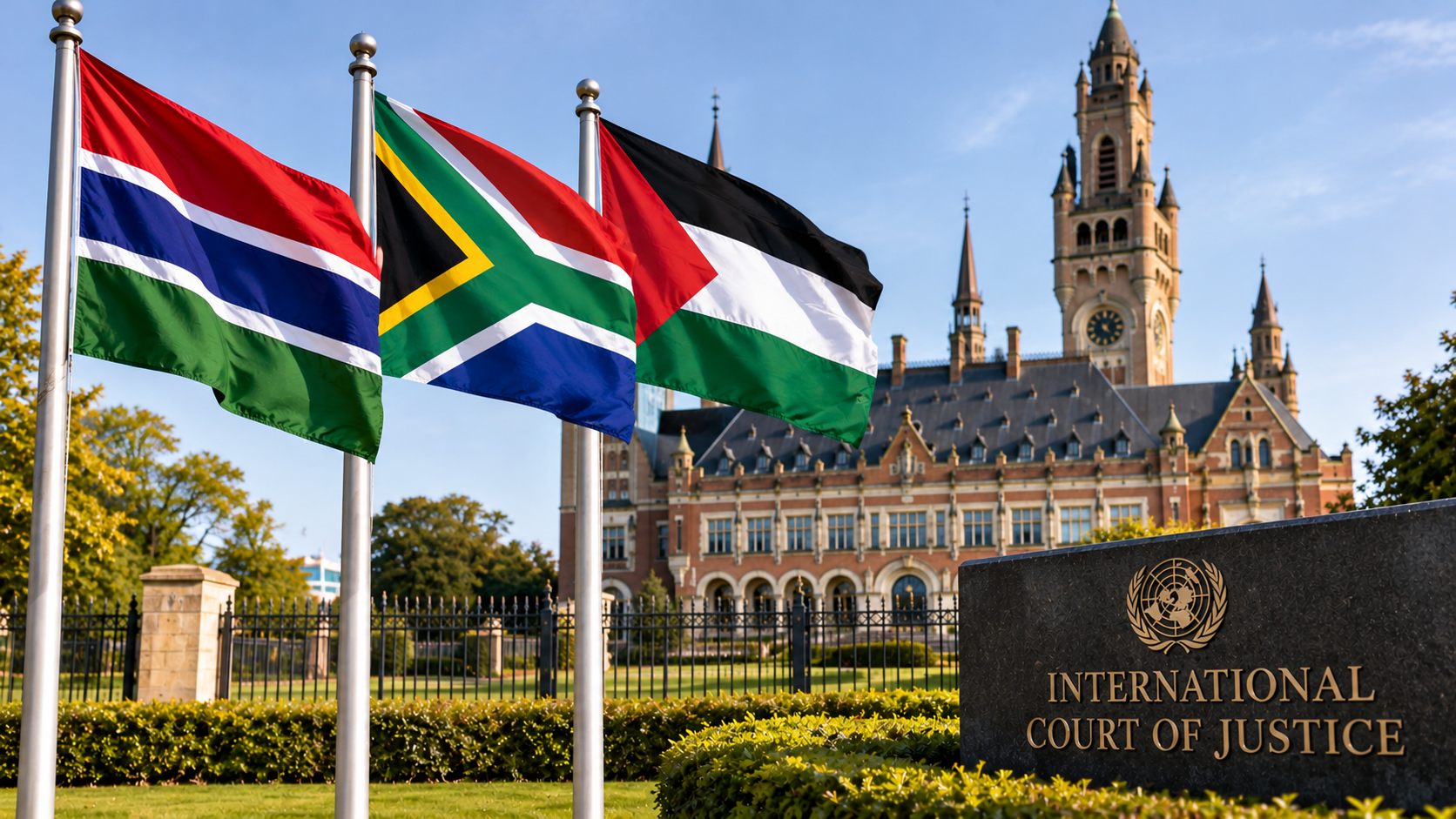
The International Court of Justice (ICJ) has ruled that Myanmar committed genocide against Rohingya Muslims. The landmark judgement could strengthen South Africa’s genocide case against Israel over its war on Gaza.
The ruling follows seven years of legal proceedings that The Gambia initiated in 2019.
According to Al Jazeera, legal experts believe the decision offers important guidance on proving genocidal intent. This remains one of the most difficult aspects of genocide cases.
However, the ruling does not determine the outcome of South Africa’s case against Israel.
ICJ ruling sets legal precedent
The court examined extensive evidence of atrocities against the Rohingya. It concluded that Myanmar intended to destroy the minority group, in whole or in part.
Judges considered patterns of violence, systematic persecution and the conduct of Myanmar’s security forces.
Importantly, the ruling demonstrated that courts can establish genocidal intent without explicit written orders. Instead, judges can draw conclusions from the available evidence as a whole.
Palestinian political analyst Ahmed Najar told Al Jazeera that the decision could provide South Africa with a clearer legal framework.
Nevertheless, the court must assess the evidence concerning Gaza independently.
South Africa’s genocide case against Israel
South Africa launched legal proceedings against Israel in December 2023. It accused Israel of violating the Genocide Convention through its military operations in Gaza.
Since then, the ICJ has issued several emergency measures to protect Palestinian civilians and ensure humanitarian assistance.
Israel rejects the genocide allegations. It maintains that its military operations target Hamas and constitute self-defence.
However, UN experts and the International Association of Genocide Scholars have concluded that genocide has taken place in Gaza.
Meanwhile, Amnesty International and Human Rights Watch have accused Israel of failing to comply with the court’s orders.
According to Al Jazeera, nearly 75,000 Palestinians have died in Gaza, including an estimated 21,000 children.
A final judgement could still take several years. South Africa’s next written submission is expected in November 2027.
Implications for Israel’s allies
The Myanmar ruling could also have implications for Israel’s international allies.
Countries have obligations under the Genocide Convention to prevent and punish genocide.
In March 2024, Nicaragua launched legal proceedings against Germany over its continued arms supplies to Israel. It accused Germany of violating its international legal obligations.
Those proceedings remain ongoing.
Meanwhile, the United States has expressed concerns about the interpretation of genocide law. Washington has also warned against the politicisation of international judicial institutions.
African nations pursue international justice
The Gambia’s historic victory highlights Africa’s role in pursuing international accountability.
Similarly, South Africa has used international law to seek justice for Palestinians affected by the war in Gaza.
Both countries have demonstrated how African nations can use international courts to address atrocities beyond their borders.
Although the situations in Myanmar and Gaza differ, the Rohingya ruling could influence future genocide cases.
For Palestinians seeking justice, the decision offers renewed hope. However, the outcome of South Africa’s case remains undecided.