
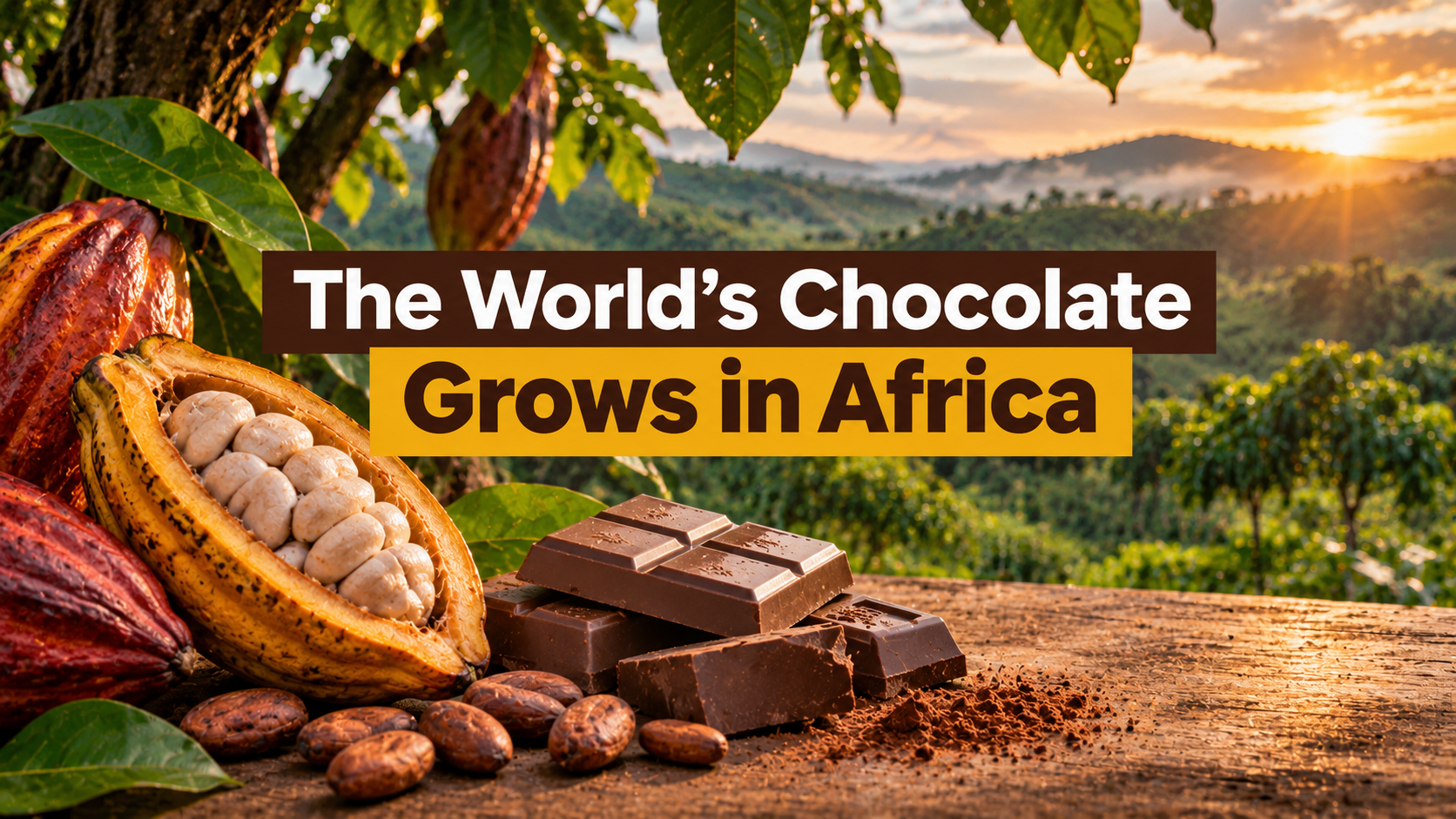
Every time someone enjoys a chocolate bar, there is a good chance its journey began on an African farm.
West Africa plays a major role in the global cocoa industry. In particular, Côte d’Ivoire and Ghana are among the world’s leading cocoa producers.
Together, these two countries have historically supplied a substantial share of the cocoa beans used by chocolate manufacturers worldwide.
From supermarkets in Europe to confectionery shops in Asia and the Americas, African cocoa is an important ingredient in products enjoyed by millions.
From African farms to chocolate factories
Chocolate begins with cocoa beans, which grow inside colourful pods on cacao trees.
Farmers harvest the pods, remove the beans and allow them to ferment. They then dry the beans before preparing them for sale.
Once exported, the beans can be roasted and processed into cocoa products used to make chocolate.
Although cacao originally comes from the Americas, West Africa has become one of the world’s most important cocoa-growing regions.
Today, cocoa farming supports millions of livelihoods across the continent.
Côte d’Ivoire and Ghana lead cocoa production
Côte d’Ivoire is the world’s largest cocoa-producing country.
Neighbouring Ghana is also a major producer, with a long history of growing and exporting cocoa.
Other African countries, including Nigeria and Cameroon, contribute to the global supply.
African cocoa travels to manufacturers around the world, where it becomes chocolate bars, cocoa powder, desserts and other products.
However, production levels can change from year to year because of weather, crop disease and market conditions.
Africa’s contribution goes beyond cocoa
Chocolate is only one example of Africa’s influence on products used around the world.
Kenya exports tea enjoyed in homes and cafés across several continents.
Ethiopia is famous for its coffee heritage and remains an important coffee exporter.
Meanwhile, Madagascar is a leading source of natural vanilla, a popular ingredient in desserts and fragrances.
These products show how African agriculture connects local communities to international markets.
The people behind the world’s chocolate
Behind every cocoa harvest are farmers, workers and communities whose efforts help sustain the industry.
Yet cocoa farmers do not always receive a large share of the final price paid for chocolate products.
This has increased interest in fairer trade, better working conditions and more cocoa processing within producing countries.
Expanding local manufacturing could also help African economies retain more value from their agricultural exports.
A sweet connection to Africa
The next time you enjoy chocolate, consider the journey behind its ingredients.
The cocoa may have been grown and harvested by farmers in West Africa before travelling thousands of kilometres.
It is a simple reminder that Africa plays an important role in producing some of the world’s most familiar everyday products.