
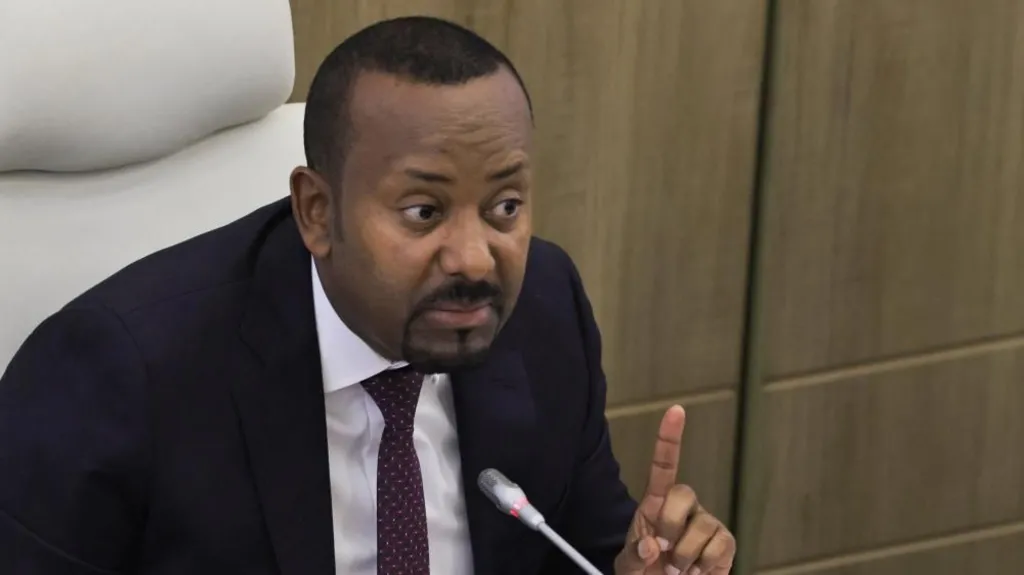
Ethiopian Prime Minister Abiy Ahmed has publicly accused Eritrea’s army of committing atrocities during the two year conflict in the northern Tigray region, marking his strongest admission to date over the role of Eritrean forces in the war that ended in 2022, according to media reports.
Speaking before parliament, Abiy acknowledged for the first time that Eritrean troops were responsible for mass killings in the historic city of Aksum. The statement contradicts earlier denials from Asmara and previous assurances by Ethiopian authorities that civilians had not been harmed during the operation.
Eritrean forces fought alongside Ethiopia’s federal army against Tigrayan fighters in a war that devastated large parts of Tigray, which borders Eritrea. Witness accounts and rights investigations have long accused Eritrean troops of some of the worst abuses during the conflict.
Relations between Ethiopia and Eritrea have fluctuated sharply in recent years. Abiy won the Nobel Peace Prize in 2019 after ending a decades long military standoff with Eritrea over a border dispute. That rapprochement later deepened during the Tigray war, but has since deteriorated amid rising tensions over Red Sea access, which landlocked Ethiopia has sought through Eritrean territory.
Ethiopia’s foreign ministry has recently accused Eritrea of shifting its position in Tigray, raising concerns about renewed instability. Eritrea was not a signatory to the African Union brokered Pretoria Agreement that formally ended the war in November 2022 and had opposed the deal, arguing it was reached before the full defeat of the Tigray People’s Liberation Front.
During his address, Abiy said Eritrean troops had not only carried out killings but also destroyed homes, looted property, dismantled industries and seized machinery in several major Tigray towns, including Adwa, Aksum, Adigrat and Shire. He said Ethiopian envoys were sent to Eritrea during the war to urge its leadership to halt the destruction and violence.
His remarks came as passenger flights between Addis Ababa and cities in Tigray resumed after a brief suspension triggered by clashes in disputed areas of western Tigray, clashes that reignited fears of a return to wider conflict.
The Tigray war, which lasted from late 2020 to 2022, is estimated by an African Union envoy to have claimed the lives of around 600,000 people. All parties to the conflict have been accused of committing abuses, though Eritrean forces have been repeatedly singled out in reports by media and human rights organisations.