
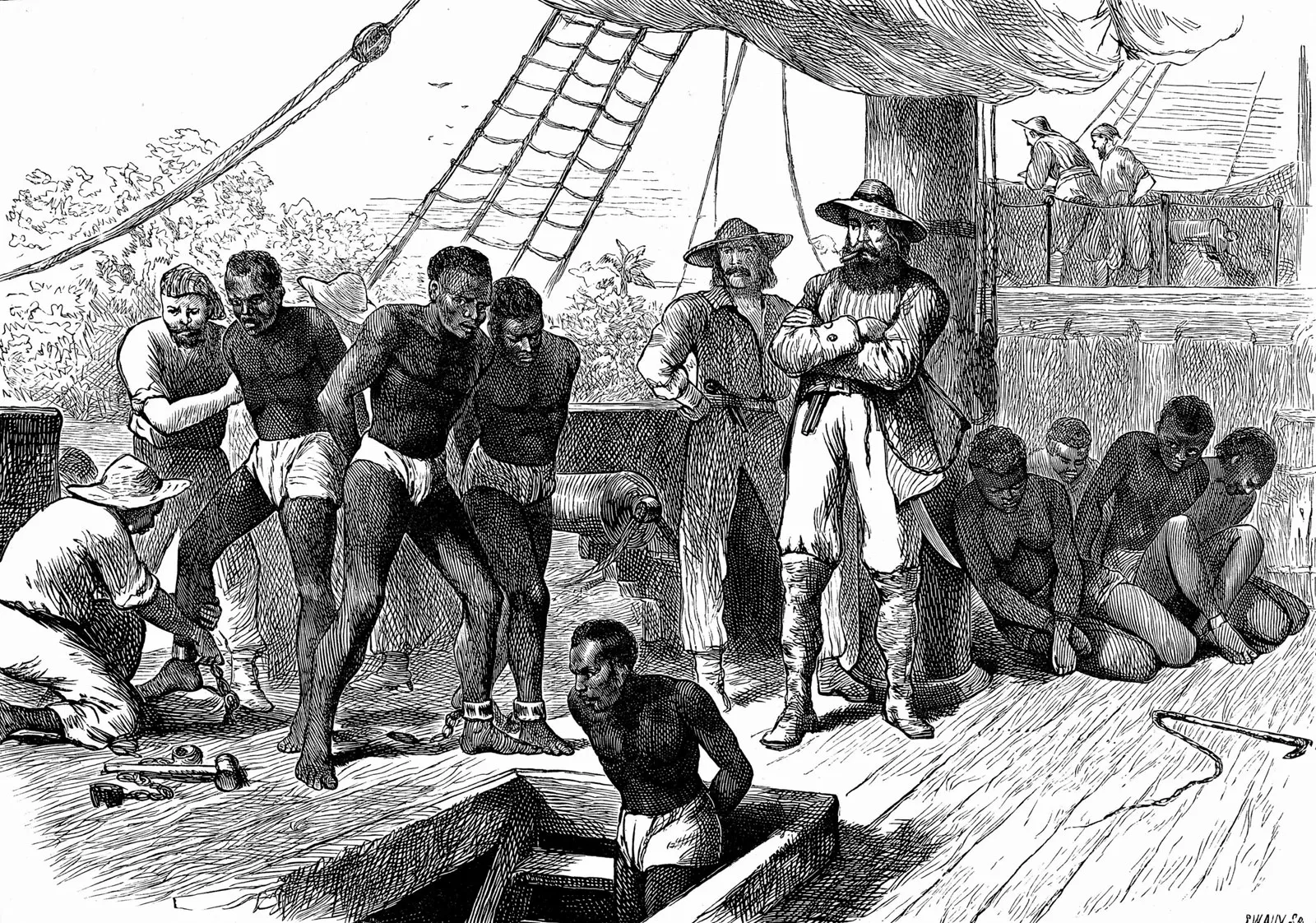
The transatlantic slave trade remains one of history’s darkest chapters, spanning nearly four centuries. From the late 15th to the 19th century, European powers forcibly transported millions of Africans to the Americas, reshaping continents forever.
Historical records indicate 12.5 million Africans survived the Atlantic crossing, though countless more perished before reaching ports or remained unrecorded. Scholars estimate that up to 30 million people, nearly a third of Africa’s population, were torn from their homes over centuries.
The trade’s brutality eclipsed other slavery systems, inflicting widespread suffering, death, and irreversible social and economic disruption across Africa. Portugal pioneered mass trafficking in the late 15th century, soon joined by England, France, Spain, and the Netherlands, fueling colonial economies.
European ships sailed to West Africa’s infamous hubs like Goree Island, confining captives in windowless cells before the perilous Atlantic crossing. The Middle Passage alone claimed at least 1.8 million lives due to overcrowding, disease, starvation, and physical abuse during the voyage.
Brazil received the largest share, with around five million Africans arriving, while North America imported nearly 388,000, though populations grew domestically over generations. Southern Africa’s Cape Town saw two-thirds of its population enslaved by 1795, while East Africa’s Bagamoyo region supplied forced labour to India, Iran, and islands.
Abolitionist movements pressured Western powers to end slavery: England in 1833, France in 1848, the US in 1865, and Brazil in 1888. Yet the end of slavery marked only the beginning of enduring demographic, economic, and social scars across Africa and the diaspora. The legacy of the transatlantic slave trade continues to shape societies, a haunting reminder that its impact is neither distant nor forgotten.Africa bore the brunt of the transatlantic slave trade for centuries