
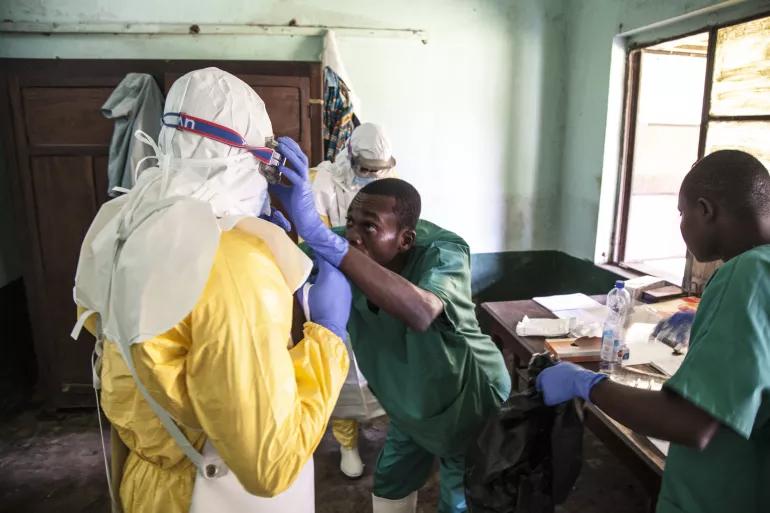
U.S. health authorities confirmed Monday that an American aid worker tested positive for Ebola after being exposed during humanitarian work in the Democratic Republic of Congo (DRC), as officials moved to contain a worsening outbreak that has already killed more than 100 people.
The U.S. Centers for Disease Control and Prevention (CDC) said the individual contracted the virus while working in eastern DRC, where a rare Ebola strain continues to spread rapidly.
The patient was identified by the Serge Christian mission organization as Dr. Peter Stafford, a medical missionary who had been treating patients at Nyankunde Hospital. According to the organization, Stafford developed symptoms over the weekend and tested positive late Sunday.
CDC Ebola response manager Dr. Satish Pillai said the infected American is being transferred to Germany for treatment in coordination with the U.S. State Department. Six additional people exposed to the virus are also being relocated for monitoring and care.
The outbreak has raised alarm among global health officials due to delayed detection and rapid spread in eastern Congo. Health authorities have reported at least 105 suspected deaths and 393 suspected cases linked to the outbreak.
The current outbreak involves the Bundibugyo strain of Ebola, a variant for which no approved vaccine or treatment currently exists.
The CDC said it is deploying technical teams from Atlanta to support the response while U.S. agencies work on developing potential monoclonal antibody therapies through the Biomedical Advanced Research and Development Authority (BARDA).
Despite the case, U.S. officials said the immediate risk to the American public remains low.
Former CDC Director Thomas Frieden, however, warned that recent cuts to the agency and Washington’s withdrawal from the World Health Organization could undermine future outbreak responses.
“When the West Africa Ebola outbreak was first identified, there were around 40 cases. This outbreak already began with hundreds,” Frieden told Reuters, warning the situation may become difficult to contain because infections have spread across multiple countries and remote areas.
Travel restrictions announced
The CDC also announced temporary entry restrictions affecting some travelers arriving from the DRC, Uganda and South Sudan.
Under a 30-day order issued under U.S. public health law, non-exempt travelers who were present in those countries within the previous 21 days may face entry restrictions. U.S. citizens, permanent residents, military personnel and certain government staff are exempt.
Officials cited Ebola’s incubation period — which can extend up to 21 days — as a major concern because infected individuals may travel internationally before symptoms appear.
The CDC said it will increase airport screening, contact tracing, laboratory testing and hospital preparedness measures nationwide.
The outbreak comes weeks before the FIFA World Cup begins in North America, with U.S. officials still assessing protocols for teams and delegations from affected countries. Houston is expected to host the DRC national team during the tournament.