
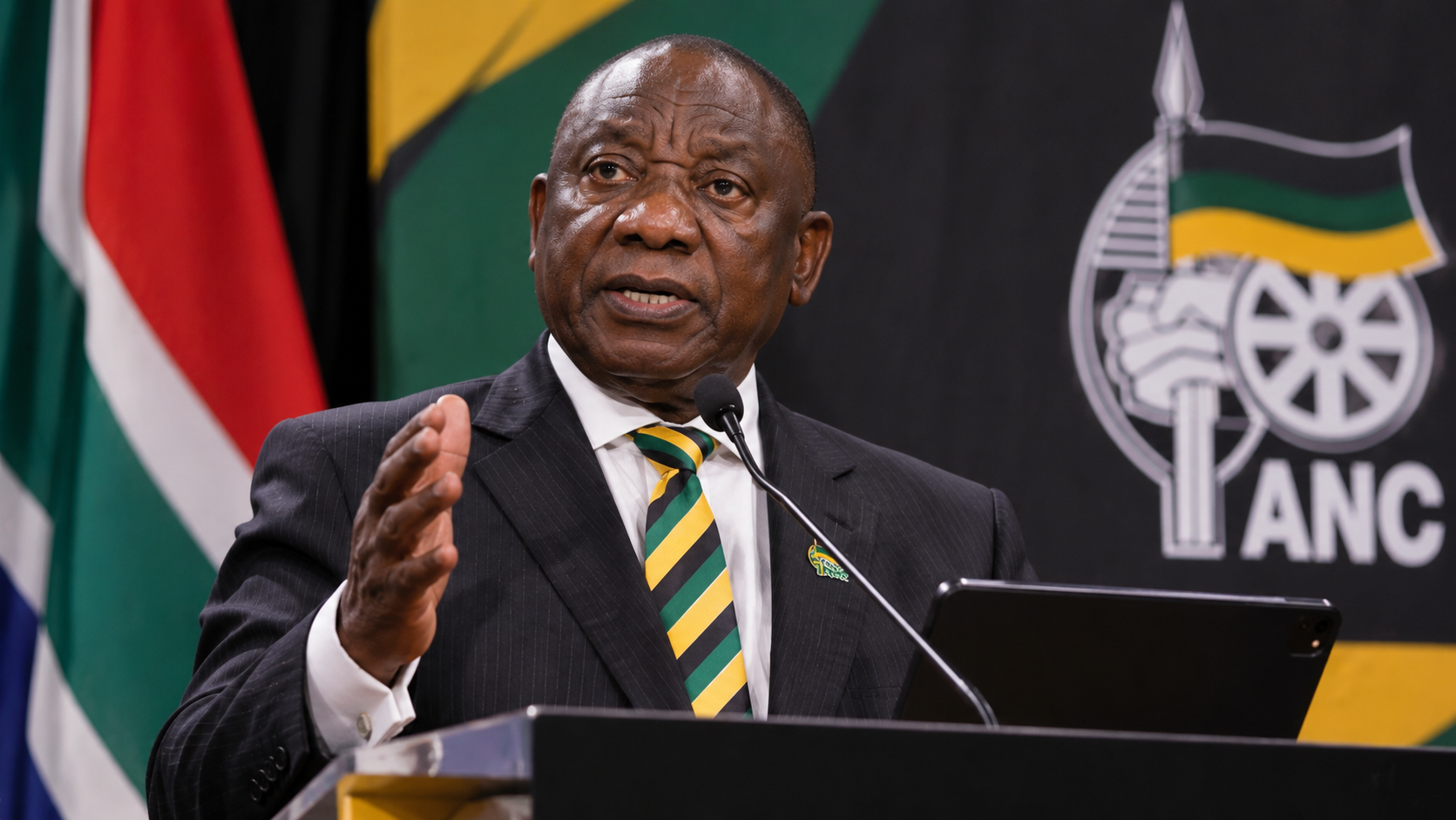
South Africa’s ruling African National Congress (ANC) has suffered its worst election result, winning just 31% of the vote in recent local government elections.
However, the ANC has ruled out President Cyril Ramaphosa’s resignation despite growing pressure following the party’s electoral setback.
According to the Associated Press, ANC leaders met on Thursday, November 12, to assess the results and discuss coalition negotiations.
The party has promised a period of internal reflection as it attempts to rebuild public trust.
ANC election defeat sparks leadership debate
The ANC’s vote share fell by 15 percentage points to approximately 31%.
The result marks another major setback for the party that has governed South Africa since the end of apartheid in 1994.
Once capable of securing nearly 70% of the national vote, the ANC now faces increasing competition from opposition parties.
Following the latest results, speculation emerged about President Cyril Ramaphosa’s political future.
However, ANC national spokesperson Mahlengi Bhengu-Motsiri dismissed reports that Ramaphosa had offered to resign.
She described the claims as fabricated and confirmed that the president would remain in office.
The ANC’s National Executive Committee met to review the election results and determine its next steps.
ANC promises internal reflection
Party officials acknowledged that the election results represented a serious warning from voters.
The ANC’s secretary-general described the outcome as catastrophic.
He said the party needed to examine why South Africans were increasingly withdrawing their support.
Meanwhile, Bhengu-Motsiri said the leadership would conduct a thorough assessment of its electoral performance.
The party has promised to reconsider its approach to governance and voter engagement.
However, it now faces the challenge of turning that commitment into meaningful changes.
Coalition talks become essential
The ANC must also negotiate with other political parties to retain control of municipalities where no party secured an outright majority.
These negotiations could determine who governs several important local authorities.
According to Bhengu-Motsiri, the party respects the decisions made by voters.
She said the National Executive Committee would consider reports from preliminary discussions with other parties.
The committee is also expected to approve negotiating guidelines for ANC representatives.
As a result, coalition-building has become a central part of the party’s strategy.
South Africans frustrated by failing services
The ANC’s declining support comes amid widespread dissatisfaction with basic public services.
Many communities continue to experience electricity problems, unreliable water supplies and deteriorating sewage systems.
Waste collection failures have also left rubbish accumulating in some neighbourhoods.
Meanwhile, housing shortages remain a major challenge, with millions of South Africans living in informal settlements.
These problems have increased pressure on the governing party to demonstrate improvements in everyday living conditions.
The ANC has frequently highlighted the long-term economic and social consequences of apartheid and colonialism.
However, voters have increasingly focused on the government’s ability to address present-day problems.
ANC faces growing electoral challenges
The latest setback follows the ANC’s disappointing performance in South Africa’s 2024 national elections.
During that vote, the party secured approximately 40% of the national ballot and lost its parliamentary majority for the first time.
The result forced the ANC to enter a national coalition arrangement.
Two years later, the party has suffered another significant decline in support.
The latest local election results suggest that its efforts to regain voter confidence have not yet produced a recovery.
Nevertheless, the ANC leadership has publicly backed Ramaphosa.
The party must now negotiate local governing arrangements while confronting concerns over service delivery and declining political support.
Its ability to rebuild trust could shape South Africa’s political landscape ahead of future elections.