
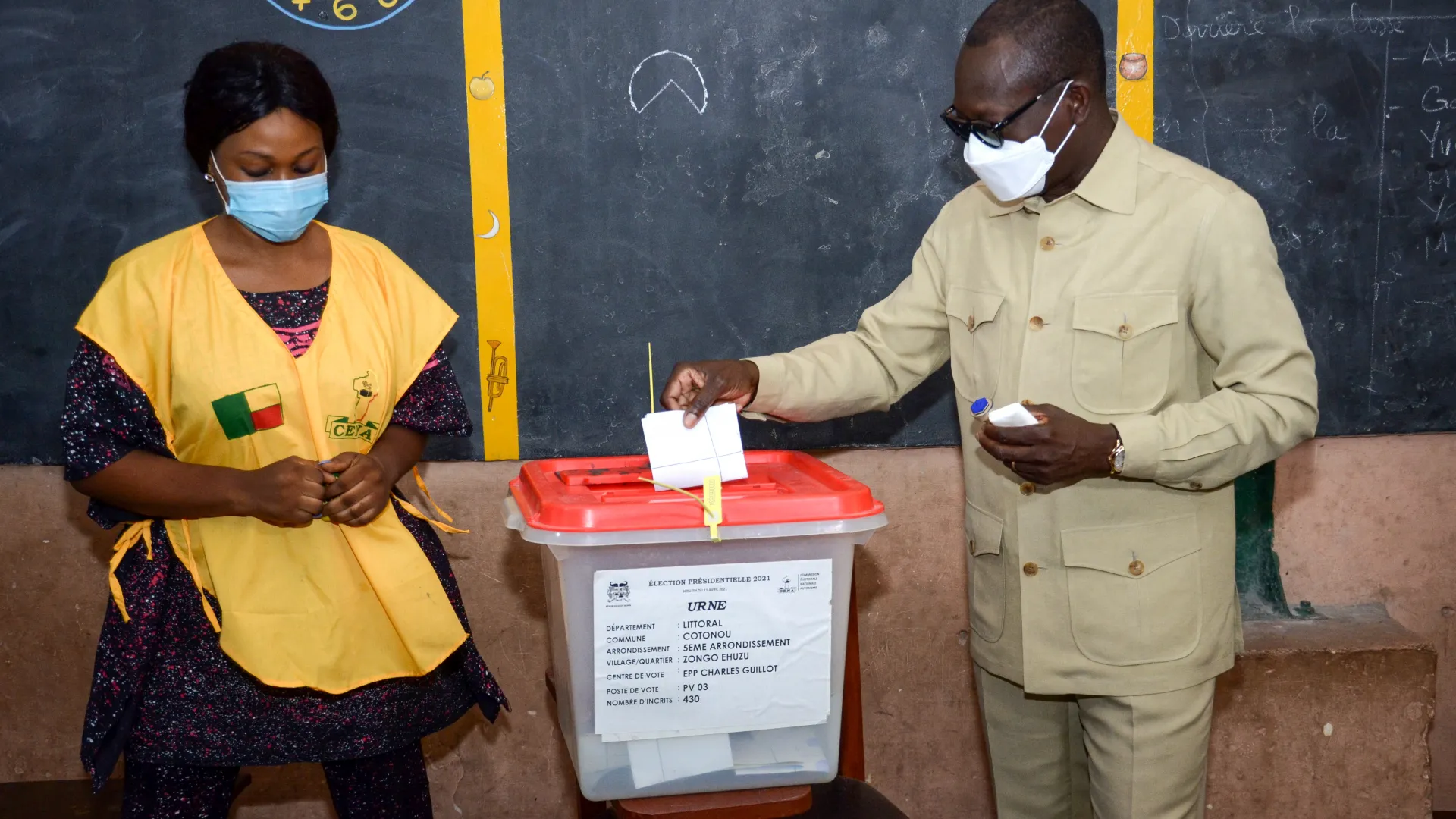
Election officials in Benin began counting ballots after a largely peaceful presidential vote, as Finance Minister Romuald Wadagni emerged as the clear favourite.
The election followed a decade of steady economic expansion under President Patrice Talon, despite persistent jihadist attacks destabilising the country’s northern regions.
Electoral commission head Sacca Lafia said the process unfolded calmly, though civil society monitors reported around one hundred irregularity alerts across polling stations.
Reports cited early openings and ballot boxes appearing filled before voting began, raising concerns over procedural transparency in parts of the country.
Nearly eight million voters were eligible to choose Talon’s successor, with the outgoing leader endorsing Wadagni after completing his constitutionally limited two terms.
Turnout appeared subdued in several areas, with observers noting sparse queues in Cotonou and participation rates between 20 and 40 percent in Porto-Novo.
Voting closed in the afternoon, and counting began swiftly, with preliminary results expected to emerge early in the coming week.
Wadagni voted quietly in his hometown of Lokossa, while Talon drew cheering supporters in Cotonou, expressing hope for a “great and powerful Benin.”
Opposition candidate Paul Hounkpe urged citizens to “turn a page,” though his campaign remained low-key and lacked strong institutional backing.
The absence of a major opposition contender, after The Democrats failed to secure ballot access, appeared to dampen voter enthusiasm nationwide.
Analysts warned that frustration lingers among excluded voters, with political tensions simmering beneath the surface despite the orderly conduct of polling day.
International observers from the European Union, African Union, and ECOWAS monitored the vote, reflecting its regional significance.
Benin’s next election is scheduled for 2033 following constitutional changes extending presidential terms and synchronising the electoral calendar.
While economic growth has doubled GDP and expanded infrastructure, poverty remains widespread, with more than 30 percent still struggling to benefit from progress.
Security challenges persist in the north, where jihadist violence continues to spill over from the Sahel, testing the resilience of Benin’s fragile stability.