
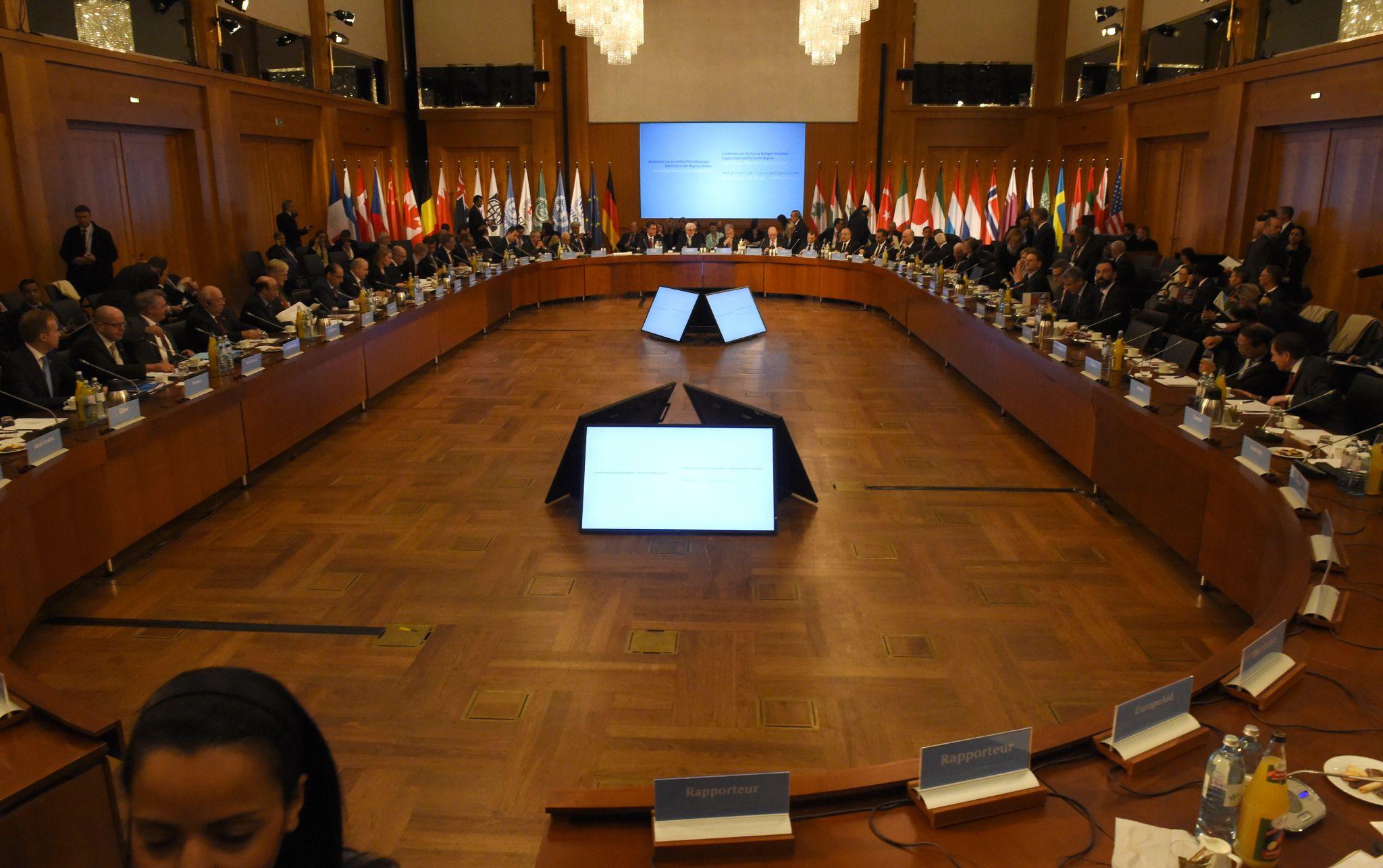
International powers called for an immediate ceasefire in Sudan and expanded humanitarian access at a high-level conference in Berlin on Tuesday, but deep divisions over the path forward underscored the difficulty of ending the war.
The meeting, co-hosted by Germany alongside the EU, UN, African Union and Arab League, brought together representatives from Western and regional states as part of renewed diplomatic efforts to halt the conflict between General al-Burhan’s SAF and the Rapid Support Forces (RSF).
In a joint statement, participants stressed the urgency of silencing the guns and ensuring “safe, rapid and unimpeded” humanitarian access to millions affected by the war, now entering its third year.
German officials said the conference aimed to re-energise international coordination, though no formal agreement on a ceasefire mechanism was announced.
“The humanitarian situation in Sudan is catastrophic and demands immediate action,” Germany’s foreign ministry said, calling on all parties to uphold international law and protect civilians.
The United Nations warned that Sudan remains one of the world’s worst humanitarian crises, with more than 25 million people in need of assistance and widespread displacement across Darfur, Kordofan and the capital Khartoum.
Regional actors, including Gulf states and Egypt, reiterated support for a negotiated settlement, while also emphasising the need for Sudanese-led political dialogue.
The United Arab Emirates called for an immediate humanitarian truce and expanded aid corridors, while other participants highlighted the importance of a longer-term political transition framework.
However, disagreements remain over sequencing — whether to prioritise a ceasefire, political negotiations, or accountability measures — reflecting broader geopolitical tensions shaping the conflict.
No representatives from General al-Burhan’s army or the RSF were present at the talks, limiting prospects for immediate breakthroughs.
Ahead of the Berlin meeting, a preparatory session in Addis Ababa involving the African Union, UN, EU, Arab League and IGAD sought to align positions, but diplomats acknowledged gaps remain between international stakeholders.
Analysts say the Berlin process reflects growing concern that the conflict risks further regional spillover, particularly as fighting intensifies in Darfur and Kordofan and external actors deepen their involvement.
Despite the lack of concrete outcomes, officials framed the conference as part of a broader effort to maintain diplomatic pressure and prevent Sudan from slipping further into prolonged state collapse.