
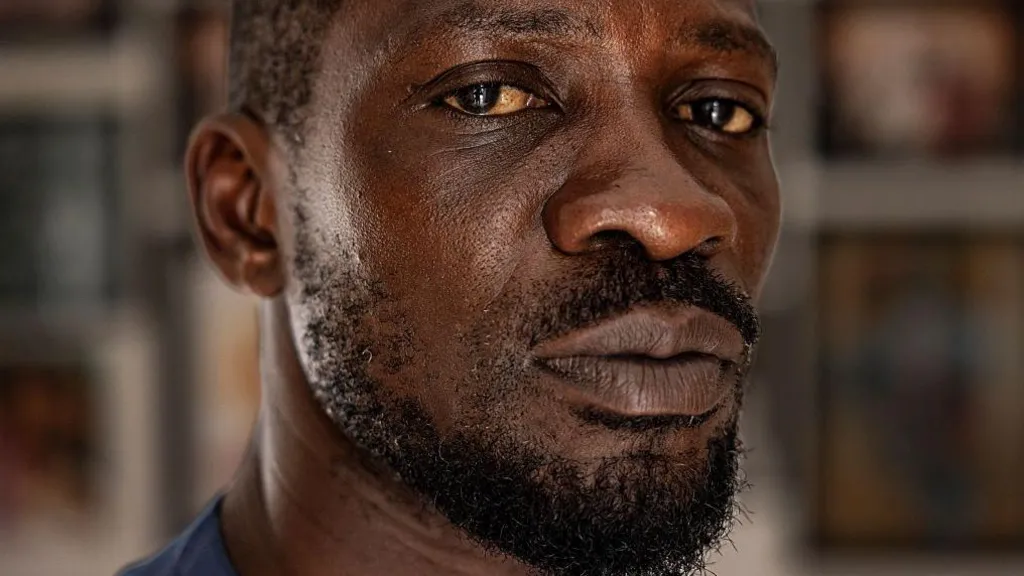
Uganda’s opposition leader Bobi Wine has said he will not challenge the results of last week’s presidential election in court, citing a lack of confidence in the judiciary, and has instead urged his supporters to organise peaceful protests.
Speaking to media from an undisclosed location, Wine said he would continue to oppose President Yoweri Museveni despite serious concerns for his personal safety.
“The judiciary in Uganda is captured,” the opposition figure said, calling on Ugandans to use constitutional and legal means to defend what he described as their stolen democratic choice.
Museveni, 81, was declared the winner of the election with 72% of the vote, according to official results, while Wine secured 25%. The president has accused the opposition of attempting to destabilise the country through violence, branding its supporters as “terrorists”.
Wine, whose real name is Robert Kyagulanyi, rejected the outcome as fraudulent, alleging ballot stuffing and manipulation of results, though he did not provide detailed evidence.
He also accused security forces of effectively placing his family under house arrest by blocking food supplies and communications. Wine said he fled his home in a Kampala suburb on Friday night after learning that security forces were preparing to raid the property.
Authorities have not directly responded to his claims. The Uganda Human Rights Commission said technical and procedural challenges observed on polling day did not undermine the overall integrity of the election. African Union observers also said they found no evidence of ballot stuffing, but criticised the days-long internet shutdown that coincided with the vote count.
Wine previously challenged Museveni’s victory in the 2021 election but later withdrew the case, citing bias and lack of independence within the courts.
He further alleged that political activists were being targeted in what he described as a “silent massacre”, claiming more than 100 people had been killed during election-related violence, without presenting supporting data.
Media reports indicate that more than 100 young people have been remanded in prison in Kampala on charges linked to post-election unrest. Uganda’s army chief, Gen Muhoozi Kainerugaba, who is also Museveni’s son, stated on social media that security forces had killed 22 opposition supporters during disturbances.
Gen Kainerugaba also issued a public threat against Wine, giving him 48 hours to surrender to authorities or be treated as an outlaw.
Wine said he went into hiding after witnessing security forces breach his property, cut electricity, and disable surveillance cameras. He added that signal jammers around his home prevented him from contacting his wife, even after the internet was partially restored.
Police have denied raiding his home, saying security deployments were intended to protect him as a presidential candidate.
Wine reiterated his call for peaceful change, stressing that protests were a constitutional right. “We encourage Ugandans to use any lawful means to fight back,” he said.
President Museveni, who first came to power in 1986, said his victory demonstrated the dominance of his National Resistance Movement party. Uganda has never experienced a peaceful transfer of presidential power since independence.