
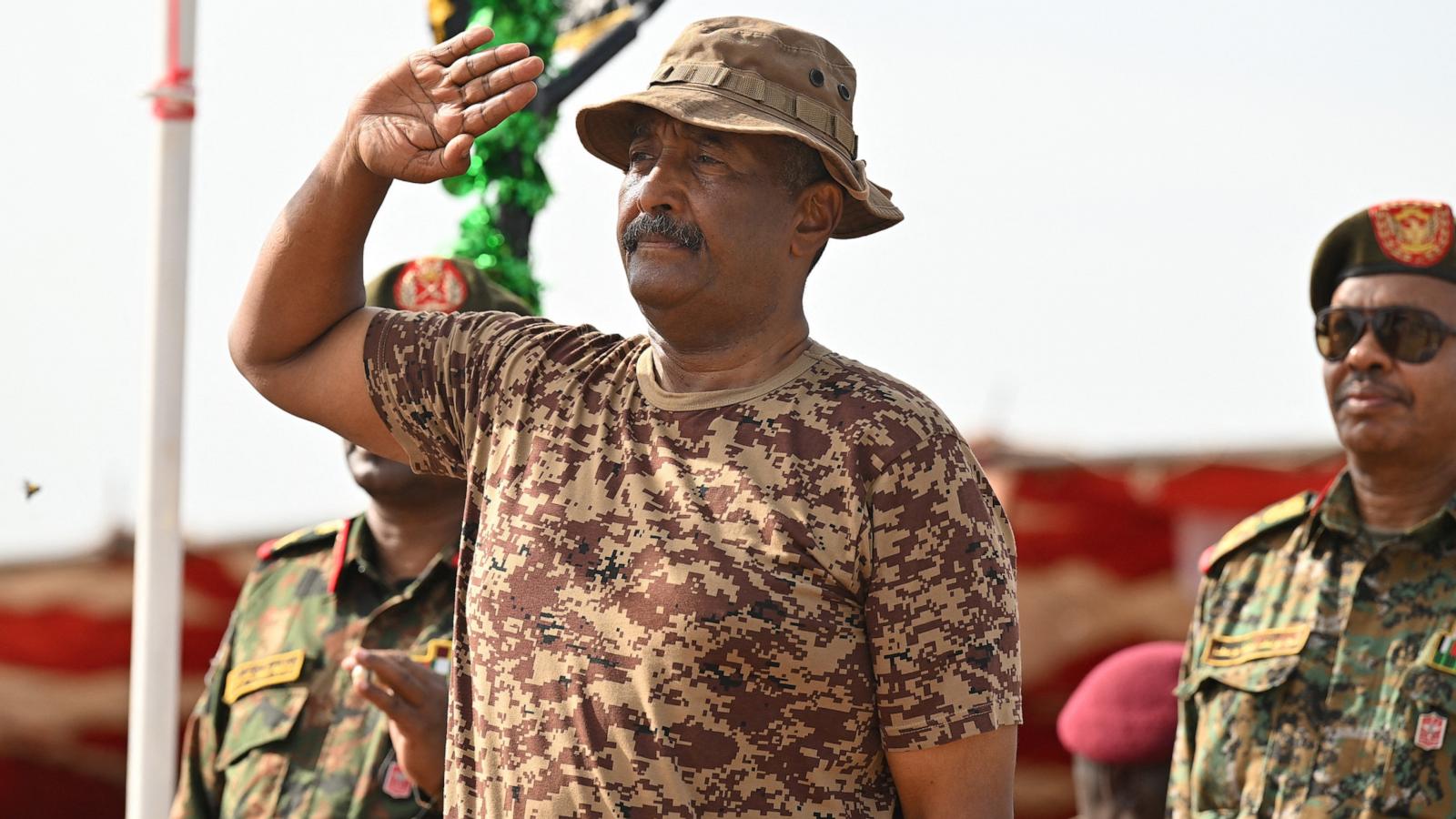
A months-long international investigation has uncovered extensive evidence of mass killings and ethnically targeted violence carried out by Port Sudan–based forces during their advance into Al-Jazira State earlier this year — with indications that General Abdel Fattah al-Burhan was aware of the operations.
The inquiry, led by CNN and Lighthouse Reports in collaboration with several media partners, traces a grisly pattern that stretches from burned-out villages to irrigation canals filled with corpses. Witness accounts, satellite images and leaked testimonies from Sudan’s intelligence services point to a campaign directed not only at supposed supporters of the Rapid Support Forces (RSF), but at entire non-Arab farming communities long treated as outsiders.
A campaign hidden in plain sight
Investigators geolocated dozens of videos showing villagers rounded up, beaten, and executed on suspicion of harbouring sympathy for the RSF. One cluster of footage from the village of Kariba reveals groups of young men stripped, bound, and assaulted by soldiers accusing them of belonging to an “enemy tribe”.
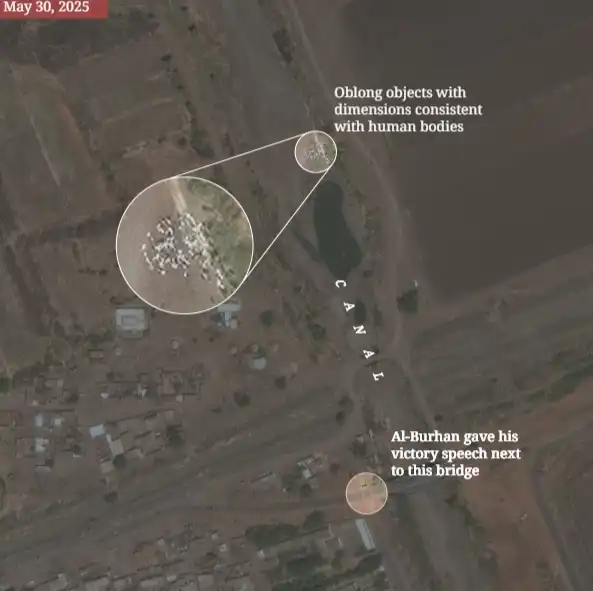
Elsewhere, near a crossing known locally as the Police Bridge, another set of videos shows scores of bodies — many with gunshot wounds to the head — strewn across a patch of dirt. Satellite images captured days later reveal disturbed soil and the outlines of what appear to be mass graves.
Whistleblowers say these killings were not isolated. A source inside Sudan’s General Intelligence Service described orders that framed the Kanabi, a largely non-Arab agricultural community, as a security threat to be “cleansed” from the belt of villages leading to Wad Madani.
Dumped in the water
One of the most disturbing elements uncovered by CNN and Lighthouse Reports involves the disposal of victims. According to two intelligence officers who spoke anonymously, soldiers routinely dumped bodies into irrigation canals running between Bikka, Kariba and the approaches to Wad Madani. Some civilians, they said, were shot and thrown in alive.
When the water receded months later, video evidence shows dozens of corpses lying exposed on the canal floor — wrapped in plastic, half-buried in silt, or slumped on the banks.
Burhan’s visit to the canal
What has drawn particular scrutiny is the timing of a public visit by General al-Burhan to one of these sites. Video released by his office shows the army chief addressing his troops from the bank of the same canal where intelligence officers say bodies had been dumped days earlier.
Only metres from where Burhan stood, satellite imagery later captured the outlines of numerous corpses lying in the mud after the waterline dropped. Lighthouse Reports notes that this raises serious questions about what the general knew and when.
Not isolated, but systematic
The investigation maps at least 39 villages in Al-Jazira that were raided, burned or depopulated between October 2024 and May 2025. Patterns of destruction — razed homes, flattened markets, torched grain stores — match eyewitness descriptions of punitive operations targeting “Black Sudanese” communities the militias label as foreign.
While SAF has framed its campaign as an effort to restore control from the RSF, analysts who reviewed the evidence say the scale and consistency of the attacks point to an ethnic cleansing strategy carried out under military command.
United Nations investigators consulted by CNN described the findings as “strongly indicative of genocide conducted on ethnic grounds”.
For now, no senior officers have faced inquiry — and no public investigation has been launched by Port Sudan authorities into the conduct of SAF units or their allied militias.
Lighthouse Reports underlines that this impunity is the engine that allows such operations to continue. With no internal checks and no external enforcement mechanism, the burden of accountability, investigators say, falls increasingly on documentation efforts outside Sudan.