
Britain announced it will cut its international aid budget to 0.3% of gross national income, prioritising defence funding.
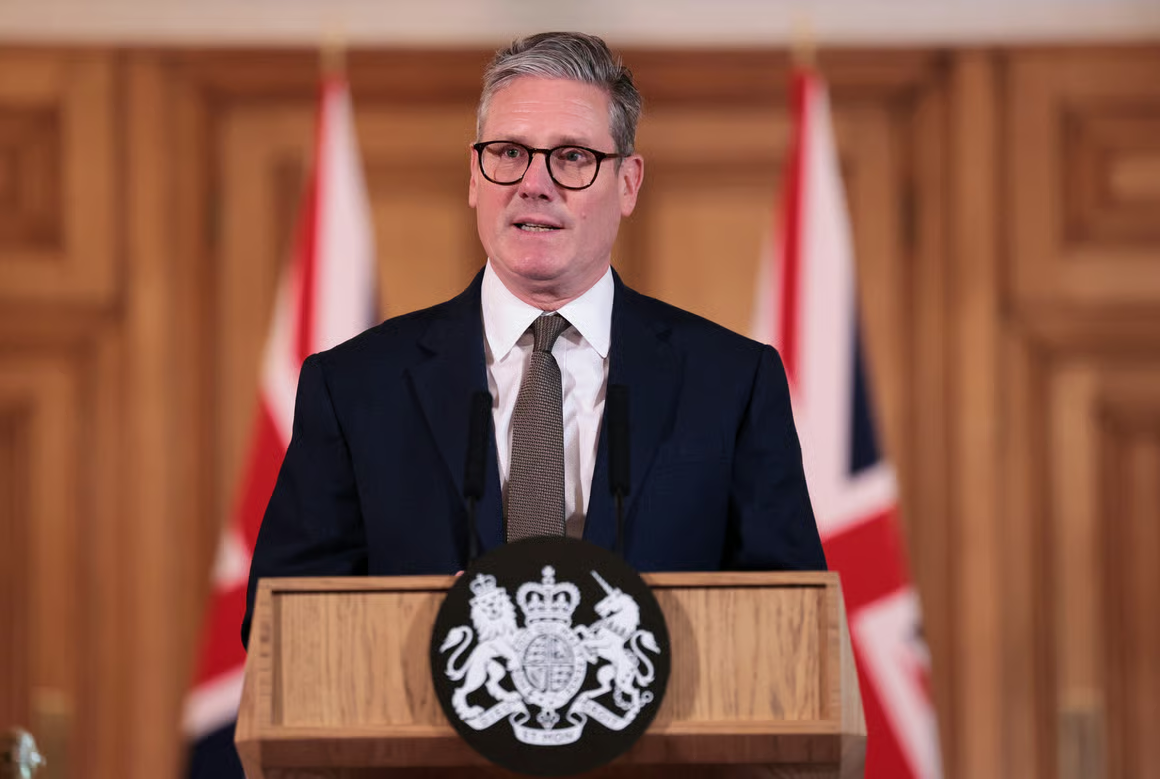
Prime Minister Keir Starmer faced pressure from the United States to increase defence spending, prompting charities’ sharp criticism.
Foreign Secretary Yvette Cooper said aid to Sudan, Ukraine, Lebanon, and Palestinian territories would remain fully protected under the new plan.
London plans to allocate around 1.4 billion pounds annually to countries facing the most urgent humanitarian crises over three years.
Direct bilateral aid to other nations will be reduced, while support to G20 countries will largely end, except for Turkey.
Aid to Africa and the Middle East will face cuts, though nations like Somalia and Yemen remain high on the priority list.
Cooper emphasised a shift from donor to investor, focusing on expertise sharing rather than grants to build sustainable local capacity.
Support for women and girls will continue, with six billion pounds earmarked to help communities hit hardest by climate change.
Britain was the fourth-largest international aid donor in 2024, giving nearly $18 billion, behind the United States, Germany, and EU institutions.
Starmer had promised to restore aid spending to 0.7% of gross national income but reversed course to fund defence increases instead.
The move highlights tensions between humanitarian obligations and national security priorities amid growing global instability and funding pressures.
Analysts warn that while some regions remain protected, cuts could affect development outcomes and deepen reliance on international support elsewhere.
Britain’s strategy frames aid as partnership-driven, aiming to foster independence and resilience rather than maintaining long-term dependency.