
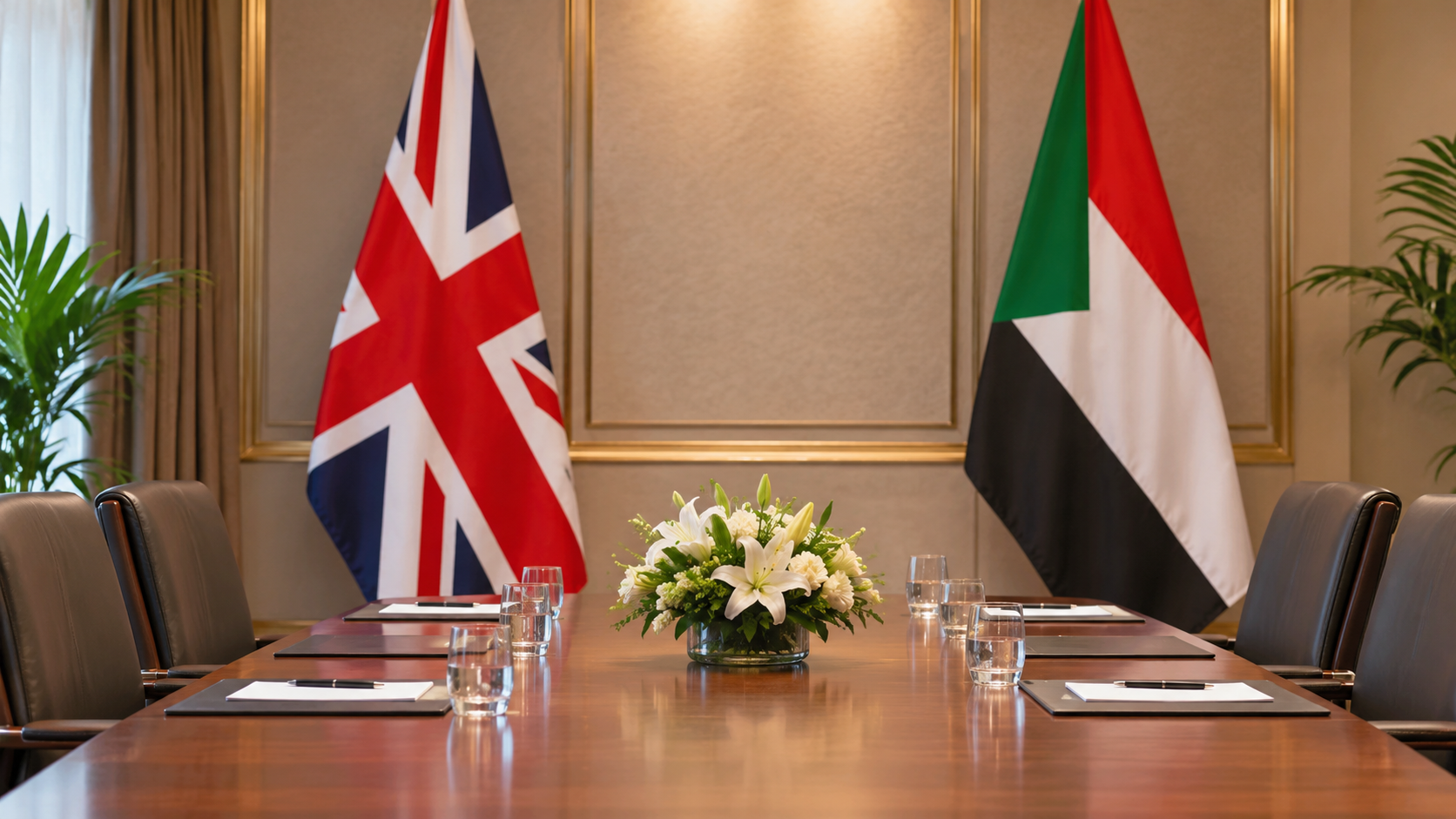
British diplomats have held discussions with Sudan’s Dialogue Preparation Committee over a proposed political conference aimed at addressing the underlying causes of the country’s war and paving the way towards a political settlement.
The meeting on November 17 brought together committee representatives and the British Embassy’s political adviser to explore potential diplomatic cooperation.
Committee spokesperson Osman Mirghani said the discussions focused on securing international and regional support for a Sudanese-led political dialogue.
However, Britain has not announced any formal commitment to sponsoring, organising or financing the proposed conference.
Sudan political dialogue seeks path to peace
The committee aims to organise a conference inside Sudan to address the historical causes of political instability.
However, holding negotiations in Khartoum raises questions about the participation of political movements operating outside territory controlled by the Sudanese Armed Forces (SAF).
Sudanese civilian organisations have repeatedly called for a political settlement that addresses the concentration of power, military involvement in governance and the marginalisation of communities outside the capital.
Disagreements also remain over the political role of groups associated with Bashir’s former administration.
Sudan’s democratic transition suffered a major setback following the October 2021 military coup. Subsequently, war erupted between the SAF and the Rapid Support Forces (RSF) in April 2023.
Addressing these longstanding political disputes remains an important part of efforts to achieve lasting peace.
Sudanese movement rejects Swiss consultations
Meanwhile, another round of Sudanese political consultations is scheduled to take place in Nyon, Switzerland, from November 25 to 28.
The mediation organisation Promediation is facilitating the initiative to help narrow differences among Sudanese political groups.
However, the Sudan People’s Liberation Movement-Revolutionary Democratic Current, led by Yasir Arman, has announced a boycott.
The movement accused the organisers of facilitating efforts to bring together political factions it associates with Sudan’s former regime. It also opposed restoring political influence to groups it considers responsible for undermining Sudan’s democratic transition.
Furthermore, the movement called for civilian oversight of military institutions and the establishment of a unified, professional military.
The organisers’ response to these accusations was not included in the available reporting.
Britain calls for an inclusive peace process
Britain has previously supported international efforts to secure a ceasefire and establish a Sudanese-led political process.
In September, Britain joined international partners, including the African Union, European Union and United States, in calling for inclusive negotiations.
Their joint statement emphasised that Sudanese citizens should determine their country’s political future without interference from armed actors.
While the latest British engagement offers another opportunity to explore pathways towards peace, significant political obstacles remain.
An inclusive process that addresses Sudan’s longstanding grievances and accommodates its diverse communities could help lay the foundations for ending the war and building lasting stability.