
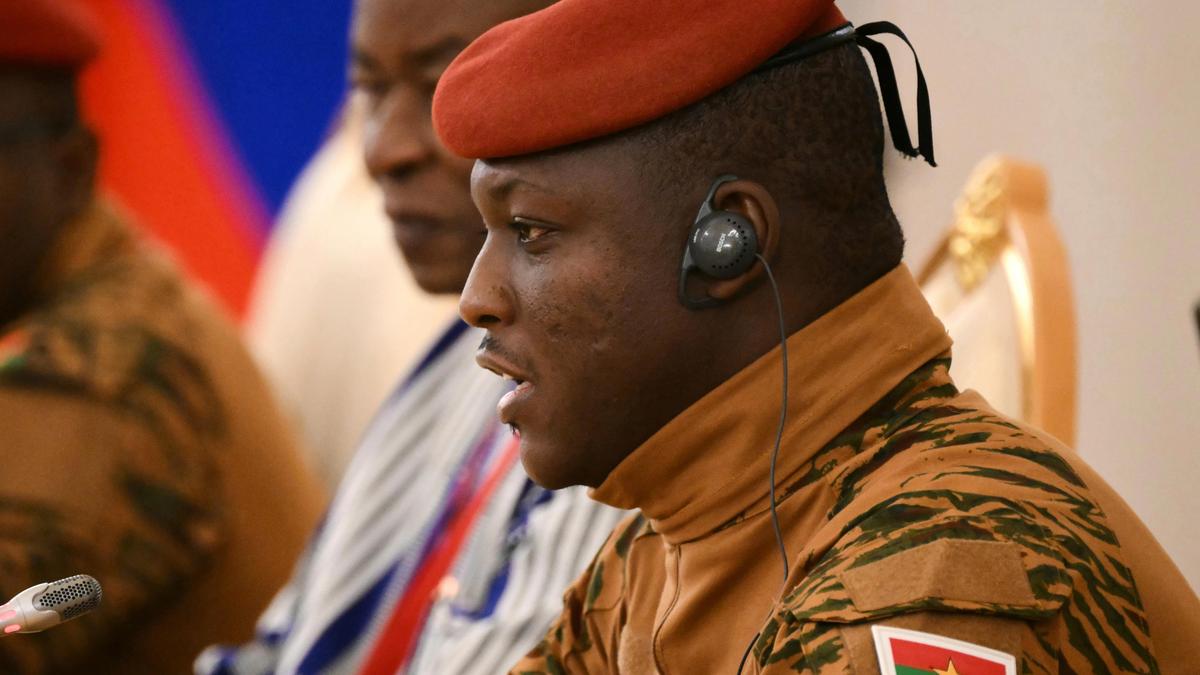
Burkina Faso’s military-led government has announced a sweeping ban on all political parties, formalising restrictions that have been in place since the junta seized power in 2022.
The decision, announced by Interior Minister Emile Zerbo, marks the latest move by junta leader Captain Ibrahim Traoré to consolidate control amid growing criticism over the suppression of political dissent.
Zerbo said the ban was part of efforts to “rebuild the state,” arguing that Burkina Faso’s multiparty system had been marked by “numerous abuses” and had fuelled division within society. He claimed the system had weakened national cohesion and undermined the country’s social fabric.
Political parties had already been barred from organising public activities, but the new decree goes further by prohibiting them from operating entirely. Zerbo said the assets of all dissolved parties would be transferred to the state, adding that a draft law would soon be submitted to the Transitional Legislative Assembly to formalise the move.
Before the 2022 coup, Burkina Faso had more than 100 registered political parties, with 15 represented in parliament following the 2020 general election.
The announcement has drawn criticism from civil society figures, some of whom fear reprisals for speaking out. “This will not help the country move forward. We’re not happy with this,” one civil society member told the BBC. They warned that the junta has increasingly portrayed democracy as harmful and suggested Traoré may be entrenching himself in power, despite Burkina Faso’s long history of coups.
The decision has also sparked debate online. While some social media users criticised the ban, others voiced support for the junta, arguing that the sheer number of political parties had contributed to corruption and clientelism rather than genuine political representation.
Traoré came to power in September 2022 after overthrowing Paul-Henri Sandaogo Damiba, who himself had ruled for just nine months following an earlier coup. Although Traoré initially promised a return to civilian rule by July 2024, the junta later extended the transition period by five years.
Despite his increasingly authoritarian approach, the 37-year-old leader has built a strong following both at home and across Africa, driven by his pan-Africanist rhetoric and sharp criticism of Western influence in the region.
Burkina Faso is among several West African states that have seen military takeovers in recent years, often followed by restrictions on political parties and electoral processes. In neighbouring Guinea, junta leader General Mamady Doumbouya recently ran in elections and secured a landslide victory.