
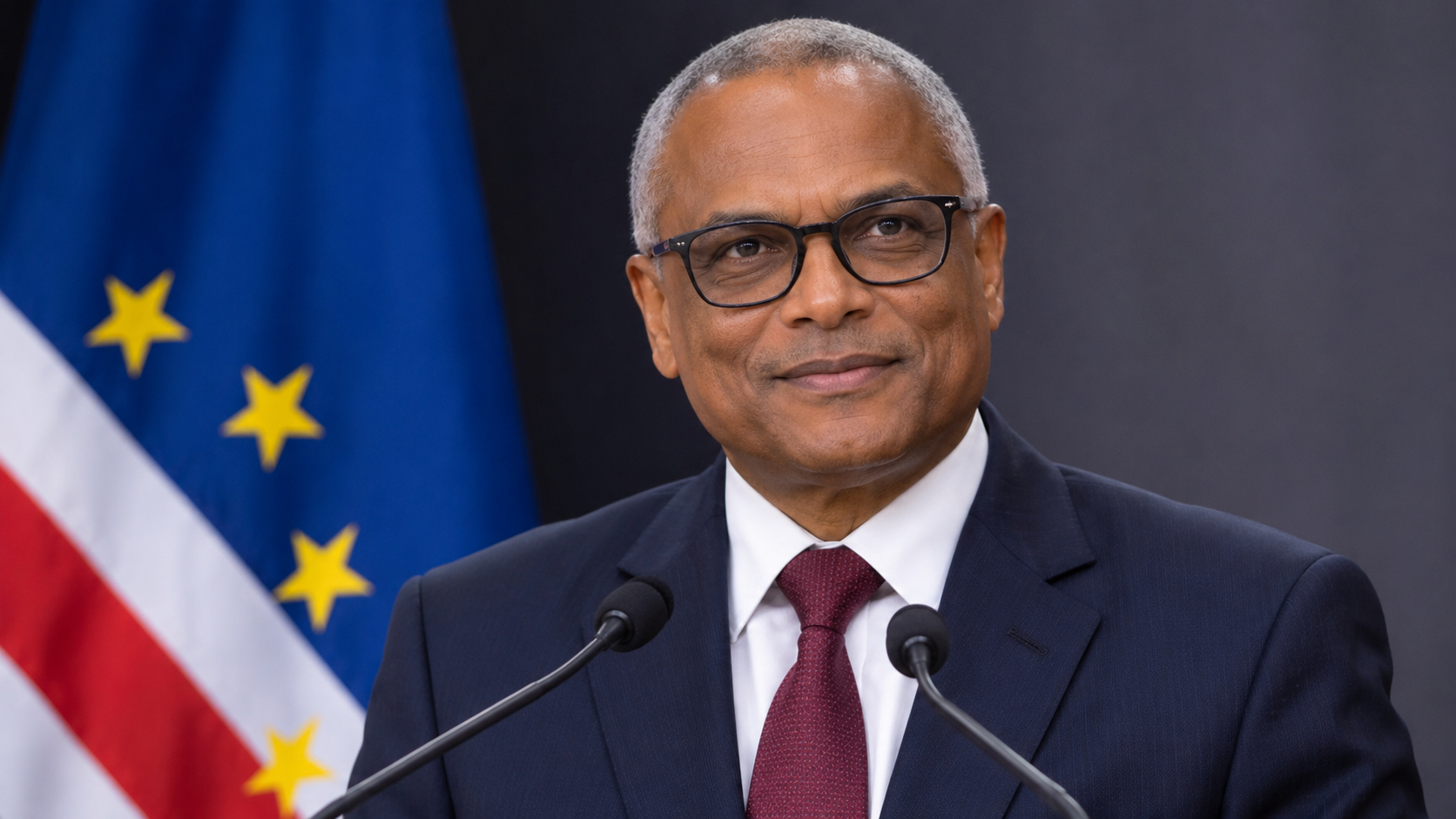
Cape Verde President José Maria Neves is set to win a second term after securing nearly 64% of the vote, according to preliminary election results.
With 98% of ballots counted, Neves held a commanding lead over his rivals following Sunday’s presidential election.
Africanews, citing Associated Press reporting, said the incumbent claimed victory on Sunday evening. However, the final results have yet to be confirmed.
Neves promises unity after election
Speaking to supporters, Neves pledged to represent all Cape Verdeans, regardless of their political views.
He also promised to work across party lines to improve housing, healthcare and education. In addition, he identified job creation as a priority for his second term.
Neves said he would seek to strengthen unity among citizens living across the islands and abroad.
First female candidate finishes second
Joana Rosa, Cape Verde’s first female presidential candidate, secured approximately 31.5% of the vote.
Her participation marked a milestone in the country’s electoral history.
Meanwhile, voter turnout remained low. Official figures indicated that around 32% of more than 400,000 eligible voters participated.
Despite the low turnout, the election continued Cape Verde’s tradition of competitive presidential contests.
President holds largely ceremonial role
Cape Verde operates under a parliamentary system. As a result, the prime minister controls most government policy and executive decisions.
The president primarily performs ceremonial and constitutional duties. However, the office also carries the authority to veto legislation.
Neves first became president in 2021. Previously, he served as prime minister between 2001 and 2016.
He also led the African Party for the Independence of Cape Verde (PAICV) and held positions as mayor and lawmaker.
The PAICV won a parliamentary majority in May, ending a decade of government led by the Movement for Democracy.
Economic challenges remain
Cape Verde has recorded economic growth supported by tourism.
In July, the World Bank classified the island nation as an upper-middle-income country.
Nevertheless, several challenges remain.
Residents continue to face rising living costs, high fuel prices and limited employment opportunities for young people.
Furthermore, geographic isolation and expensive transport between islands create additional economic difficulties.
As Neves prepares for another term, his administration will face pressure to address these concerns while strengthening public services.
The final election results are expected to confirm the outcome once counting is complete.