
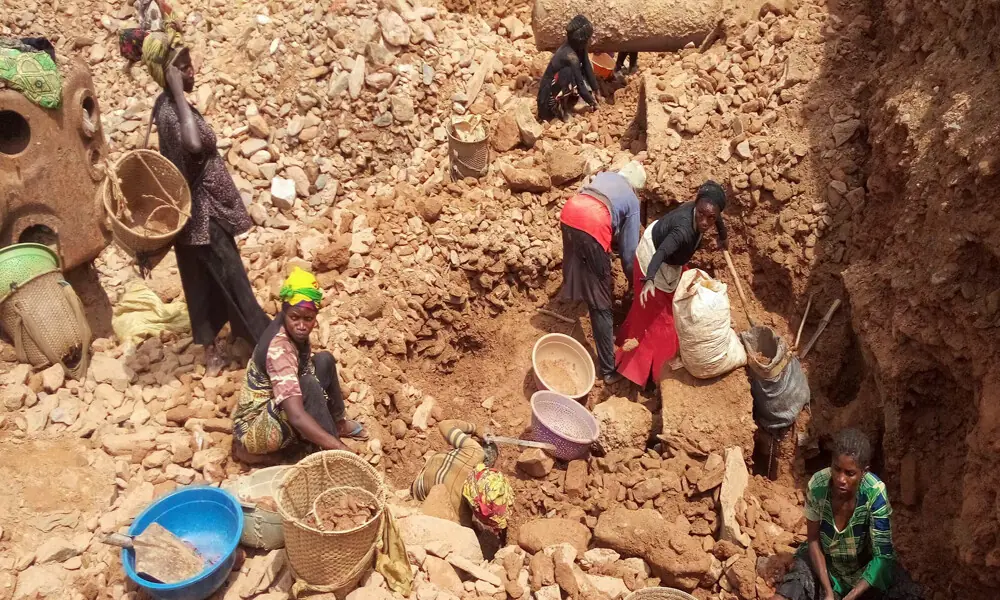
The death toll from a catastrophic gold mine collapse in western Central African Republic has risen sharply, with local sources now saying around 100 people were killed in the disaster near the border with Cameroon.
The new estimate represents a dramatic increase from earlier reports that at least 30 bodies had been recovered following Tuesday’s collapse.
Search operations were still underway on Wednesday at the Zamboye mining site, around 50 kilometres from the town of Baboua, as rescuers continued looking for people buried beneath earth and collapsed tunnels.
Several local sources cited by AFP said around 100 people had died and many others were injured.
Authorities cautioned that the figure remained provisional as rescuers continued working through the sprawling artisanal mining area.
“At this stage it’s difficult for us to establish a formal toll,” Baboua elected official Laurent Ngon Baba said.
The Baboua public prosecutor said the disaster was believed to have been caused by the collapse of several underground tunnels where miners were working and announced the opening of a judicial investigation.
Images circulating from the site showed part of the earth at the large open-pit mining area giving way and sweeping down towards miners below.
Hundreds of artisanal miners are reported to work at the site.
Survivors were transported to hospital in Baboua, while residents and fellow miners joined emergency crews in searching through the debris.
At least four of those killed were Cameroonian nationals, according to Cameroon Tribune, highlighting the cross-border nature of the mining community.
Cameroon’s East Region Governor Gregoire Mvongo said authorities were coordinating with their Central African counterparts in responding to the disaster.
The mine lies close to Cameroon’s eastern frontier, an area where informal gold mining attracts workers from communities on both sides of the border.
Cedric Mbango, a miner at the site, described the collapse as catastrophic, saying people had been completely buried when the ground gave way and that others remained trapped.
Earlier on Wednesday, officials had confirmed the recovery of at least 30 bodies.
Souleymane Bi, deputy mayor in Nana-Mambéré prefecture, said residents and rescuers had spent hours pulling bodies from the site while injured miners received treatment.
The rapidly changing casualty figures reflect the difficulty authorities face in determining how many people were underground or working across the mining area when the collapse occurred.
The Central African government said it was providing assistance to victims and their families as rescue operations continued.
Repeated disasters at artisanal mines
The tragedy has again drawn attention to the dangers of artisanal and informal mining in the Central African Republic, where thousands of people depend on small-scale gold extraction for their livelihoods.
Many sites operate with rudimentary equipment and limited safety protections, leaving miners particularly vulnerable to landslides and tunnel collapses.
Tuesday’s disaster follows several deadly incidents this year.
In June, dozens of people were killed when another mining site at Be-Mbari, also near the Cameroon border, collapsed.
Seven miners were killed in a landslide at Ngourroum in western Central African Republic in March, while around 20 people died in another mining accident in Gordi in the northeast in February.
The final toll from the Zamboye disaster remained uncertain Wednesday as search teams continued digging through the collapsed site.