
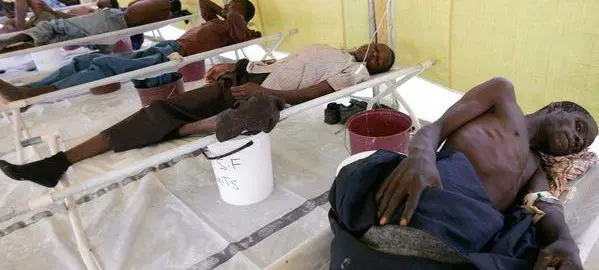
The Central African Republic has declared a cholera outbreak after authorities confirmed 197 infections and 24 deaths in areas near the capital, Bangui.
Health Minister Pierre Somse announced on June 26 that cholera cases had been identified in the health districts of Bimbo and Mbaiki, southwest of the capital.
The outbreak has cast a shadow over affected communities, prompting an urgent response from health officials seeking to prevent further spread.
Somse said containment measures were already in place in impacted areas, while additional interventions were being deployed in nearby towns.
Cholera is a waterborne disease transmitted through contaminated food or drinking water and can cause severe diarrhoea and dehydration.
Although largely controlled in wealthier nations, the disease continues to threaten vulnerable populations in regions with limited access to clean water.
Authorities are investigating the source of the outbreak, which is the fifth cholera outbreak recorded in the Central African Republic.
The country’s previous outbreak in 2016 infected more than 500 people and claimed 23 lives, highlighting the disease’s recurring danger.
“The government remains fully mobilised to contain this outbreak,” Somse said, urging residents to follow health guidance and preventive measures.
The outbreak comes as the Central African Republic also remains on alert over a deadly Ebola outbreak in neighbouring Democratic Republic of the Congo.
Health officials hope swift action will curb transmission and prevent the outbreak from deepening an already challenging public health situation.