
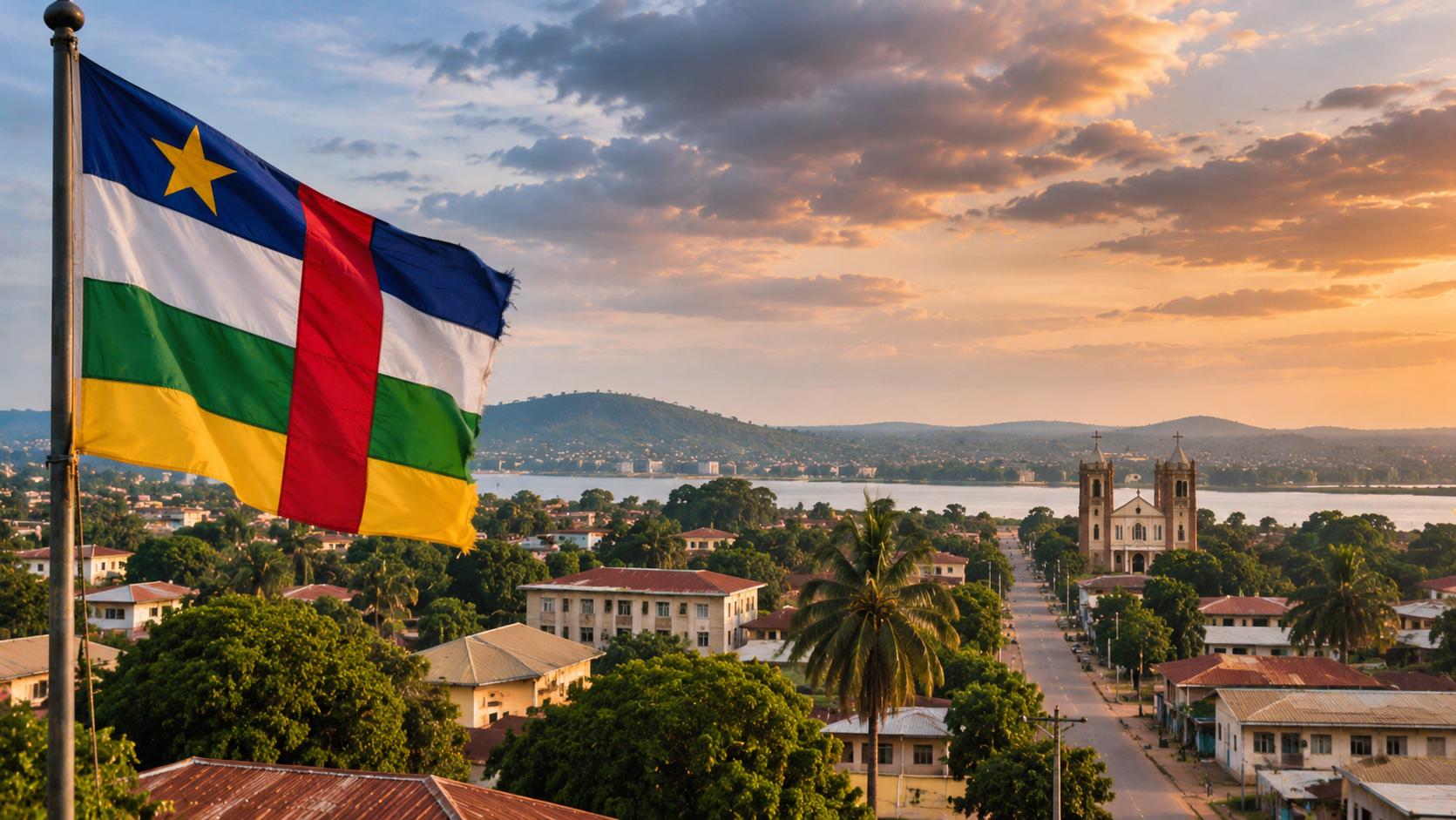
Hundreds of demonstrators marched through Bangui on Friday, November 13, protesting rising living costs and demanding lower fuel prices in the Central African Republic (CAR).
The demonstration was organised by the opposition Republican Bloc for the Defence of the Constitution (BRDC). Protesters also called for the release of five civil society leaders arrested in October.
According to Africanews correspondent Serge Léger Kokpakpa, demonstrators continued their march despite heavy rain, expressing frustration over economic hardship and unemployment.
The protest marked the opposition coalition’s first major public demonstration since a citywide shutdown the previous month.
Protesters demand lower fuel prices
Rising fuel prices were a central concern for demonstrators in Bangui.
Petrol currently costs more than 1,100 CFA francs per litre, according to Africanews. However, the BRDC is demanding a reduction to 850 CFA francs.
Opposition representatives argue that expensive fuel has increased financial pressure on households and businesses.
Samson Ngaïbino, a BRDC member, accused President Faustin-Archange Touadéra’s government of failing to address worsening living conditions.
He said many Central Africans could no longer afford basic necessities and called for immediate government action.
Meanwhile, BRDC spokesperson Martin Ziguélé highlighted broader economic difficulties.
He pointed to limited employment opportunities, struggling businesses and repeated fuel price increases as major sources of public frustration.
Opposition raises concerns over arrests
Beyond economic demands, demonstrators also protested the detention of five civil society leaders arrested on October 15.
The BRDC claims the arrests have contributed to a climate of fear among activists and opposition supporters.
Ziguélé accused authorities of intimidating people who speak out against government policies.
These allegations have not been independently verified, and the supplied report did not include a government response.
The march was authorised by authorities and closely monitored by security personnel and United Nations peacekeepers.
Despite the security presence, the demonstration proceeded as protesters called for political freedoms and economic reforms.
BRDC gives government deadline
The opposition coalition has urged the government to respond to its demands within two to three weeks.
Ziguélé warned that further demonstrations could follow if authorities fail to address the concerns.
He also said the coalition was monitoring public discussions, particularly among young people, about possible future action.
However, no specific follow-up protest date was announced in the report.
For the BRDC, Friday’s turnout represented an important demonstration of public dissatisfaction.
Economic pressure fuels political tensions
The protest highlights growing frustration over living costs in the Central African Republic.
High fuel prices, limited employment opportunities and economic difficulties have become central issues in the opposition’s criticism of the government.
At the same time, allegations concerning the treatment of civil society activists have added a political dimension to the demonstrations.
The government’s response to the BRDC’s demands could determine whether further protests take place in the coming weeks.
For now, the Bangui demonstration has brought renewed attention to the economic pressures facing households across the country.