
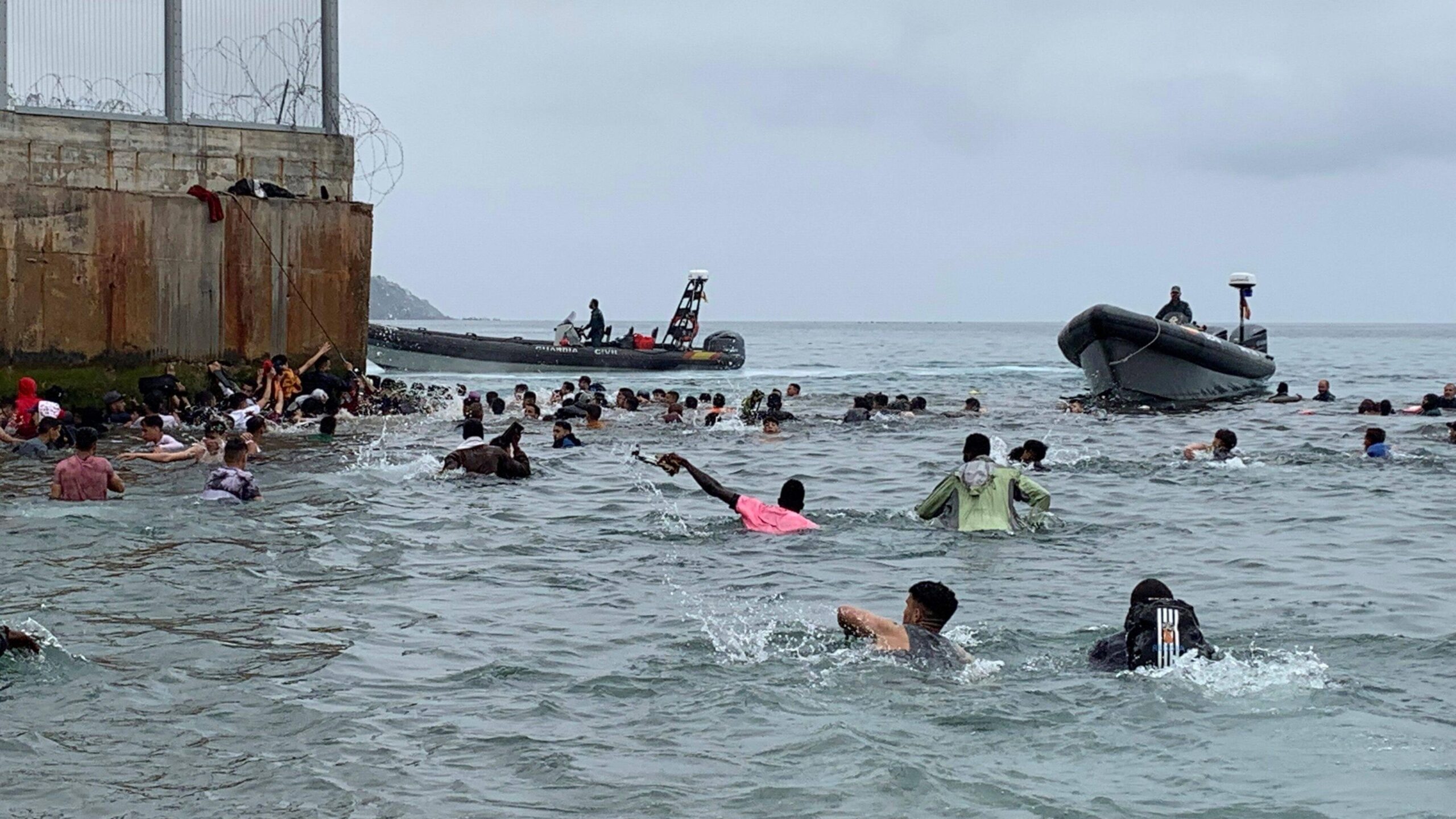
The leader of Spain’s North African enclave of Ceuta has warned that the territory is facing a humanitarian and security emergency after around 1,500 migrants reached the city by swimming from neighbouring Morocco in just one week.
Ceuta and Melilla, Spain’s two autonomous cities on the North African coast, form the European Union’s only land borders with Africa. Both enclaves have repeatedly experienced large-scale attempts by migrants seeking to enter European territory.
Ceuta’s regional president, Juan Jesús Vivas, said the latest influx had overwhelmed reception facilities, forcing hundreds of migrants to sleep outdoors.
“We are facing a situation of absolute humanitarian and social emergency,” Vivas told Spanish radio station Cadena SER on Thursday.
He said centres housing unaccompanied migrant children were operating at around 2,400% of their intended capacity.
In a separate interview with Onda Cero, Vivas described the influx as a national emergency and urged the Spanish government to establish a single command structure capable of delivering a “decisive, forceful, immediate and coordinated” response.
Spain’s Interior Minister Fernando Grande-Marlaska is expected to travel to Ceuta on Friday for talks with local officials and security commanders.
The Spanish government said several ministries were coordinating efforts to tighten border controls while expanding humanitarian assistance for those arriving in the enclave.
According to Vivas, around 300 migrants are currently reaching Ceuta each day. He warned that, unless the pace slows, the territory could face a crisis similar to that of May 2021, when approximately 10,000 people entered the enclave within several days.
Many of the latest arrivals reportedly attempted the dangerous sea crossing by swimming around border barriers separating Ceuta from Morocco.
Vivas said 60 bodies had been recovered from the surrounding waters in recent months, highlighting the growing human cost of the migration route.
He argued that stronger border controls were needed not only to manage arrivals but also to prevent further deaths at sea.
Spain’s Interior Ministry said Moroccan security forces were cooperating with Spanish authorities to reduce the number of departures from Moroccan territory.
Vivas also called for changes to Spain’s immigration legislation following a recent Supreme Court ruling affecting the treatment of migrants intercepted at sea.
Earlier in July, the court ruled that migrants stopped while attempting to reach Ceuta or Melilla by sea could not automatically be returned under the enclaves’ special border-rejection system.
The ruling has raised questions about how Spanish authorities can respond to future maritime crossings while complying with national and European asylum protections.