
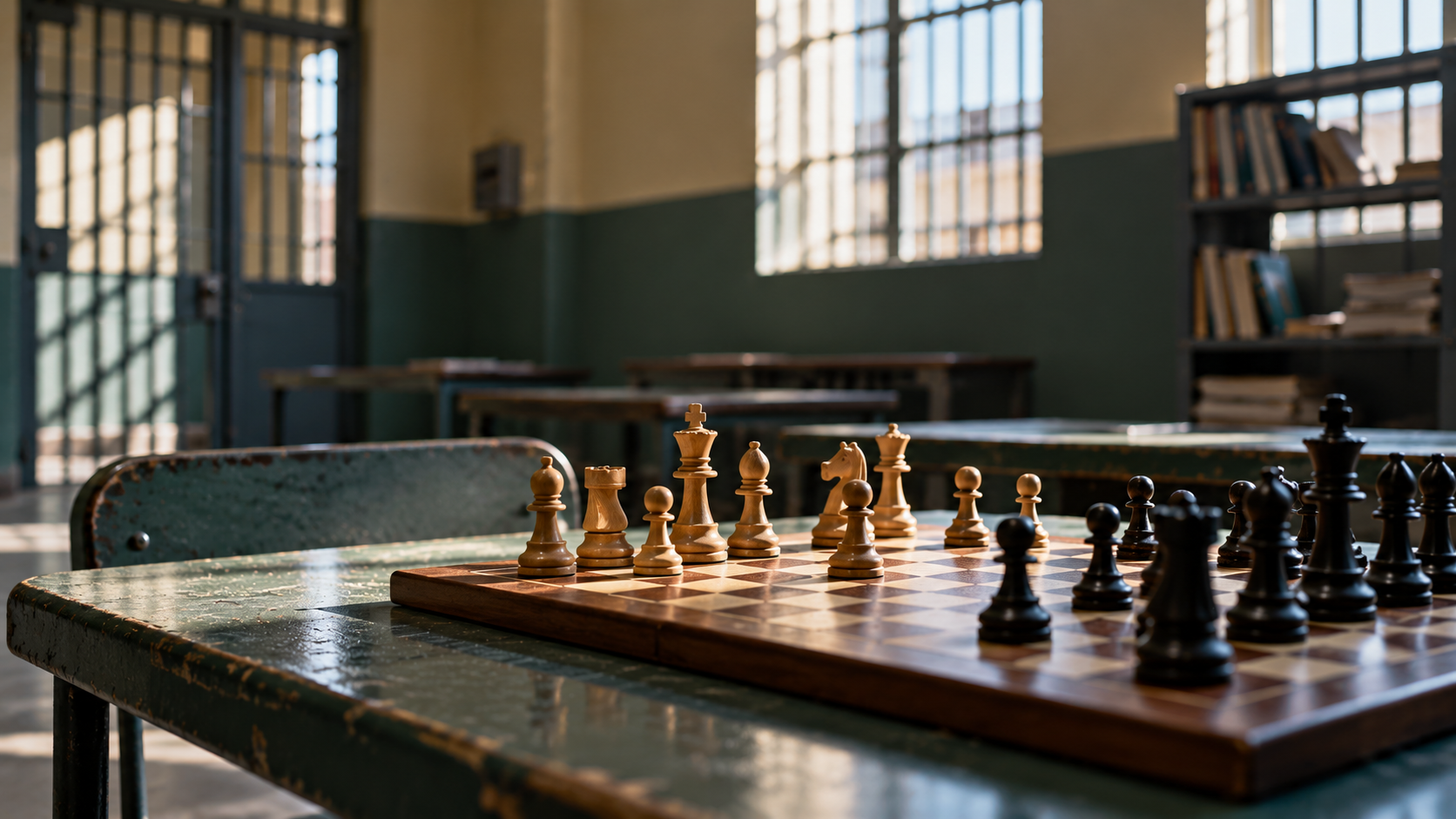
Chess is becoming increasingly popular in Kenyan prisons, where the game is being used to support rehabilitation and encourage better decision-making among inmates.
Prisoners say chess has helped them develop patience, control impulsive behaviour and think more carefully about the consequences of their actions.
Africanews reported that chess programmes have been operating in some Kenyan prisons for several years, with support from NGOs, the government and the International Chess Federation.
Prisoners learn patience through chess
Among those taking part is 28-year-old Brian Gatonye, who has served around 18 months of a three-year sentence for assault.
Gatonye said playing chess has changed how he approaches decisions.
“Chess has taught me a lot,” he said, adding that the game has encouraged him to remain calm and consider the consequences of his actions before making decisions.
He is among a growing number of prisoners in Kenya who have taken up the game.
Chess used to support rehabilitation
Prison officials also see chess as a practical rehabilitation tool.
Humphrey Young, superintendent of Maranjau Prison, said many inmates at the facility are serving sentences for offences including assault and disputes involving family members.
He said chess can help prisoners learn to manage anger and live more peacefully with others after leaving prison.
The game is therefore being incorporated into rehabilitation programmes rather than being treated only as recreation.
Programme aims to reduce repeat offending
The Gift of Chess, a nonprofit organisation that distributes chess sets, is among the groups supporting the initiative.
Programme director Phyllis Ngigi said chess can teach prisoners patience, better decision-making and anger management while keeping them engaged.
She said the programme aims to give inmates skills that could help them avoid returning to prison after their release.
Chess-based programmes have operated in some Kenyan prisons for several years. They have received backing from NGOs as well as government authorities and the International Chess Federation.
Supporters hope the game can continue to provide prisoners with a constructive activity while contributing to their rehabilitation and eventual return to society.