
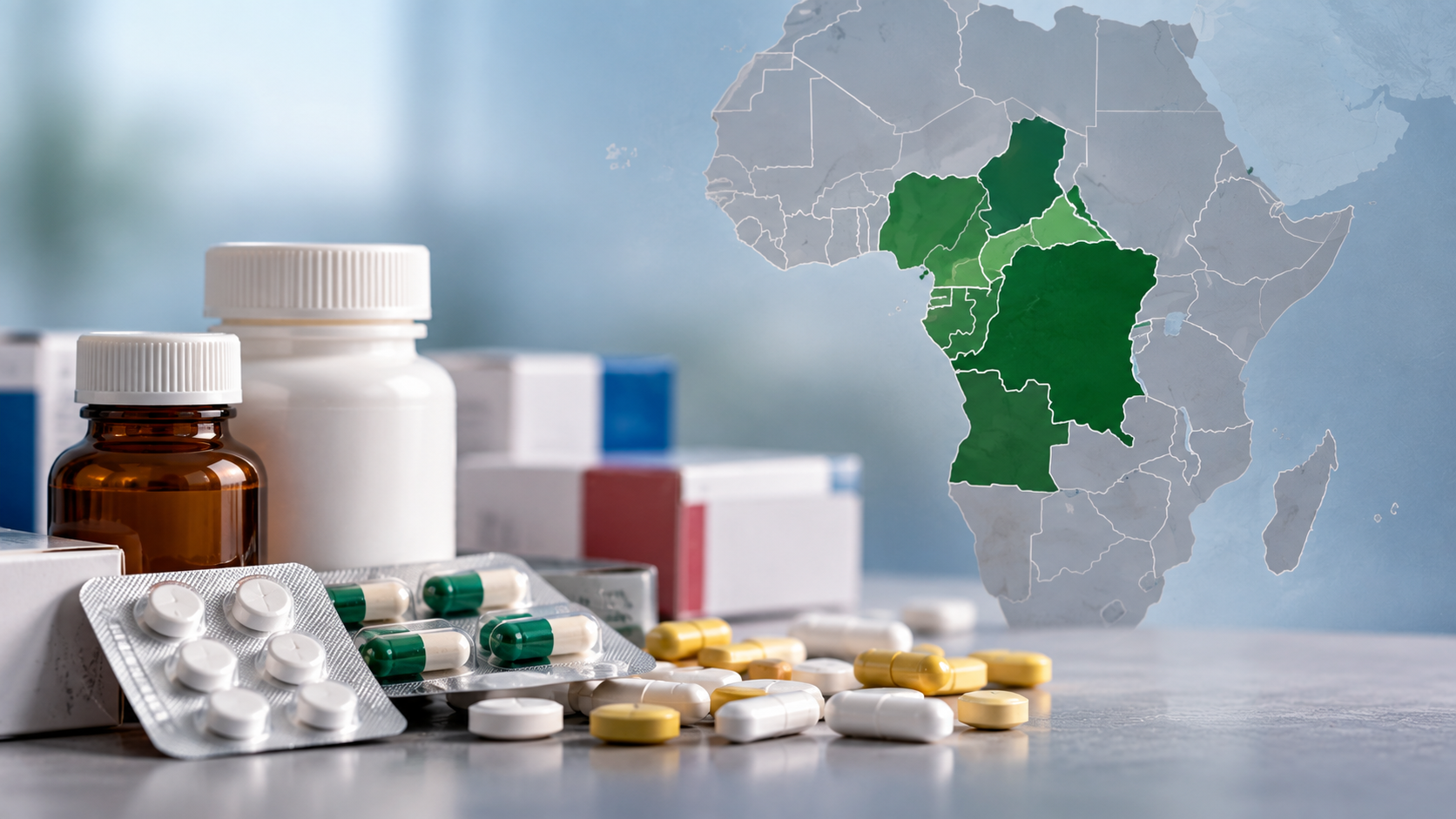
Counterfeit medicines pose growing threat across Central Africa
Counterfeit and trafficked medicines are becoming a major public health threat across Central Africa, according to a new United Nations-backed report.
At least 251 tonnes of medicines were seized across six Central African countries between 2020 and 2025.
The report was produced by the United Nations Office on Drugs and Crime (UNODC), the World Health Organization (WHO) and the Central African Economic and Monetary Community (CEMAC), Africanews reported.
It covers Cameroon, the Central African Republic, Chad, the Republic of Congo, Equatorial Guinea and Gabon.
Healthcare gaps fuel illicit medicine trade
The six CEMAC countries have high rates of infectious diseases, including malaria, tuberculosis and HIV.
However, safe medicines and treatment are not always available or affordable. The report said this gap helps fuel an illicit market for medical products.
Traffickers may divert prescription medicines from regulated supply chains and stocks intended for national health programmes.
Other products are counterfeit, below required quality standards or have not received official approval.
The medicines involved include antibiotics, antimalarial drugs, painkillers and anti-inflammatory medicines. Psychoactive substances such as tramadol and pregabalin are also trafficked.
Counterfeit medicines put patients at risk
UNODC warned that the trade poses a major threat to public health. Poor-quality or falsified medicines can result in treatment failure, poisoning and preventable deaths.
In some cases, illicit medicines can also enter official healthcare facilities, according to the report. This creates an additional risk because patients generally consider these facilities reliable sources of medicine.
The report cited a 2017 WHO estimate to illustrate the wider scale of the problem in sub-Saharan Africa.
WHO estimated that falsified or substandard antimalarial medicines could be associated with between 72,000 and 267,000 deaths each year.
It also estimated that poor-quality antibiotics used for childhood pneumonia could be linked to as many as 169,271 deaths annually.
These figures apply to sub-Saharan Africa broadly and are not estimates specifically for the six CEMAC countries.
Ports and trade routes used for trafficking
Most trafficked medicines enter Central Africa through sea and river ports, according to UNODC.
Some are also transported by air freight or carried in passenger luggage. The products are then distributed inland along major trade routes.
UNODC said the illegal trade also supports organised crime and weakens public institutions.
In the Central African Republic, the report said armed groups generate income by looting health facilities and imposing payments on shipments moving through areas under their control.
Gabonese customs officials also seized 17,000 tramadol tablets in late September. Authorities attributed the shipment to cross-border traffickers from neighbouring Cameroon.
The report highlights how limited access to affordable, regulated medicines can leave communities vulnerable to dangerous products while creating opportunities for criminal networks.