
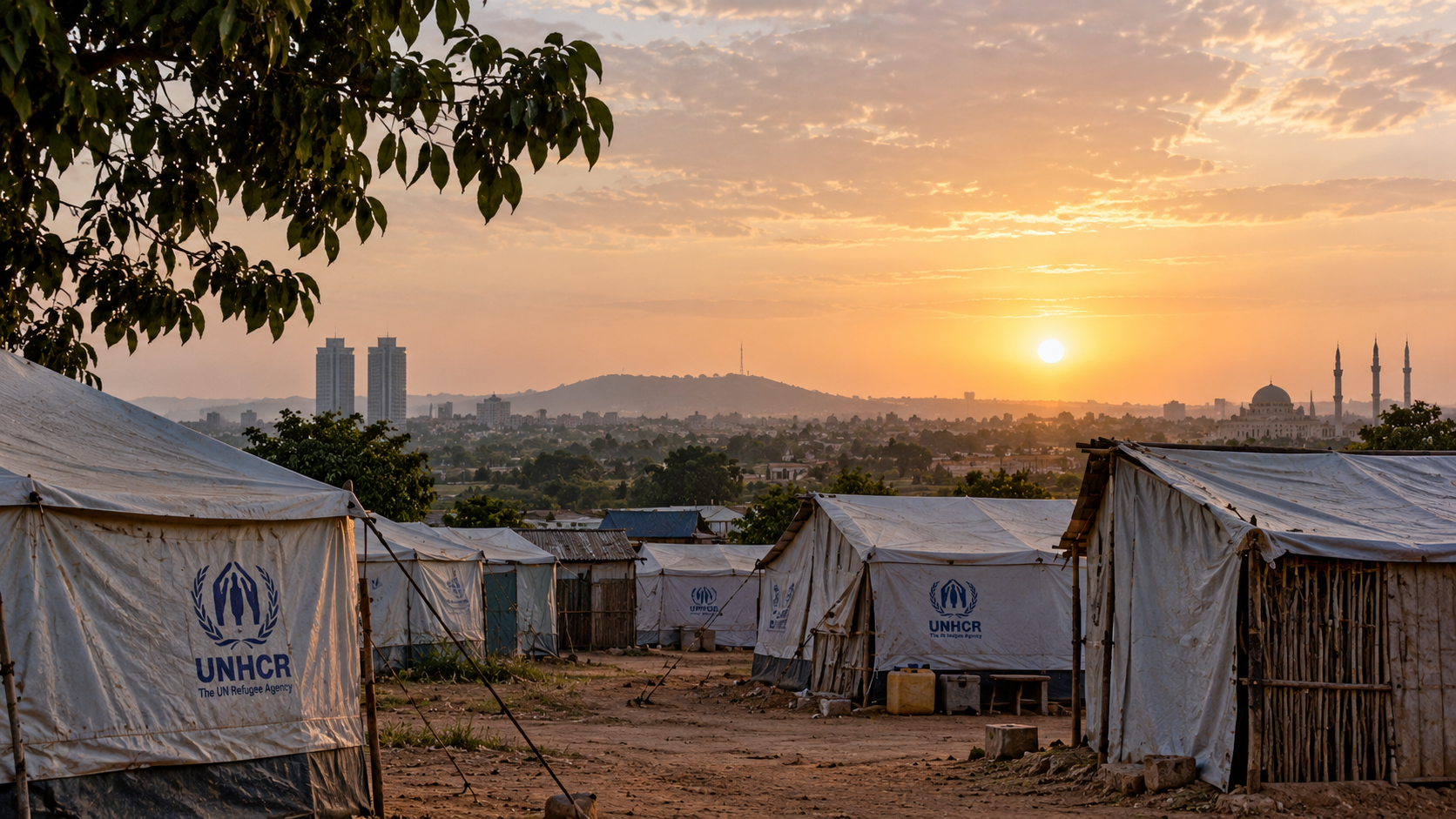
Nigerians displaced by years of conflict are raising concerns about security and the cost of living as the country moves towards its next presidential election.
Thousands of internally displaced people live in settlements around the capital, Abuja. Many fled violence in other parts of Nigeria and have spent years away from their original homes.
Some residents told AFP they plan to use their votes to push for political change, while others continue to support President Bola Tinubu.
Displaced Nigerians face rising living costs
Around 3,800 internally displaced people live in one of the settlements visited by AFP.
Across Nigeria, about 3.7 million people are internally displaced, according to UN figures cited in the report. That figure has increased from around 3.1 million in 2022.
Economic pressure is another major concern.
Tinubu removed Nigeria’s fuel subsidy in 2023. His government has also introduced exchange-rate and tax reforms.
Supporters of the reforms argue that they are necessary for the economy. However, critics say many Nigerians continue to struggle with higher everyday costs.
Security remains a concern
Security is also expected to remain an important issue.
Nigeria continues to face violence involving several armed groups, as well as kidnappings and other forms of insecurity.
Lagos-based consultancy SBM Intelligence estimated that armed groups received nearly $6 million in kidnapping ransoms between July 2025 and June 2026.
Some displaced residents interviewed by AFP said continued violence had affected how they planned to vote.
However, political views within displaced communities are not uniform. Some residents continue to support Tinubu and his All Progressives Congress, while others said they intend to support another candidate.
Nigeria prepares for presidential election
Tinubu is seeking another term, while opposition figures are positioning themselves ahead of the election.
The economy and security are expected to feature prominently in political debate.
For displaced Nigerians, however, the concerns are immediate. Residents interviewed by AFP spoke about insecurity, living costs and conditions in displacement settlements.