
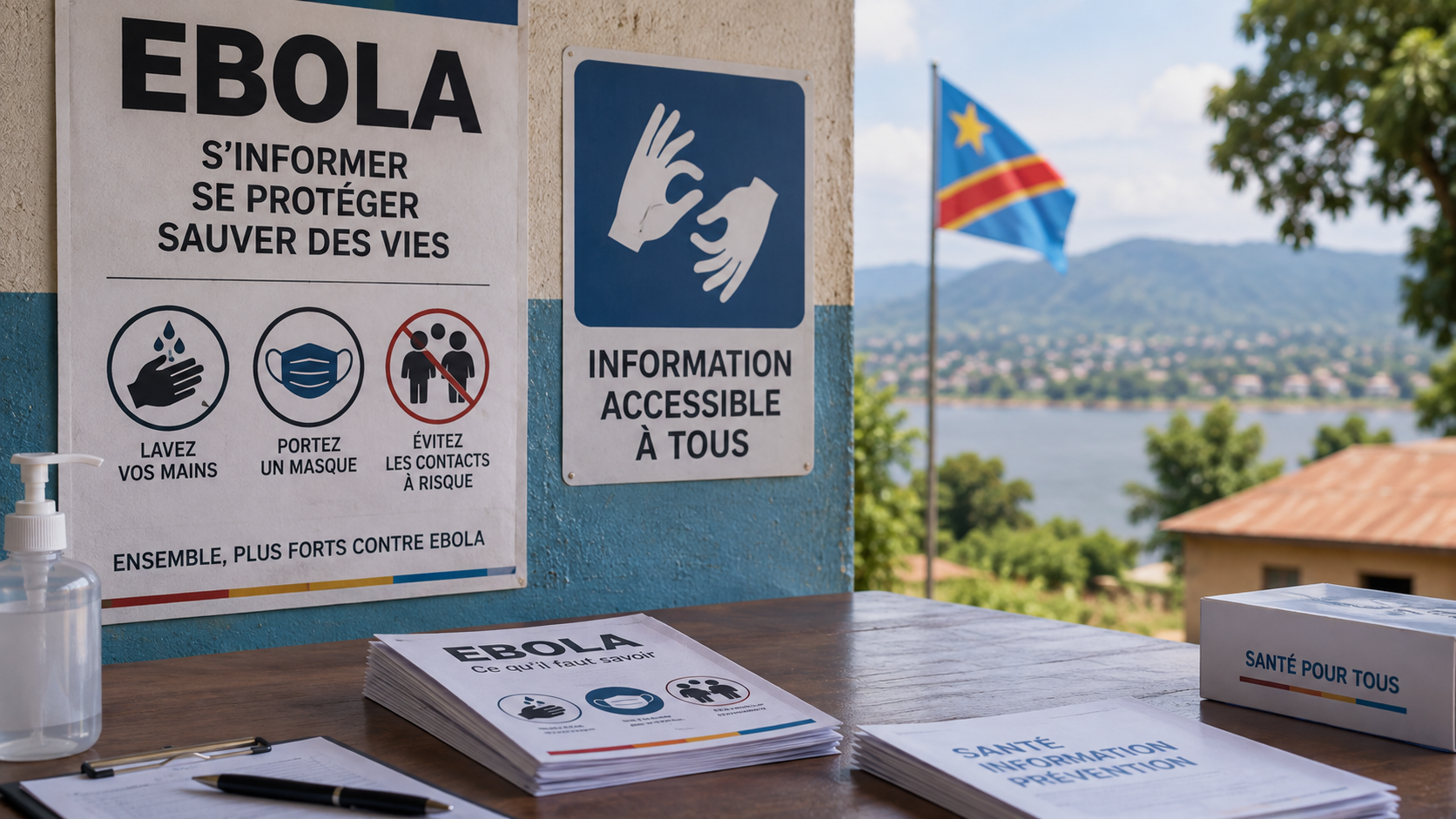
Health teams in the Democratic Republic of Congo are working to make Ebola information more accessible to deaf people as the country battles a major outbreak.
Ebola response teams held an awareness meeting for deaf residents in Kisangani.
Sign-language interpreters helped explain the symptoms of Ebola and ways to reduce the risk of infection.
Health officials said people with disabilities can face additional challenges during disease outbreaks.
Making Ebola information accessible
Dr Gloris Esaa, a member of DR Congo’s Ebola response team, said communication barriers can make it harder for deaf patients to receive medical care.
Doctors may struggle to understand a patient’s symptoms without suitable communication support.
This can be particularly dangerous when dealing with a serious infectious disease such as Ebola.
During the meeting, Esaa explained the symptoms and risks of the disease.
Gilbert Kazingufu, from the national network of sign-language interpreters, translated the information for participants.
Kazingufu said few organisations specifically support deaf people during Ebola outbreaks.
Deaf residents learn Ebola symptoms
The meeting also focused on recognising possible symptoms.
These can include fever, vomiting and bleeding.
Participants were also given information about hygiene and reducing physical contact when necessary.
Bwana Muzuri, a carpenter who attended the session, said he learned about symptoms and ways to protect himself.
The campaign aims to ensure that important public-health information reaches people who may otherwise face communication barriers.
DR Congo battles Ebola outbreak
DR Congo is currently facing a serious Ebola outbreak.
According to government figures cited in the report, the country had recorded 7,541 confirmed cases as of Saturday.
The figures included 3,639 deaths and 1,823 recoveries.
The outbreak has been concentrated in Ituri province.
The World Health Organization has warned that the outbreak remains uncontrolled.
Health teams are continuing prevention, treatment and awareness efforts as authorities work to contain the spread of the disease.
The Kisangani campaign highlights the importance of making emergency health information accessible to everyone, including people with hearing disabilities.