
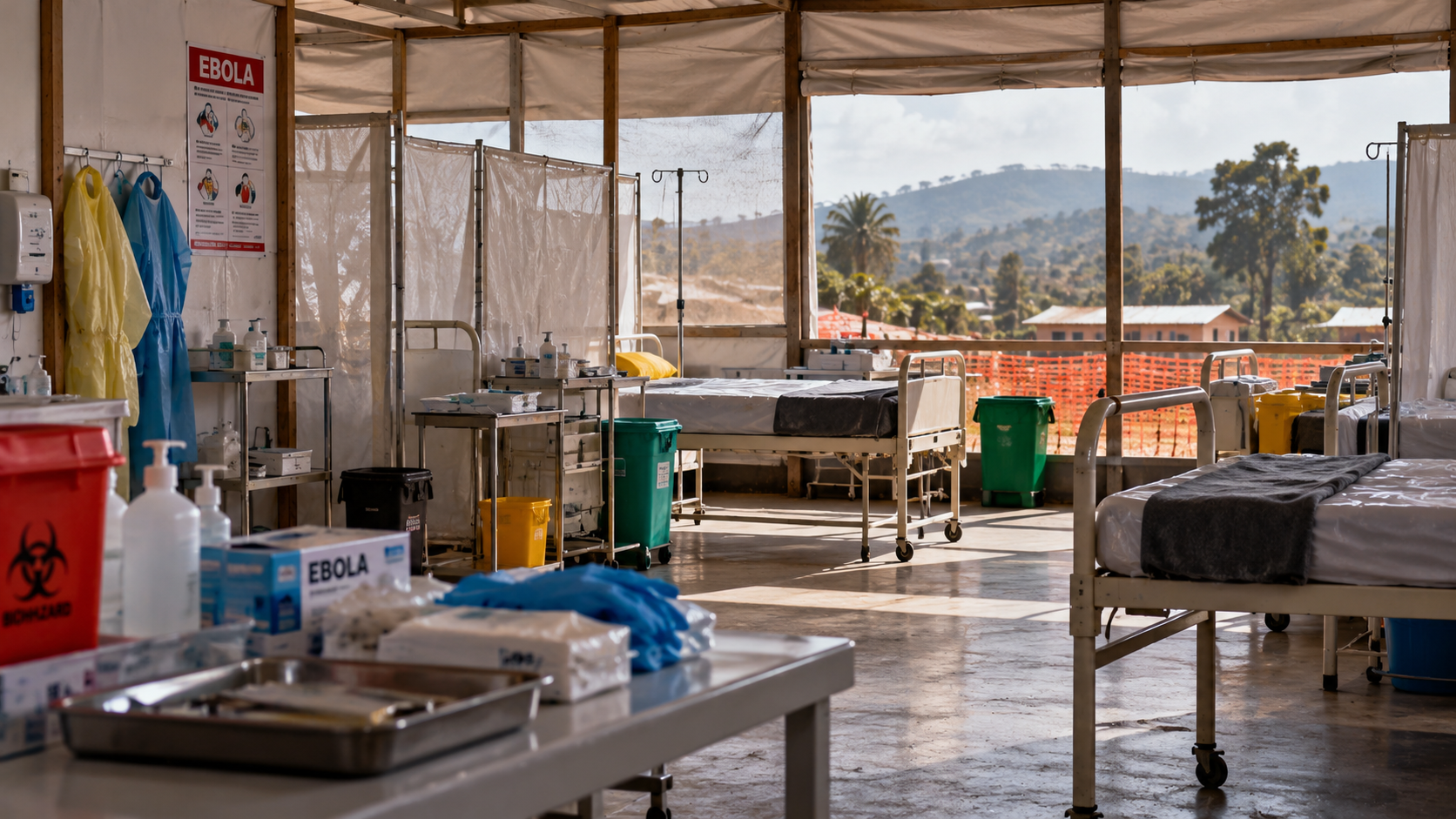
The DR Congo Ebola outbreak is taking a growing psychological toll on patients, survivors and families in the country’s conflict-affected east, where fear, grief and social stigma are adding to an already difficult humanitarian situation.
Health workers warn that the emotional consequences of Ebola extend beyond those infected with the virus, affecting relatives, medical personnel and entire communities.
According to the Associated Press, mental health professionals are providing support to people struggling with bereavement and isolation as the outbreak continues.
Meanwhile, ongoing armed conflict and displacement have made vulnerable communities even more exposed to psychological distress.
Ebola survivors and families face stigma
At a mental health treatment centre in Bunia, eastern Democratic Republic of Congo, one woman is receiving psychological support after losing two close relatives and three extended family members to Ebola.
She described how fear of infection had caused neighbours to distance themselves from her family, leaving them feeling isolated.
Although her family sought medical care, she said the stigma surrounding the disease continued to affect their daily lives.
Health workers say such experiences are common among Ebola patients, survivors and their relatives.
The fear of transmission can lead to social exclusion, even as affected families struggle to cope with illness and bereavement.
Health workers warn of growing psychological impact
Medical professionals say the DR Congo Ebola outbreak is affecting the mental wellbeing of both communities and healthcare workers.
Anicet Katembo Vyaluva, a healthcare worker interviewed in the AP report, explained that stigma can affect patients undergoing treatment as well as those who survive the disease.
People receiving care may feel isolated from their communities, while survivors can face difficulties reintegrating into everyday life.
Healthcare workers can also experience stigma because of their involvement in treating Ebola patients.
These challenges can deepen emotional distress and complicate recovery after the immediate medical emergency has passed.
Armed conflict makes eastern Congo more vulnerable
The Ebola outbreak is unfolding in a region already affected by years of armed conflict and displacement.
In eastern DR Congo, insecurity has disrupted communities and placed additional pressure on families and healthcare services.
Mirella Riccardi, who works in mental health and psychosocial support with Médecins Sans Frontières (MSF), said the combination of conflict and disease has made an already vulnerable population more fragile.
The psychological effects of violence, displacement and uncertainty can intensify the distress experienced by people affected by Ebola.
For families who have lost relatives or experienced repeated displacement, the outbreak represents another serious challenge.
Mental health support essential alongside Ebola treatment
Aid workers are calling for psychological care to remain an important part of the response to the DR Congo Ebola outbreak.
They say medical treatment alone cannot address the grief, fear and social isolation experienced by affected communities.
Mental health services can help patients and survivors cope with traumatic experiences while supporting families dealing with loss.
Community engagement is also important in addressing stigma and helping people affected by Ebola reconnect with their neighbours.
As eastern DR Congo continues to face disease outbreaks and armed conflict, healthcare workers warn that protecting mental wellbeing is essential to supporting long-term recovery.