
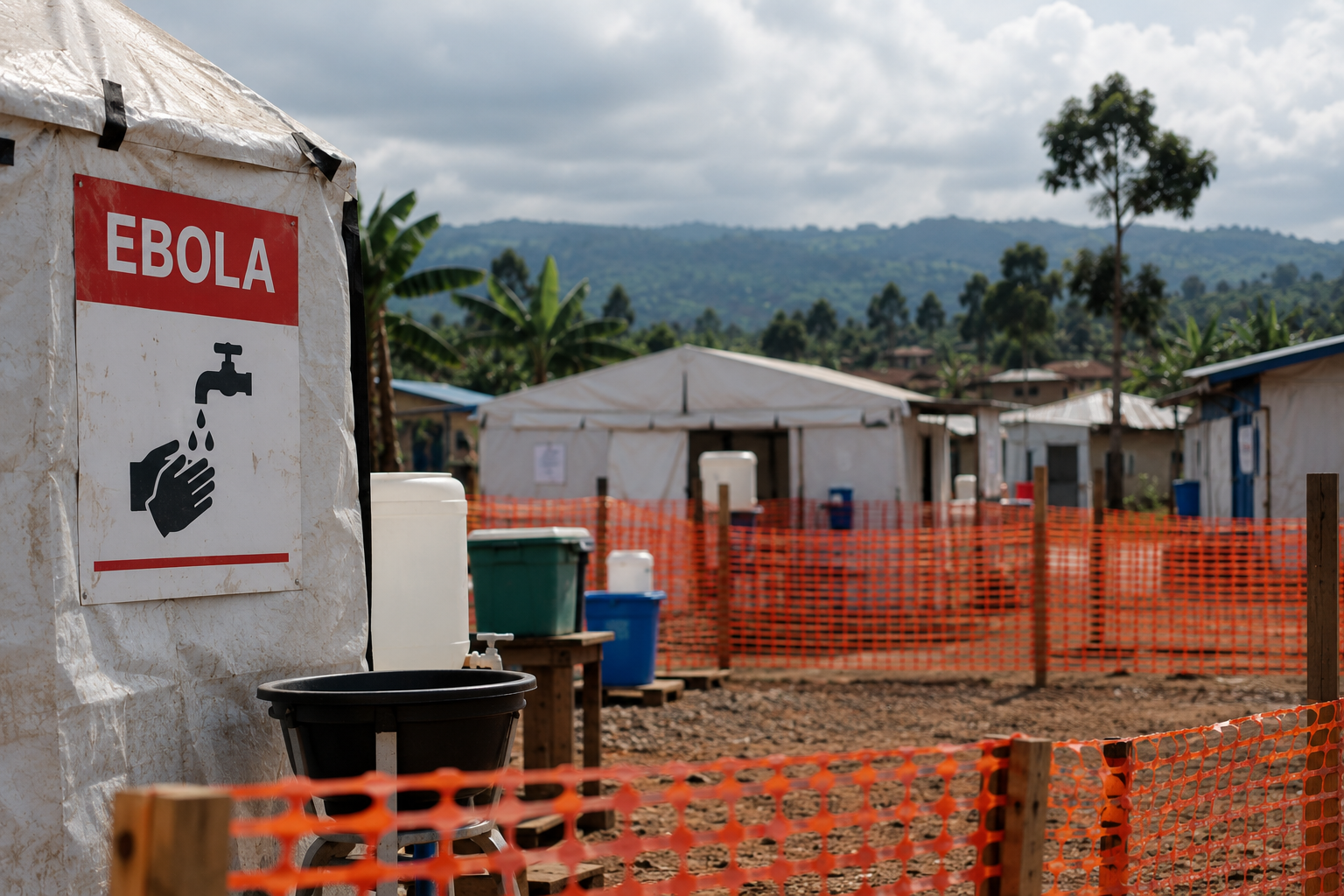
A nurse has been killed and another health worker seriously injured in an attack in the Democratic Republic of Congo (DRC), raising fresh concerns about the safety of medical teams responding to the country’s deadly Ebola outbreak.
The attack took place on Saturday, October 24, in Bafwasende, a town in the eastern Tshopo province.
The two health workers were responding to an Ebola alert when they were attacked, according to the World Health Organization (WHO).
The incident comes as the DRC struggles to contain an outbreak that has killed more than 4,700 people since May.
According to Al Jazeera, which cited the WHO, AP and Reuters, repeated attacks and growing distrust among communities are making efforts to control the virus increasingly difficult.
WHO condemns attack on Ebola health workers
WHO Director-General Tedros Adhanom Ghebreyesus confirmed the attack on Sunday.
He condemned the killing and called for greater protection for medical personnel working in affected communities.
Tedros stressed that healthcare workers must be able to carry out their duties safely.
The WHO’s regional director for Africa, Dr Mohamed Yakub Janabi, also condemned the violence.
He warned that fear and misinformation must not lead to attacks against people responding to the outbreak.
Local authorities had not publicly identified the attackers or commented on possible motives at the time of reporting.
The incident is the latest in a series of attacks targeting health workers and Ebola response teams in the DRC.
DR Congo Ebola outbreak kills more than 4,700
The DRC is experiencing its deadliest Ebola outbreak on record.
According to figures from the country’s Ministry of Health, more than 9,800 cases have been recorded since the outbreak began in May 2026.
More than 4,700 people have died.
The outbreak has placed considerable pressure on healthcare services, particularly in remote areas where medical resources are already limited.
Health officials are struggling with shortages of supplies and trained personnel.
Meanwhile, the virus continues to spread to new communities.
The current outbreak involves the Bundibugyo strain of Ebola.
There is currently no approved vaccine or specific treatment for this strain, although clinical research is underway.
Misinformation complicates Ebola response
Public distrust has emerged as a major obstacle to controlling the outbreak.
Some residents have questioned the government’s response, while others have dismissed the disease as a hoax.
Health workers say these beliefs have made it harder to identify infections, monitor contacts and provide medical assistance.
In some areas, response teams have reportedly faced threats or been prevented from carrying out their work.
The latest attack follows several other incidents involving people associated with the Ebola response.
In September, a local politician in North Kivu was beaten after publicly supporting government measures against the virus.
He later died from his injuries.
Earlier in the outbreak, angry residents also set fire to tents at two health centres.
These incidents have increased concerns about the safety of medical workers operating in affected areas.
Health authorities warn that violence against responders can delay efforts to contain the disease.
Ebola spreads beyond DR Congo
The outbreak has also raised concerns across Africa as infections are reported outside the DRC.
According to Al Jazeera, the virus has now been detected in four countries across eastern, central and western Africa.
Uganda, Kenya and Nigeria have all reported Ebola cases during the current outbreak period.
Uganda has introduced a mandatory 21-day quarantine for citizens returning from the DRC.
The measure was announced on Sunday as authorities increased screening at airports and border crossings.
Uganda says it currently has no active Ebola cases.
However, health officials remain on alert following infections detected in people who had recently travelled through the country.
Kenya has also reported Ebola-related deaths, while Nigeria confirmed its first case in October.
The developments have increased pressure on regional authorities to strengthen disease surveillance.
How does Ebola spread?
Ebola is a serious infectious disease transmitted through direct contact with the blood or other bodily fluids of infected people.
The virus can also spread through contact with contaminated materials.
Symptoms may include fever, weakness, vomiting and diarrhoea.
In severe cases, patients can develop bleeding complications and organ failure.
According to the WHO, symptoms can appear up to 21 days after exposure.
This incubation period explains why health authorities monitor potentially exposed individuals for three weeks.
Early detection, isolation and supportive medical care remain essential to reducing deaths and preventing transmission.
WHO calls for stronger regional cooperation
The WHO has urged countries to strengthen monitoring and cooperation as the outbreak spreads.
In an October 23 update, the organisation called for improved cross-border surveillance and coordination.
However, it advised against imposing general restrictions on travel or trade with affected countries.
The organisation continues to emphasise the importance of protecting healthcare workers and maintaining public trust.
For the DRC, the latest attack represents another setback in efforts to control the outbreak.
Medical teams face the challenge of treating patients while working in communities affected by fear, misinformation and violence.
As the death toll continues to rise, protecting frontline workers remains essential to preventing further infections.