
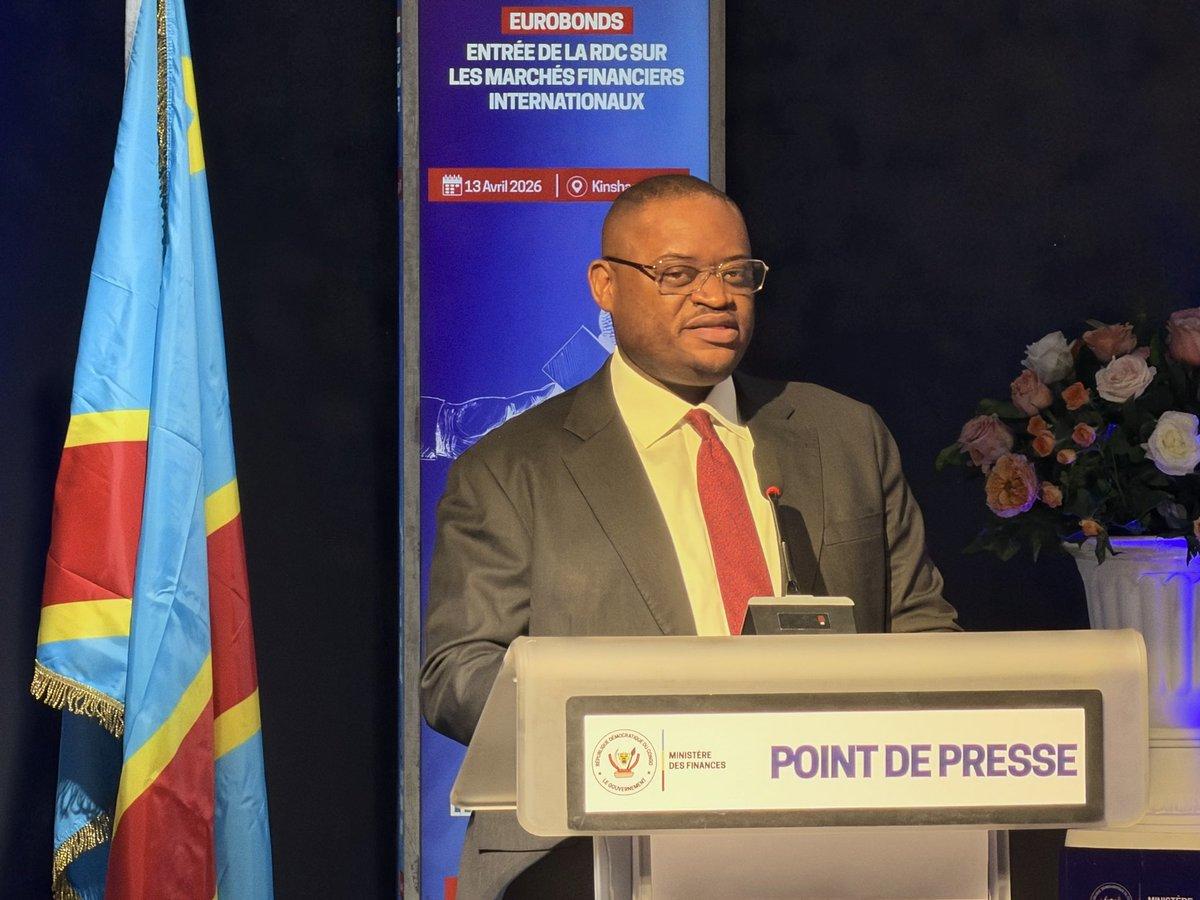
A political controversy has erupted in the Democratic Republic of Congo over hundreds of millions of dollars raised through international debt markets that remain unused months after the government borrowed the funds.
The Kinshasa government is facing criticism over its $1.25 billion Eurobond issuance, with opponents questioning why such a large amount was raised when a significant portion has yet to be spent on infrastructure and development projects.
According to Radio France Internationale, four months after the borrowing, hundreds of millions of dollars remain deposited in banks while the government continues to pay interest on the debt.
The situation has prompted lawmakers to question whether the government accurately assessed its financing needs before entering international markets and whether it unnecessarily increased the country’s debt burden.
One lawmaker from President Félix Tshisekedi’s political camp questioned whether the entire amount needed to be raised at once when some of the money was not expected to be used immediately.
The Finance Ministry has rejected that criticism, arguing that the country’s inaugural Eurobond issuance serves a broader strategic purpose beyond simply financing individual projects.
Officials say entering international capital markets is intended to strengthen the country’s financial credibility, attract investors and establish a benchmark for the future cost of Congolese sovereign borrowing.
The ministry has described the operation as an example of major financial engineering and greater transparency, saying the bond issuance should be viewed as a strategic and sovereign move.
However, the figures have remained a source of political debate.
Of the $1.25 billion raised in April, around $650 million was allocated for spending this year. So far, only about $138 million has reportedly been disbursed for projects.
That leaves roughly $600 million that is not expected to be immediately used, raising concerns about the interest costs associated with holding borrowed funds.
MP Flory Mapamboli, a member of the presidential camp and the same political grouping as Finance Minister Doudou Fwamba, said the unused money meant the state was paying interest without an immediate financing requirement.
Government officials counter that the unspent funds have been deposited with commercial banks, where they generate income that partly offsets the cost of holding the money until it is needed for projects planned for next year.
They also argue that raising the entire amount at once protects the country against the possibility of higher global interest rates or more difficult access to international financial markets in the future.
The funds are intended to finance major infrastructure projects, including National Road No. 4, airport developments, sections of Kinshasa’s ring road and energy projects.
Eurobonds are debt securities issued by governments or companies in a currency different from that of the issuing country. Despite the name, they are not limited to Europe or to the euro and are frequently denominated in U.S. dollars.