
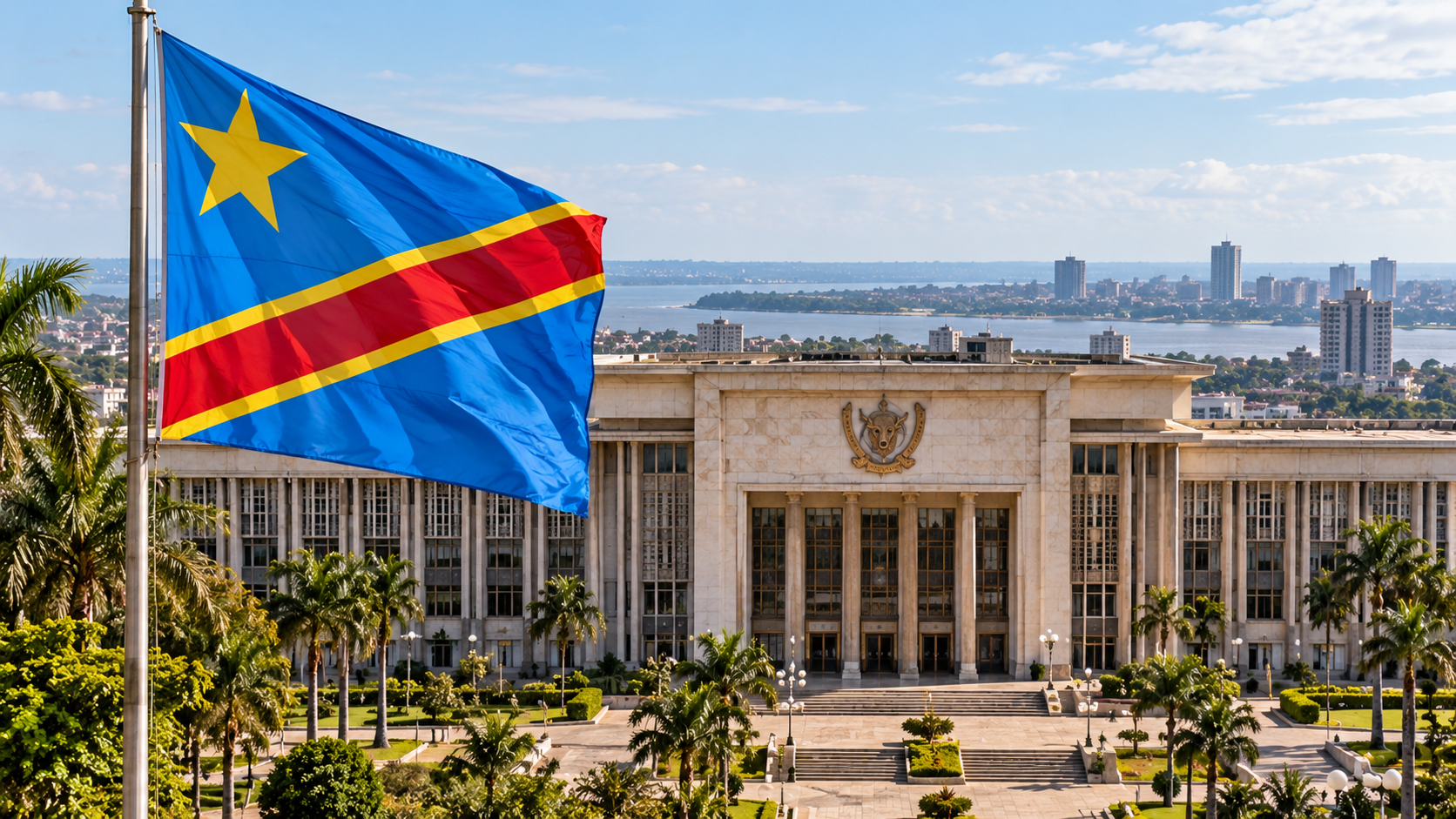
The Democratic Republic of Congo has banned the activities of 13 political parties, including the party of former President Joseph Kabila.
The government says the decision is linked to national security. However, opposition figures argue that it threatens political freedoms.
According to Africanews, Interior Minister Jacquemain Shabani announced the restrictions on Thursday, October 15.
The decision has increased political tensions as the country continues to face conflict in its eastern regions.
DR Congo targets 13 political parties
The ban includes Kabila’s People’s Party for Reconstruction and Democracy (PPRD).
It also affects the Leadership and Governance for Development (LGD), led by former Prime Minister Matata Ponyo.
Other affected parties include Seth Kikuni’s PISTE-E and Claudel Lubaya’s Union for African Democracy (UDA).
Provincial governors have been instructed to enforce the restrictions.
However, the government has not publicly detailed how long the ban will remain in place.
The announcement also does not formally dissolve the political parties.
Therefore, the restrictions concern their activities rather than their legal existence.
Government cites national security concerns
The decision comes amid growing tensions between the government and supporters of Joseph Kabila.
Kabila recently announced the creation of the National Refoundation Front (FRN) in Goma, eastern DR Congo.
Africanews describes the FRN as a political-military movement.
The government has presented its restrictions as a security measure.
Meanwhile, the ruling Union for Democracy and Social Progress (UDPS) has welcomed the decision.
Jean-Baptiste Katsongo, a UDPS official in Butembo, said the Interior Ministry has a duty to protect citizens.
He argued that the ministry must take necessary measures to maintain security.
However, the government has not provided detailed public evidence explaining the grounds for restricting each party.
Opposition condemns political restrictions
Opposition figures have criticised the decision.
They argue that the restrictions could reduce political participation and limit dissent.
Bruno Mwitohero, an LGD official, accused the authorities of weakening democratic institutions.
He also expressed opposition to possible constitutional changes.
In addition, Mwitohero alleged that some lawmakers had been bribed.
However, Africanews did not provide independent evidence supporting that allegation.
His comments reflect wider opposition concerns about political freedoms and government accountability.
Analysts question legality of the ban
The restrictions have also raised legal questions.
Political analyst Guel Mamlaka warned that ordinary party members could face consequences for actions attributed to their leaders.
He argued that the decision could create frustration among supporters who were not involved in any alleged wrongdoing.
Moreover, he cautioned that the measure could deepen political tensions.
The Interior Ministry’s announcement did not clearly explain the legal grounds for each restriction.
It also did not specify the available appeal procedures.
As a result, questions remain about how the decision will be implemented.
Kabila’s political allies face growing divisions
The announcement has also exposed disagreements among figures linked to Kabila.
According to Africanews, several political figures have distanced themselves from the former ruling party.
These developments follow the creation of the FRN and the restrictions on PPRD activities.
However, the full political impact remains unclear.
The divisions could affect the party’s future influence and its ability to organise political activities.
DR Congo faces wider political uncertainty
The dispute comes as DR Congo continues to face serious security challenges in its eastern regions.
The government argues that protecting national security is a priority.
However, opposition figures insist that political freedoms must also be respected.
For now, the restrictions remain a source of disagreement.
Their long-term impact will depend on how authorities enforce the ban and whether the affected parties can challenge it.
The developments highlight the continuing tension between security measures and democratic participation in DR Congo.