
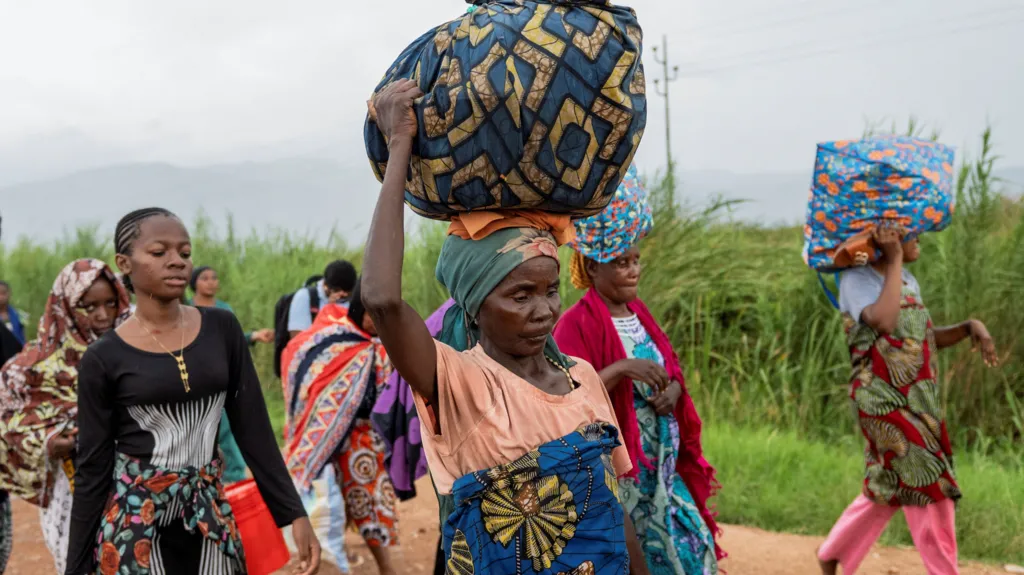
Tens of thousands of people who fled renewed violence in eastern DRC are facing increasingly dire conditions in overcrowded camps in neighbouring Burundi, according to aid agencies working on the ground.
Nearly 90,000 refugees have crossed the border in recent weeks following the escalation of fighting in South Kivu, where clashes involving M23 rebels forced hundreds of thousands from their homes. The armed group briefly captured the city of Uvira near the Burundi border, before announcing a withdrawal, a claim disputed by Congolese authorities.
Medical organisations providing emergency assistance warn that shortages of food, clean water, and shelter are putting lives at risk, particularly among women and children. Aid workers say some families have gone days without food after arriving exhausted and traumatised.
Medical teams report treating around 200 people each day since the influx began, with many patients suffering from dehydration, malnutrition, and stress related illnesses. Women have reportedly given birth while fleeing violence, with some delivering babies in makeshift clinics shortly after arrival.
Humanitarian groups have also raised alarm over the growing risk of disease outbreaks, including cholera and measles, as well as a potential surge in malaria cases due to overcrowding and poor sanitation.
The UN’s food agency says it is scaling up life saving assistance to more than 210,000 of the most vulnerable people displaced by the fighting. Since early December, an estimated half a million people have been uprooted in South Kivu alone.
Emergency food support is currently being provided to more than 70,000 new arrivals in Burundi through transit centres, but agencies warn that services across the province are close to collapse. Health facilities have been looted, medicines are scarce, and schools remain closed, compounding the humanitarian crisis.
Aid organisations are urging donors to provide urgent funding to maintain food assistance over the coming months, warning that any interruption could have catastrophic consequences for displaced families.
The capture of Uvira marked a further expansion of M23 territorial control in eastern DRC, following earlier advances into major cities including Goma and Bukavu. While the group has said it withdrew under US pressure, the situation on the ground remains unclear.
Efforts to stabilise eastern DRC continue amid competing diplomatic tracks. A US backed agreement aimed at easing tensions between DRC and Rwanda has sought to curb the violence, amid accusations that Rwanda supports the M23, claims Kigali denies. The rebels themselves were not party to that deal but have been engaged in parallel talks led by Qatar.