
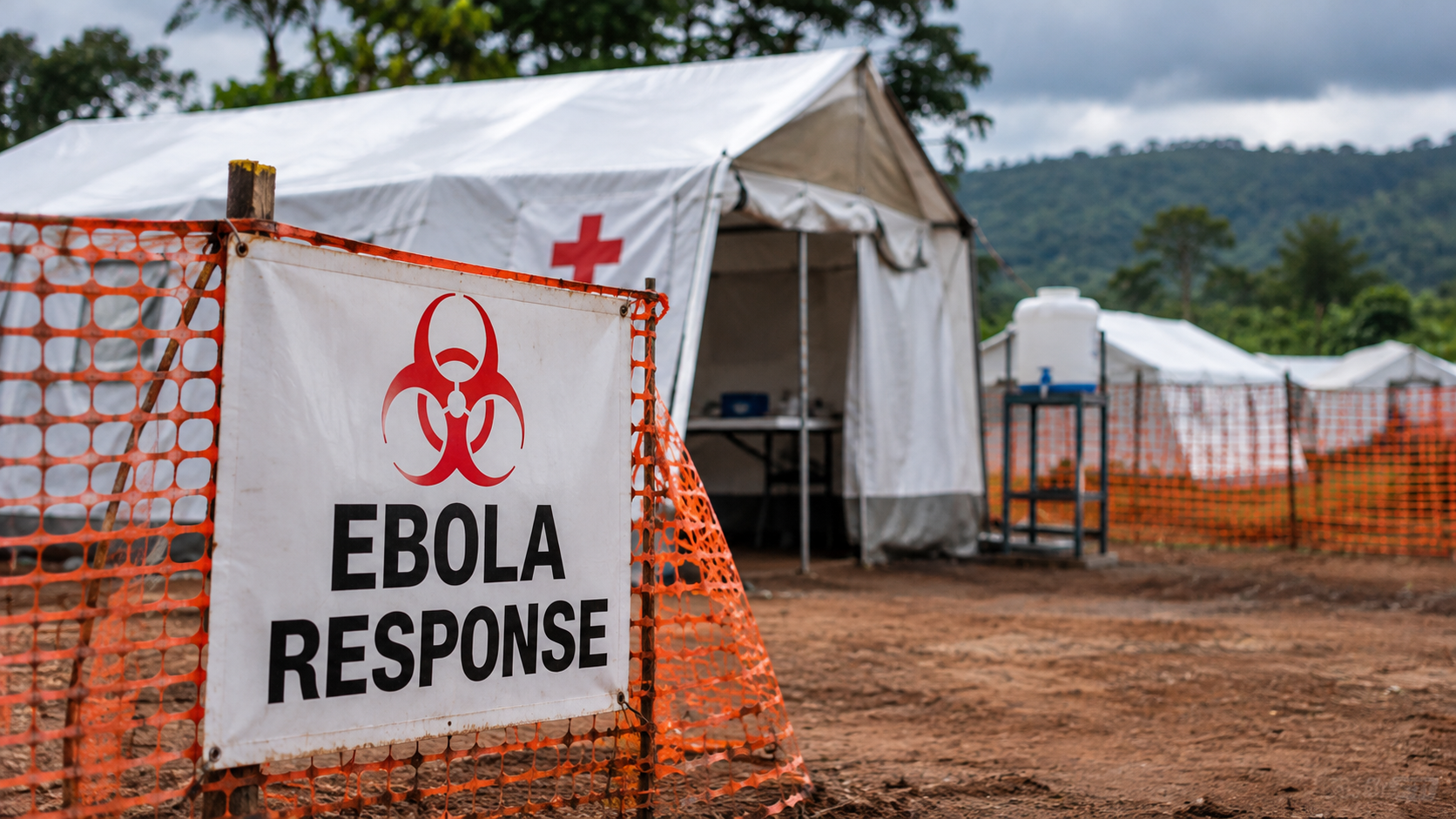
The Ebola outbreak in DR Congo has claimed 5,372 lives, according to new figures from the Africa Centres for Disease Control and Prevention (Africa CDC).
The latest data, released on Monday, November 2, shows that the outbreak has caused 5,376 deaths across Africa, including two each in Kenya and Uganda.
The Democratic Republic of the Congo remains the epicentre of the outbreak, which has also spread beyond its borders.
Health authorities are monitoring the spread of the Bundibugyo strain, a rare form of Ebola for which no approved strain-specific vaccine or treatment is currently available.
Ebola cases exceed 10,400
According to Africa CDC figures reported by AFP and Reuters, approximately 10,444 infections have been recorded across DR Congo, Uganda and Kenya.
The outbreak’s reported fatality rate exceeds 50%, highlighting the serious public health challenges facing affected communities.
DR Congo declared its 17th Ebola outbreak in mid-May 2026.
Since then, health workers have faced growing pressure to identify infections, isolate patients and prevent further transmission.
The outbreak has also placed additional strain on healthcare facilities in affected areas.
Medical teams continue to work under difficult conditions as they respond to the spread of the virus.
Ebola spreads beyond DR Congo
The outbreak has crossed international borders several times in recent months.
Uganda recorded 20 infections, most involving people who had travelled from DR Congo.
However, Ugandan authorities declared the country Ebola-free in August following their response to the outbreak.
Kenya reported nine infections and two deaths in October, marking the country’s first recorded Ebola cases.
These developments have increased attention on cross-border disease surveillance and public health coordination.
Health authorities in neighbouring countries continue to monitor potential infections and strengthen preparedness measures.
Nigeria reports negative tests
Nigeria has also investigated suspected Ebola infections.
Health authorities confirmed that two suspected cases in the country’s northeast tested negative after two rounds of testing.
The country reported an imported Ebola case in October, its first in more than a decade.
However, Nigeria has recorded no Ebola-related deaths during the current outbreak.
Meanwhile, France reported one case in July involving a healthcare worker returning from DR Congo.
The cases outside Central Africa demonstrate the importance of international disease monitoring, particularly among people travelling from affected areas.
Limited options against Bundibugyo
The current outbreak involves the Bundibugyo strain of Ebola.
Unlike the more common Zaire strain, Bundibugyo does not currently have an approved strain-specific vaccine or treatment.
This creates additional challenges for healthcare workers attempting to control infections.
Clinical trials involving the Ervebo vaccine have begun in recent weeks.
Ervebo has demonstrated effectiveness against the Zaire strain, but its effectiveness against Bundibugyo has not been established.
Researchers are therefore investigating possible options for improving protection against the current outbreak.
Until effective medical countermeasures become available, early detection and infection prevention remain essential.
Healthcare workers face serious risks
Ebola can spread through direct contact with the blood or other bodily fluids of infected people, including those who have died from the disease.
Healthcare workers and people caring for infected relatives may face increased exposure risks without appropriate protective measures.
Safe patient care, protective equipment and infection-control procedures are therefore important parts of the response.
The outbreak has also affected medical personnel.
On October 31, healthcare workers in Bunia, eastern DR Congo, buried Dr Marie-France Shogogo, who died after contracting Ebola.
Her death illustrates the risks faced by frontline medical teams responding to the outbreak.
Regional response remains critical
The latest figures underline the scale of the public health emergency in DR Congo.
Containing the outbreak requires cooperation between national health authorities, local communities and regional disease-control organisations.
Cross-border surveillance remains particularly important because infections have already been recorded in neighbouring countries.
Public health teams must also ensure that suspected cases receive timely testing and appropriate medical attention.
Clear communication can help communities recognise symptoms, seek care early and avoid potentially dangerous exposure.
As the death toll continues to rise, expanding access to healthcare and strengthening disease surveillance remain central to the regional response.
Africa CDC’s latest figures highlight the urgency of protecting vulnerable communities while researchers continue efforts to develop effective tools against the Bundibugyo strain.