
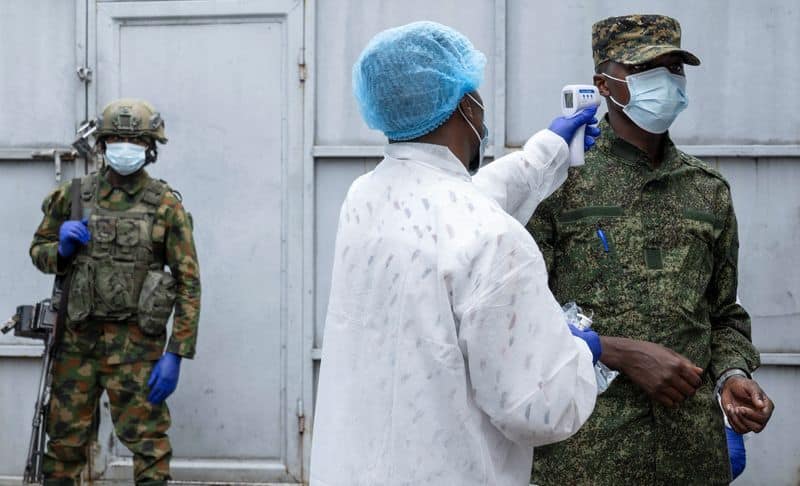
A confirmed Ebola case in eastern Democratic Republic of Congo’s South Kivu province has raised fresh concerns that the outbreak is spreading far beyond its known epicentre, as conflict, aid shortages and rebel control complicate efforts to contain the disease.
The case was reported in a rural area near Bukavu, the provincial capital, hundreds of kilometres from Ituri province, where health experts believe the outbreak may have circulated undetected for nearly two months before it was formally identified last week.
The outbreak has been linked to 139 deaths, while 600 suspected cases have been reported in Ituri and North Kivu provinces as of Wednesday, according to the World Health Organization. Two cases have also been confirmed in neighbouring Uganda.
The Alliance Fleuve Congo, a rebel coalition that includes the Rwanda-backed M23 movement, said the patient was a 28-year-old who had died and was buried safely. The group, which controls parts of eastern Congo, said the individual had travelled from the northern city of Kisangani but did not provide further details about recent movements.
South Kivu health spokesperson Claude Bahizire said earlier Thursday that two suspected cases had been detected in the province, including the fatal case. The second patient was placed in isolation while awaiting test results.
A confirmed Ebola case was also reported last week in Goma, the capital of North Kivu province, which is also under M23 control.
The WHO declared the Bundibugyo strain outbreak a public health emergency of international concern over the weekend. There is currently no approved vaccine for that strain, making containment heavily dependent on surveillance, isolation, contact tracing and safe burials.
Jane Halton, chair of the Coalition for Epidemic Preparedness Innovations, said the confirmed cases likely represent only “the top of the iceberg.” CEPI, which supports vaccine development, is now assessing potential candidates for Ebola.
Halton said CEPI’s target of producing a safe and effective vaccine for major outbreaks within 100 days may still be possible, but described the effort as a major challenge.
The response is being hampered by armed violence, rebel control over key areas, weakened health infrastructure and the spread of cases into densely populated urban zones.
Eastern Congo has already suffered one of the worst Ebola outbreaks in history. Between 2018 and 2020, an outbreak of the Zaire strain in the region killed nearly 2,300 people, making it the second-deadliest Ebola outbreak on record.
Health workers say the current response is being slowed by shortages of basic supplies. Some responders have blamed foreign aid cuts by major donors, saying reduced funding has weakened local health services and disease surveillance.
Britain said Thursday it would provide up to £20 million, about $27 million, to support the response. The United States, which contributed around $600 million during the 2018-2020 outbreak, has so far pledged $23 million and said it would help open up to 50 clinics in Congo and Uganda.
Uganda, however, criticised Washington’s approach. The country’s health ministry said it had not been consulted over U.S. plans to establish clinics and stressed that there was no known local transmission inside Uganda.
Ugandan Information Minister Chris Baryomunsi said the U.S. was “overreacting” after banning most travellers from Uganda, Congo and South Sudan earlier this week.
He said Uganda had handled previous Ebola outbreaks and had the capacity to contain the disease.