
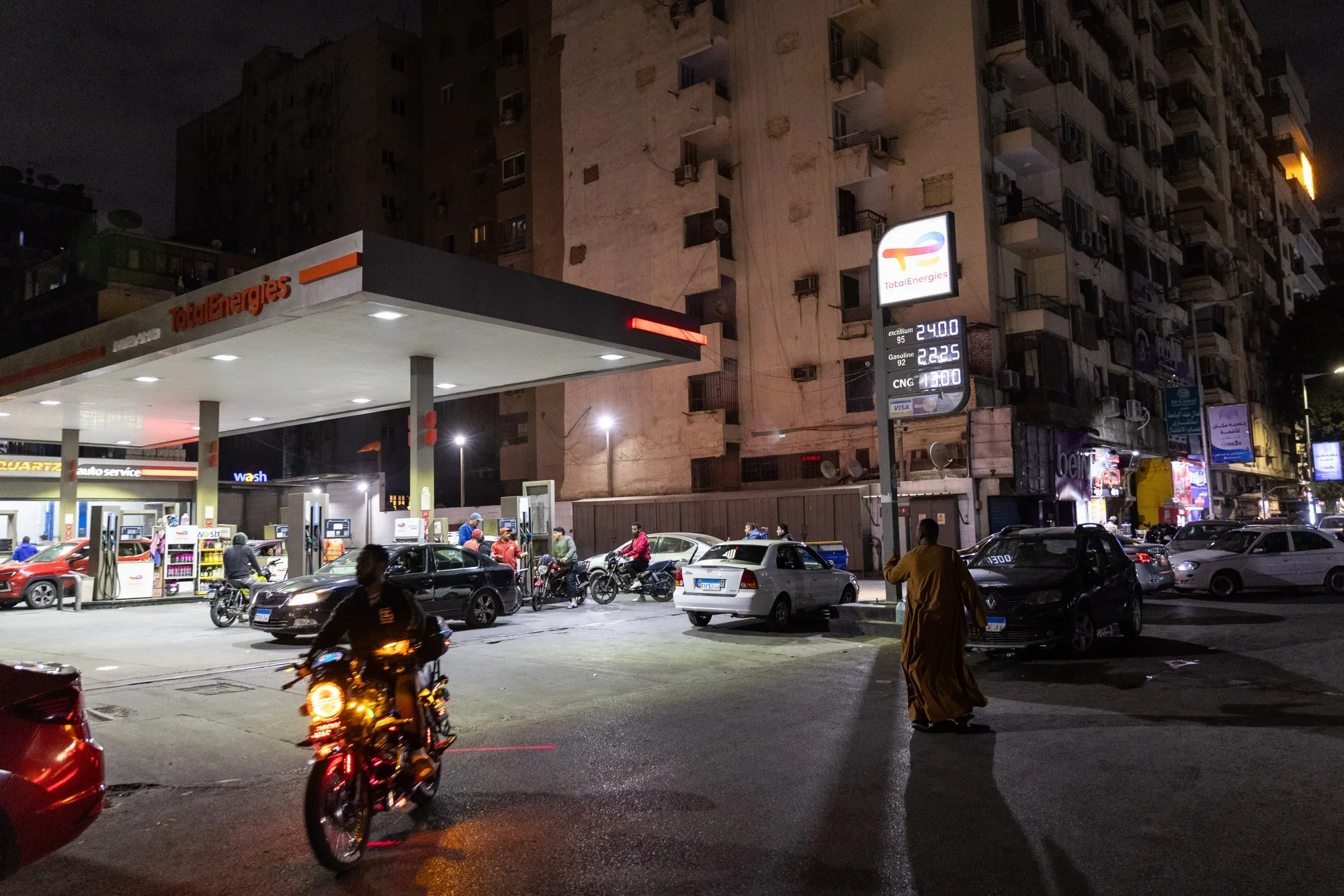
Cairo is seeing its famously vibrant nightlife fade earlier than usual as authorities impose energy-saving measures following sharp increases in fuel costs linked to the U.S.-Israel war on Iran.
Cafes that once stayed busy into the early hours are now closing shortly after evening prayers, while large sections of the capital operate under reduced street lighting. The changes reflect a government push to cut electricity consumption as energy imports become more expensive and harder to secure.
Prime Minister Mostafa Madbouly said Egypt’s energy import bill has more than doubled since the conflict began, forcing authorities to raise fuel prices, increase public transport fares, and slow some state projects to ease fiscal pressure.
The impact is being felt across a city where evening activity is central to both commerce and social life.
“As soon as the Isha prayer finishes, the city loses its usual atmosphere,” said Sayed Zaama, a cafe owner in Maadi. “It feels like the pandemic again.”
Businesses that rely on late-night customers are among the hardest hit. Cafes, gyms, cinemas, and wedding halls report declining revenues as operating hours shrink.
At Zaama’s cafe, staff now rotate shifts to cope with reduced demand. “Half the workers are off each day,” he said.
Retailers are also struggling. Hussein Galal, who runs an accessories shop, said daily earnings have dropped by half while fixed costs remain unchanged.
“You still have rent, salaries, electricity and taxes,” he said. “But income is falling.”
The measures come as Egypt faces broader economic strain, with inflation still above 13% and pressure mounting from rising import costs and a weakened currency.
Electricity demand, however, continues to grow. Energy Minister Mahmoud Essmat said consumption is increasing by around 7% annually, with households accounting for roughly 38% of total usage — making them a key focus of conservation efforts.
Egypt relies heavily on subsidised natural gas for power generation, a system that is becoming increasingly costly as global energy prices rise.
Tourism — a critical source of foreign currency — is also at risk. While key tourist areas have so far avoided strict early closures, officials acknowledge a slowdown in bookings amid regional instability.
Tourism revenues had surged to $17.1 billion in the 2025/26 fiscal year and are projected to reach nearly $29 billion by 2030/31, according to the International Monetary Fund. However, prolonged restrictions and a quieter capital could undermine that growth.
Some residents see a potential upside, saying earlier nights could improve work-life balance. But many expect the changes to be temporary.
“This won’t last forever,” said Kareem Mohamed, a Cairo resident. “Things will go back to normal.”