
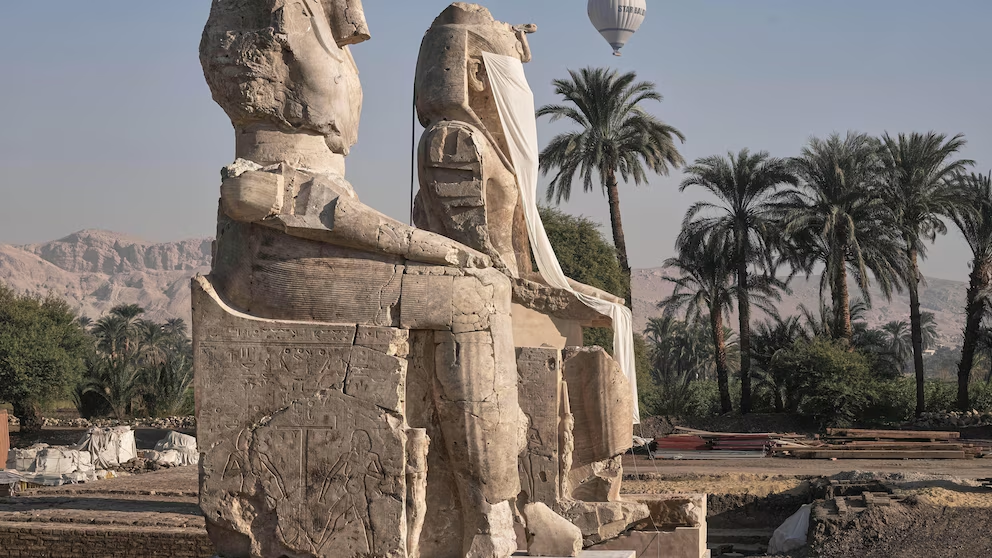
Egypt on Sunday unveiled two restored colossal statues of Pharaoh Amenhotep III in Luxor, blending archaeology, ambition, and tourism revival. The towering alabaster statues, known as the Colossi of Memnon, were reassembled after a meticulous restoration spanning nearly two decades.
They depict Amenhotep III, who ruled ancient Egypt about 3,400 years ago during a peaceful era marked by wealth, art, and grand construction. Antiquities chief Mohamed Ismail said the project aimed to revive the lost splendour of the pharaoh’s vast funerary temple.
The statues once guarded the temple entrance before a powerful earthquake around 1200 BC toppled them and destroyed much of the complex. Over centuries, the figures were fragmented, quarried, and partially reused, including stones incorporated into Luxor’s famed Karnak temple.
An Egyptian-German archaeological mission began painstaking reconstruction work in the late 1990s, rescuing remnants of the once-prestigious monument. The statues show the pharaoh seated, facing the rising sun and Nile, wearing royal regalia symbolising divine authority.
Each statue also features smaller carvings of Queen Tiye at the king’s feet, underscoring royal lineage and power. Standing up to 14.5 metres high, the colossi dominate the western Nile bank at a site rivaling Karnak in scale.
The unveiling follows the opening of the Grand Egyptian Museum, reflecting Cairo’s push to revive tourism and bolster the economy. Officials say Egypt welcomed 15.7 million tourists in 2024, with hopes of reaching 30 million visitors annually by 2032.