
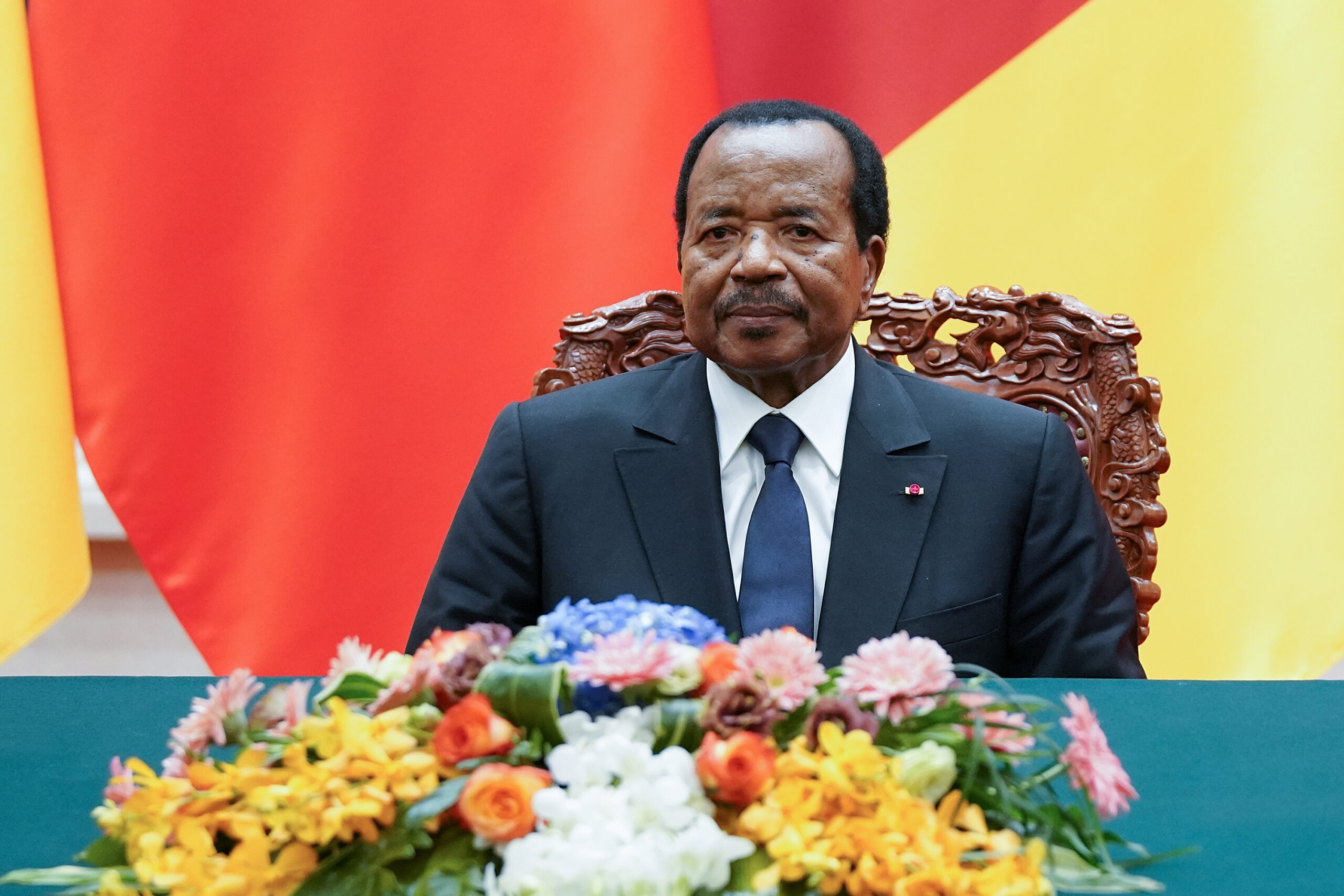
The prolonged absence of Cameroon’s President Paul Biya has fuelled mounting concern and speculation over his health and the country’s leadership, eight months after he was sworn in for an unprecedented eighth term.
Biya, 93, left Cameroon on June 7 for what the presidency described as a brief private stay in Europe. As of Sunday, he had been outside the country for eight weeks, with officials providing few details about his location, activities or expected return.
The extended absence is unusual even for Biya, who has frequently spent long periods abroad during his more than four decades in power. He was sworn in for another seven-year term on November 6, 2025, after being declared the winner of a disputed presidential election held the previous month.
Benoît Ndong Soumhet, a minister responsible for special duties at the presidency, acknowledged that the length of the president’s absence was unprecedented but said it did not violate the law.
“Ordinary citizens may, out of affection, feel the need to know what is happening to their leader,” he was quoted as saying by Radio France Internationale.
The director of the presidency’s civil cabinet has sought to calm public concern, insisting that the country is functioning normally.
“Everything is fine. There is no problem. We are not in a state of emergency or any exceptional situation,” he said.
However, opposition figures have criticised the government’s lack of transparency regarding Biya’s stay in Europe.
Roger Justin Noah, deputy secretary-general and acting national communications secretary of Maurice Kamto’s Cameroon Renaissance Movement, said the secrecy surrounding the president’s whereabouts showed a lack of respect for the Cameroonian public.
“If the president is genuinely facing health problems, the Cameroonian people have the right to know,” Noah said. “There is no justification for maintaining such uncertainty about the health of the president of the republic.”
Speculation about Biya’s health has intensified during previous prolonged absences, while government officials have repeatedly rejected reports that he is unable to carry out his duties. His latest disappearance from public view has also raised questions over whether Cameroon is effectively being governed remotely.
Cabral Libii, who finished third in the October presidential election, dismissed much of the controversy as a distraction and said attention should instead focus on legislative and municipal elections expected in 2027.
“I am among those who believe there is no fundamental difference between his being abroad and his being in Cameroon,” Libii said.
“Whichever way we look at it, legally speaking, Cameroon currently finds itself in a vacuum. We are approaching legislative and municipal elections, so let us turn out in large numbers and vote against this system.”
Biya has governed Cameroon since 1982, making him one of the world’s longest-serving leaders and its oldest sitting head of state. His repeated absences, advanced age and the absence of a clear succession plan have fuelled growing uncertainty over the future of the Central African country.