
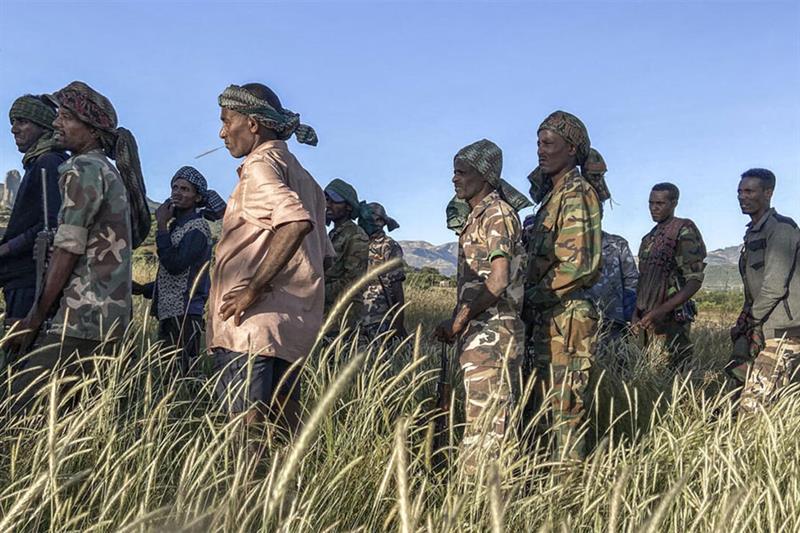
Ethiopia has accused Sudan’s military authorities in Port Sudan of backing cross-border incursions by fighters linked to the Tigray People’s Liberation Front (TPLF), sharply escalating tensions between the two neighbours amid Sudan’s ongoing war.
In a statement issued on Tuesday, Ethiopia’s government rejected what it described as “baseless accusations” from Sudan, and instead alleged that Khartoum was providing financial and military support to Tigray-linked armed elements operating along Ethiopia’s western frontier.
Addis Ababa said Sudan had become a “platform for hostile forces targeting Ethiopia,” warning that the accusations exchanged between the two sides were being fuelled by external actors seeking to destabilise the Horn of Africa.
The claims come against the backdrop of Sudan’s deepening internal conflict, where rival factions — including forces aligned with General Abdel Fattah al-Burhan in Port Sudan — are battling for control, creating security vacuums along border regions.
Ethiopian officials suggested that elements within Sudan’s military establishment were exploiting these gaps to pursue proxy strategies, including facilitating cross-border movements by armed groups historically opposed to Ethiopia’s federal government.
While Ethiopia did not provide detailed evidence in its statement, the allegations reflect longstanding mistrust between Addis Ababa and Sudan, particularly following tensions over the disputed al-Fashaga border area and Ethiopia’s war with Tigray forces between 2020 and 2022.
Analysts say Sudan’s fragmentation has increasingly drawn neighbouring states into a complex web of proxy rivalries, with borderlands becoming contested zones for influence and leverage.
Ethiopia renewed its call for an immediate humanitarian ceasefire in Sudan and urged all parties to return to dialogue, insisting that “there is no military solution” to the conflict.
The statement positions Addis Ababa as advocating de-escalation, even as it accuses Sudan’s military leadership of fuelling instability beyond its borders — a charge likely to deepen diplomatic strains between the two countries at a time when regional mediation efforts are already under pressure.