
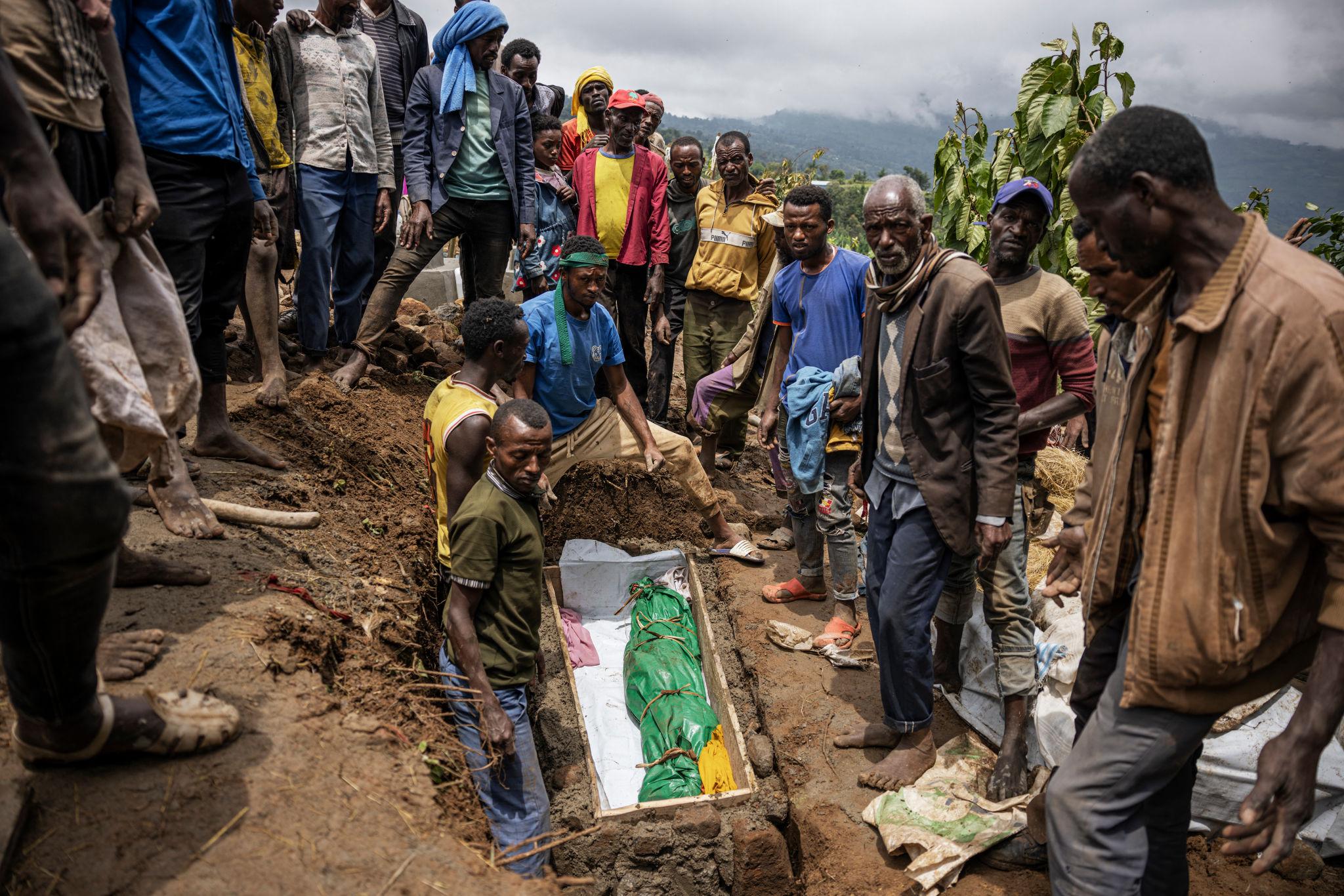
At least 14 people have been killed after a landslide struck a mountain monastery during an overnight prayer service in Ethiopia’s northern Amhara region, local officials said.
The landslide hit the Tsadqane Debre Mitmaq St Mary Monastery in North Shewa in the early hours of Monday after heavy rain caused a hillside above the religious site to collapse.
Rescue operations have since been suspended, although officials said more people may remain trapped beneath the debris.
The monastery contains a prayer chamber carved into the mountainside, where worshippers had gathered for a special Orthodox Christian service.
“The land above the cave slid after heavy rain continued throughout the night,” senior local official Dagnachew Azbite told the BBC.
Seven people were rescued with injuries, five of them in serious condition, he added.
The overnight ceremony included a holy water cleansing ritual commonly attended by Ethiopian Orthodox Christians seeking spiritual healing, including treatment for chronic illnesses.
“Many of those who died had gathered to receive the holy water,” Megabe Hadis Neka Tibeb Ababu, general manager of the local diocese, told the Associated Press.
Eleven of the victims were buried at the monastery, while the bodies of three others were returned to their hometowns for burial. Church officials said identifying some of the victims remained difficult.
Emergency workers, police officers, healthcare personnel and local residents participated in the search and rescue operation.
Archbishop Abune Klementos, head of the Ethiopian Orthodox Church’s North Shewa Diocese, travelled to the monastery to lead funeral prayers, visit the injured and offer condolences to grieving families.
Landslides are common in Ethiopia during the main rainy season, which usually runs from June through August.
More than 100 people were killed by floods and landslides in the southern Gamo Zone in March. In July 2024, a landslide in the neighbouring Geze Gofa Zone killed more than 229 people, including rescuers who were searching for survivors.
Researchers have documented increasingly extreme rainfall and prolonged droughts across East Africa, while scientists warn that human-driven climate change is increasing the frequency and intensity of severe weather events.