
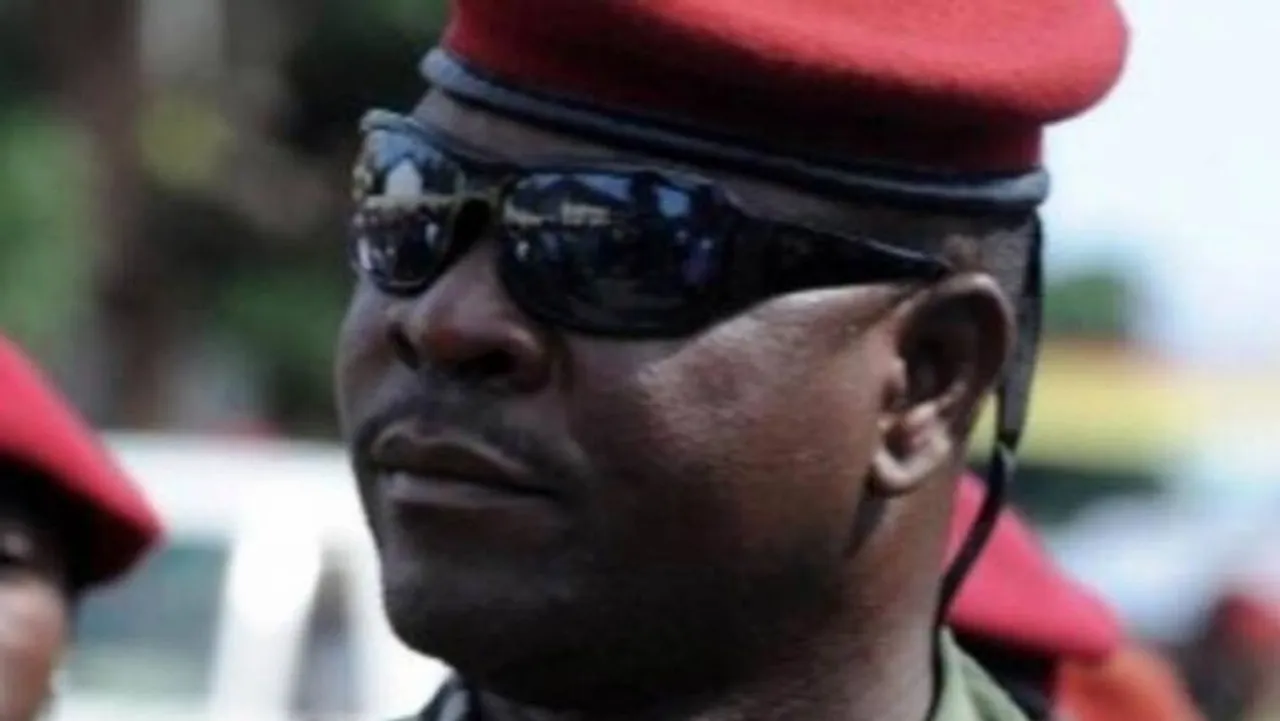
Former Guinean presidential security chief Claude Pivi, widely known as “Coplan,” has died in detention months after being convicted of crimes against humanity linked to the 2009 Conakry stadium massacre, according to prosecutors.
The public prosecutor’s office said Pivi, believed to be about 66 years old, died after falling into a hypoglycaemic coma caused by chronic diabetes, despite receiving emergency treatment at a military hospital. Authorities said a forensic autopsy has been ordered to confirm the exact cause and circumstances of death, with findings to be released at a later stage.
Pivi’s death comes shortly after his recapture following a dramatic prison escape, bringing to an end the detention of one of Guinea’s most notorious former military figures.
On 28 September 2009, opposition supporters gathered at Conakry’s main stadium to protest against then junta leader Moussa Dadis Camara’s reported intention to run for president. Security forces moved in on the crowd, killing at least 156 people, injuring hundreds, and raping more than 100 women, according to international human rights groups. Dozens of people were also reported missing.
Investigators from the United Nations later described the violence as possible crimes against humanity. At the time, Pivi was a senior figure within the ruling junta and commanded units accused of taking part in the crackdown.
A landmark trial opened in 2022 and concluded in July 2024, with Pivi sentenced in absentia to life imprisonment and a minimum security period of 25 years.
In November 2023, armed attackers stormed Conakry’s main prison, freeing several high profile detainees, including Pivi. Media reports said the assailants included members linked to his family. He remained on the run for nearly a year before being arrested near the Liberian border in September 2024.
After his extradition, Pivi was held at the high security prison in Coyah, where authorities said he was receiving treatment for diabetes, high blood pressure and gout. Prosecutors said he failed to follow his prescribed treatment, leading to a severe medical episode on 4 January 2026. He was transferred to the Camp Almamy Samory Touré military hospital, where he died two days later.
Victims’ groups reacted with mixed feelings, noting that while Pivi’s conviction marked a major step towards accountability, full justice requires transparency and the continuation of legal proceedings against other suspects. A second phase of the trial involving additional defendants opened in December 2025.