
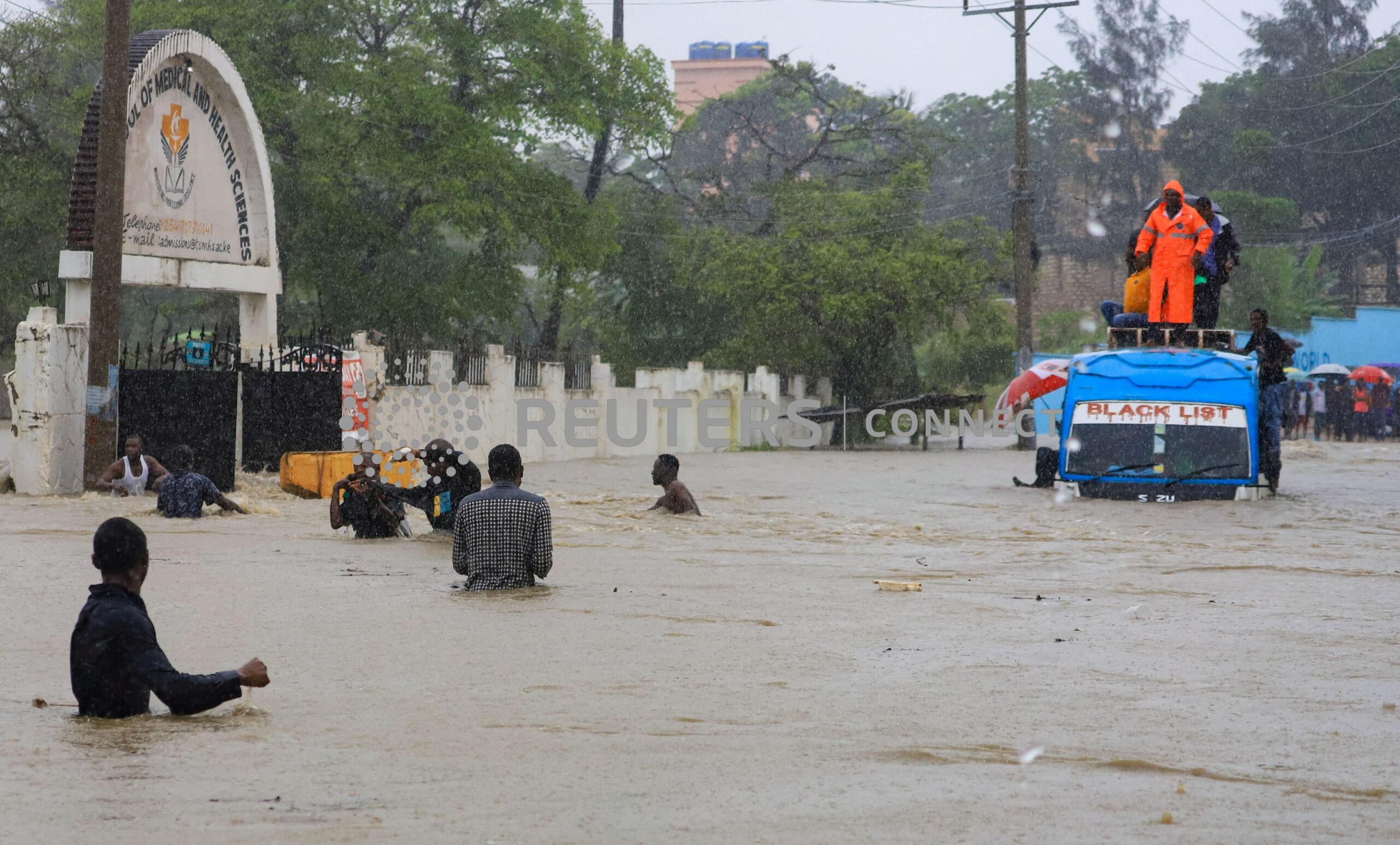
Torrential storms sweeping across Kenya have killed at least 81 people this month, authorities said Sunday, as relentless rainfall continued battering large parts of the country.
Floodwaters surged through western regions, where residents carried belongings above their heads and evacuated by overcrowded boats, scenes reflecting growing desperation among displaced communities.
Entire villages in Kisumu county disappeared beneath muddy waters, destroying roughly 1,200 hectares of farmland and washing away crops that sustained already vulnerable households.
More than 3,000 families fled homes in Nyakach as the overflowing River Mirui expanded across fields and settlements, forcing residents into temporary evacuation centres.
Local chief Seth Oluoch Agwanda said massive soil erosion ruined farmland and wiped out newly planted crops, leaving families uncertain about future food security and income.
Nairobi recorded the highest death toll, with 37 fatalities, as floods overwhelmed neighbourhoods and infrastructure, according to national police spokesman Muchiri Nyaga’s official statement.
Authorities reported nearly 2,690 families displaced nationwide, while roads, homes, and public infrastructure suffered extensive damage under persistent and unpredictable floodwaters.
Officials urged residents living downstream from Nairobi dam to evacuate vulnerable informal settlements after rising water levels threatened to breach protective embankments overnight.
The dam has held so far, offering fragile relief as emergency teams monitor water pressure and warn that continued rainfall could rapidly worsen conditions.
Heavy rains are forecast to continue until Tuesday, prompting authorities to call for extreme caution as rivers swell and saturated ground increases landslide risks.
Two people drowned in Kiambu near the capital, while landslides buried homes in Kasaka village, killing two others, according to police and local media reports.
Across Nairobi, streets transformed into fast-moving rivers, flooding homes and businesses and fuelling criticism of city leadership over long-promised drainage and infrastructure improvements.
Residents in Nyakach described abandoning flooded homes, saying nearly every structure lay underwater as families searched desperately for shelter alongside their livestock.
Scientists warn that human-driven climate change is intensifying extreme weather, with East Africa experiencing increasingly severe cycles of droughts and destructive rainfall over recent decades.