
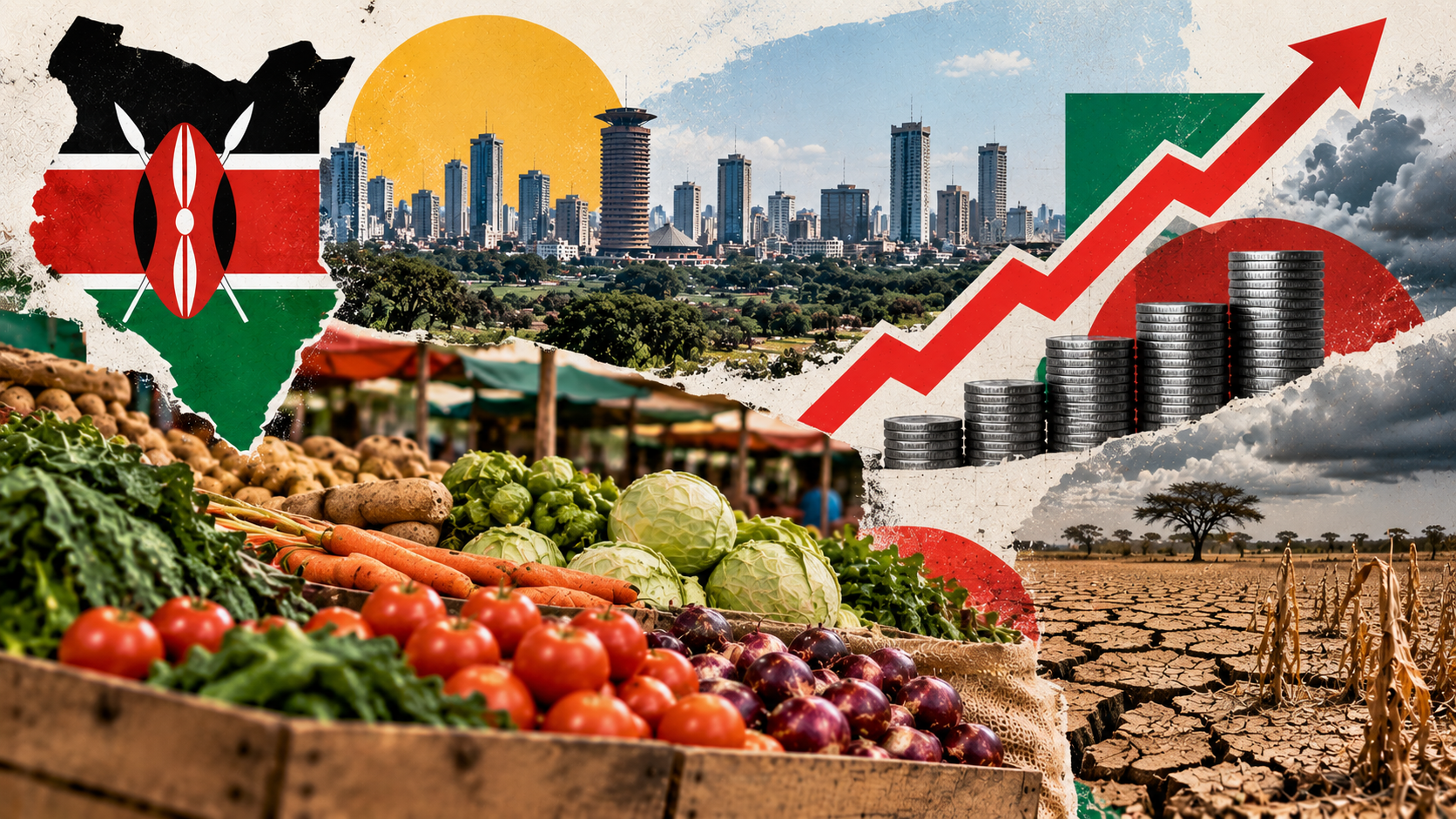
Food prices in Kenya are rising as changing weather patterns, weaker harvests and higher distribution costs put pressure on supplies.
Households in Nairobi and other parts of the country are cutting spending as basic foods become more expensive.
Some families have even reduced the number of meals they eat each day, according to Africanews.
Rising food prices hit Kenyan households
Jackline Aywa, a mother of three, said staples including flour, maize and vegetables had become increasingly expensive.
“The cost of food has really gone up,” she told Africanews.
Her family has responded by removing some items from its shopping list and eating fewer meals.
“If you take black tea in the morning, it’s enough. You skip lunch and come back to have your supper,” she said.
Food vendors are also feeling the pressure as customers reduce their spending.
One vendor said business had become difficult as households struggled with higher prices.
Weather puts pressure on Kenya’s food supply
Several factors are affecting food supplies.
Vendors have pointed to transportation costs and supply-chain problems. Climate experts have also highlighted changing weather patterns.
A dry period has reduced agricultural yields in some farming regions.
Livestock production has also been affected. Lower availability of pasture has contributed to a shortage of milk, according to the report.
Lower harvests mean less food reaches markets, adding pressure to prices.
Rain-fed agriculture increases vulnerability
Climate analyst Jackson Koimburi said Kenya’s reliance on rain-fed agriculture leaves farmers vulnerable to changing weather.
When rainfall patterns change or drought develops, agricultural production can suffer.
Heavy rainfall can create another challenge.
Weather experts cited in the report expect El Niño conditions to bring heavy rain. While rainfall could help some agricultural areas, unusually intense downpours could also damage crops.
For Kenyan households already facing higher costs, uncertainty over rainfall and agricultural production is adding to concerns about future food supplies and prices.