
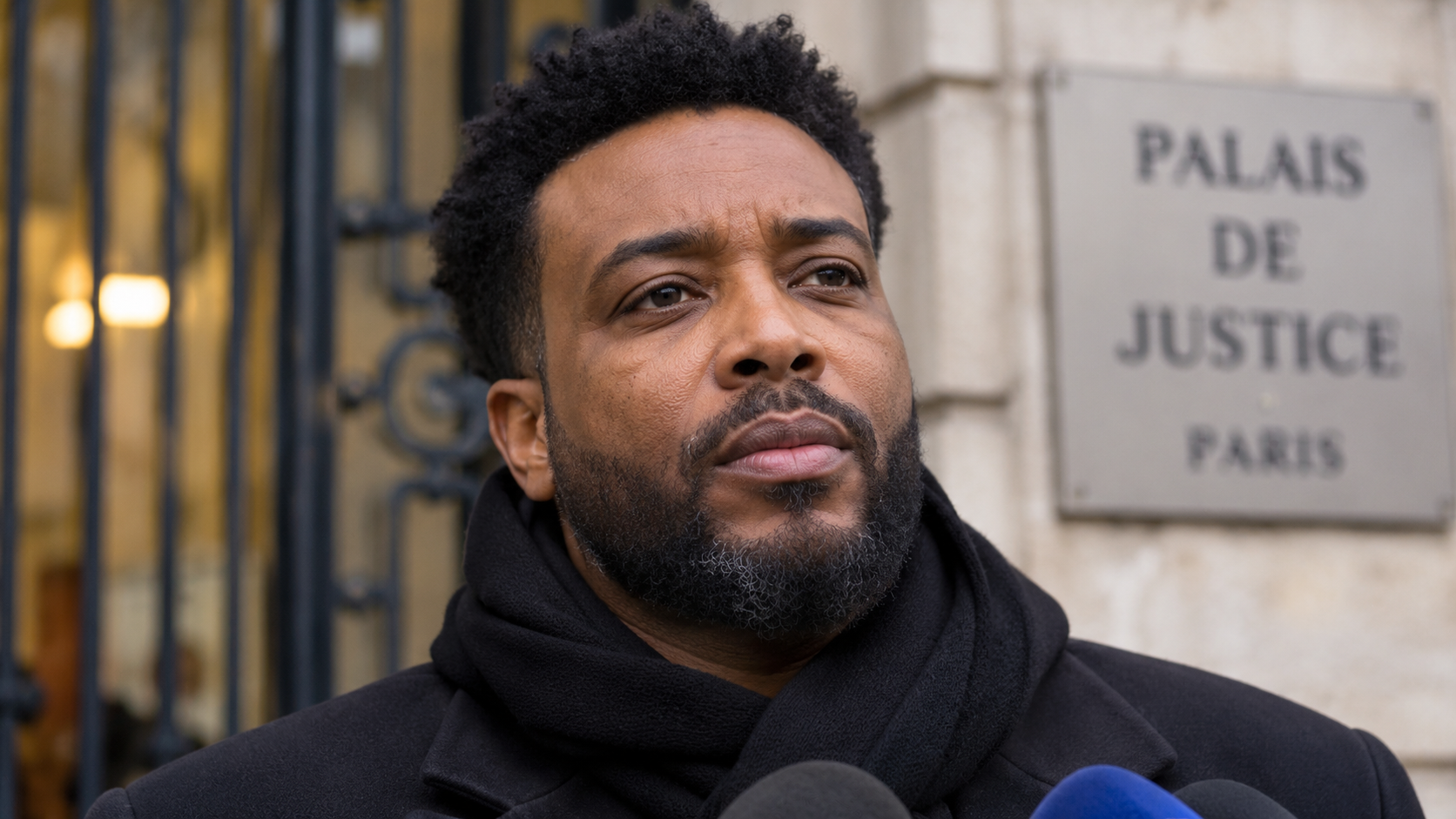
A French court has sentenced three police officers for the racist assault of Black music producer Michel Zecler in Paris.
The court gave each officer a five-year prison sentence on Friday, November 20. However, the judges suspended different portions of their sentences.
The ruling follows a violent incident in 2020 that sparked widespread protests and renewed debate over police violence in France.
According to Africanews and AFP, security footage showed officers striking Zecler more than 30 times.
Court sentences three police officers
The court handed down different penalties to the three officers involved.
Aurélien Lapersonne received five years in prison, including three years suspended.
Philippe Tondeux received five years, including three and a half years suspended.
Meanwhile, Pierre Plantier received five years, including four years suspended.
Plantier will serve his remaining year under electronic monitoring instead of going to prison.
Lapersonne and Tondeux will begin serving their prison terms at a later date.
However, the sentences were shorter than those requested by prosecutors. They had sought prison terms ranging from four to six years.
Video exposes false police claims
The assault happened outside Zecler’s music studio in Paris on November 21, 2020.
At the time, France had introduced strict COVID-19 restrictions.
Police initially stopped Zecler for allegedly failing to wear a face mask.
The officers later claimed that he attacked them and tried to seize a police weapon.
However, surveillance footage contradicted their account.
The video showed officers repeatedly beating Zecler inside his studio.
As a result, he suffered head injuries and wounds to his lip and scalp. He also suffered a complete rupture of his biceps tendon.
The officers faced charges linked to the assault and the falsification of a police report.
All three apologised to Zecler before the court announced its decision.
Lawyers welcome the verdict
Supporters applauded Zecler as he left the courtroom following the ruling.
His lawyer, Serge Money, welcomed the judgment.
He said the decision had restored his client’s dignity and allowed him to begin rebuilding his life.
Another lawyer, Caroline Toby, said the ruling carried wider importance.
According to Toby, the judgment challenged the assumption that police reports should automatically be accepted as accurate.
The case has also renewed discussions about accountability within French law enforcement.
Concerns over racial profiling in France
The assault sparked widespread anger over police violence and racial discrimination.
Victims and researchers argue that such incidents reflect wider problems within the police system.
However, French authorities and police unions maintain that misconduct generally involves individual officers.
Meanwhile, a 2025 report by France’s rights watchdog highlighted differences in police treatment.
The report found that young men perceived as Arab, Black or North African were four times more likely to face police checks than the wider population.
They were also 12 times more likely to face stricter measures, including searches.
The findings came from a survey involving more than 5,000 people.
A major case for police accountability
Convictions in major police brutality cases remain relatively rare in France.
In 2024, three officers received suspended prison sentences over injuries inflicted on a Black man, Théo Luhaka, during a police operation in 2017.
The Zecler case has now become another important example in the debate over police accountability.
Furthermore, the ruling highlights the role of video evidence in investigating allegations of misconduct.
Although the court has ruled on the actions of three officers, broader concerns remain.
These include racial profiling, police oversight and the protection of individual rights.
For Zecler, the judgment marks a significant development after six years of legal proceedings.