
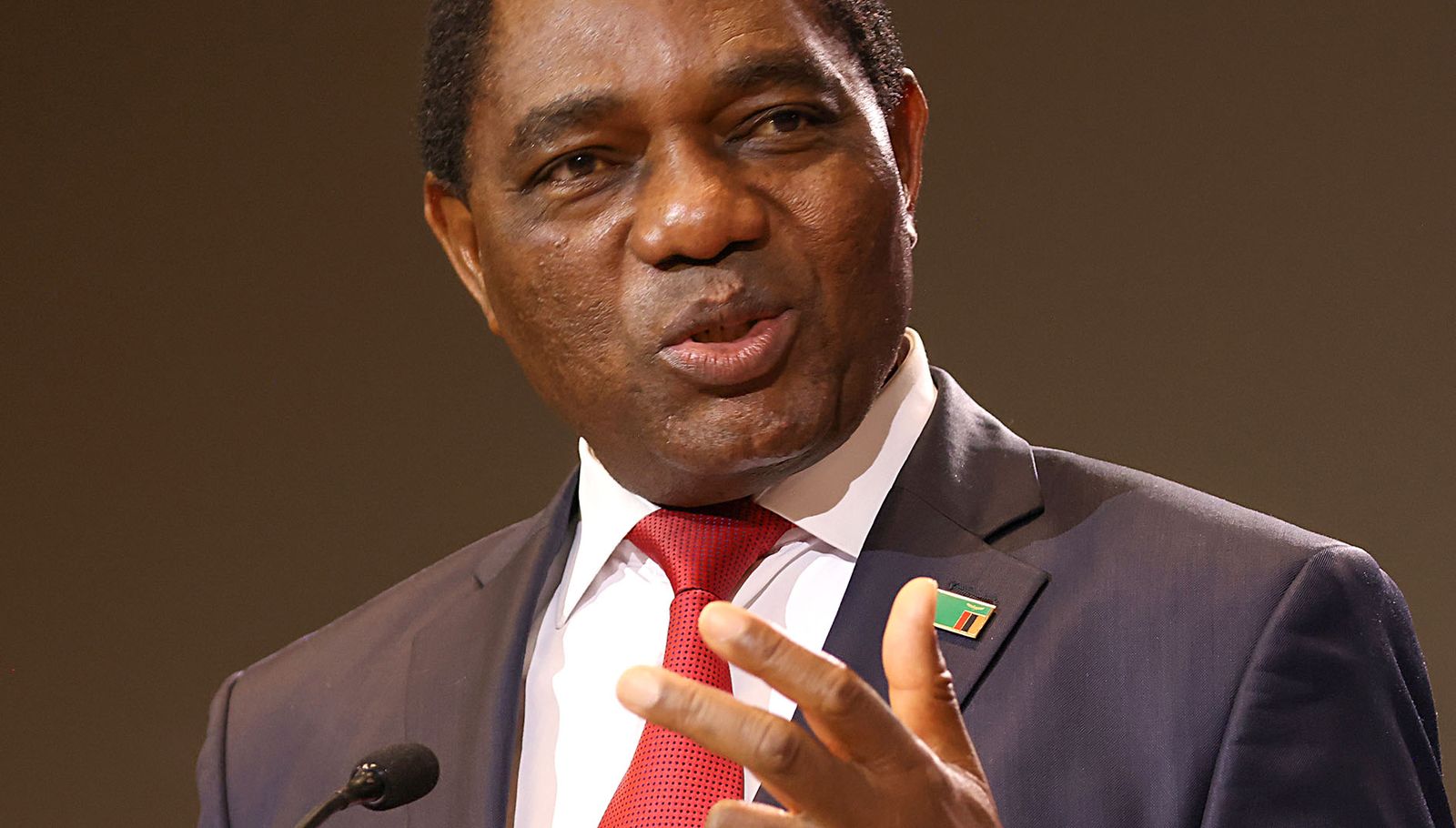
Zambia votes Thursday in an election that will decide whether President Hakainde Hichilema wins a second five-year term.
Hichilema took office in 2021, inheriting a country struggling with heavy debt after Zambia defaulted on sovereign repayments during the COVID-19 pandemic.
His government has restructured more than $12 billion in debt, while reducing inflation and helping stabilise the national currency, the kwacha.
Hichilema also wants to more than triple Zambia’s copper production to three million metric tons a year by 2031.
The ambitious target could strengthen Zambia’s position in global mineral markets as demand grows for copper and other critical resources.
But many Zambians say the economic recovery has not eased pressure from persistently high food and energy prices.
Economist Trevor Hambayi said five years of economic recovery had yet to deliver enough benefits to ordinary people across the country.
Hichilema has promised more schools, healthcare facilities, roads and jobs, alongside renewed efforts to reduce the cost of living.
His government has also faced criticism over alleged pressure on political opponents and restrictions on dissent ahead of Thursday’s vote.
Opposition leader Brian Mundubile, who heads the Tonse Alliance, is seen as Hichilema’s strongest challenger among 14 presidential candidates.
The election also comes amid the continuing political legacy of former President Edgar Lungu, who died last year.
Lungu’s death triggered a bitter dispute over his burial between his family and Hichilema’s government, with South Africa’s Supreme Court of Appeal ultimately siding with the family.
Beyond domestic politics, Zambia’s mineral wealth has attracted growing interest from both China and the United States.
China remains Zambia’s largest foreign investor, particularly in copper and cobalt, while Washington has also sought greater access to the country’s mineral resources.
About eight million registered voters will elect the president, lawmakers and local councillors in Thursday’s one-day vote.
A presidential candidate must secure more than 50% of the vote to win outright, leaving open the possibility of a second round.