
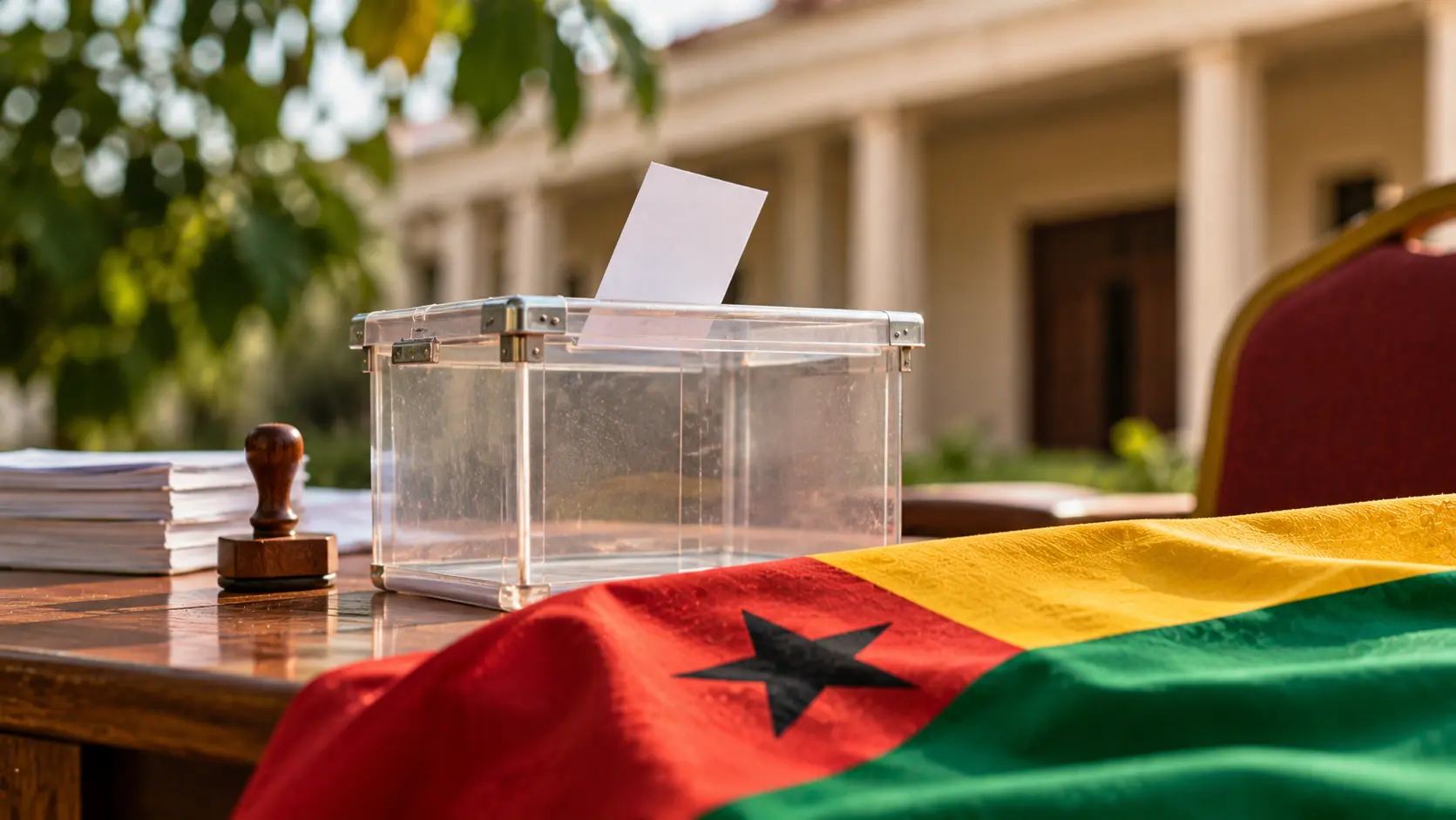
Guinea-Bissau’s military government has defended its decision to postpone presidential and legislative elections until November 2028, citing financial constraints and the need for electoral reforms.
According to Africanews, citing AFP, transitional President General Horta N’Tam said the country needed more time and resources to organise credible elections.
The military authorities had previously promised a one-year transition to civilian rule following the November 2025 coup.
Guinea-Bissau outlines electoral reforms
Speaking on national television on Thursday, N’Tam defended his administration’s record during the transition.
He announced plans to conduct a nationwide electoral census and redraw electoral boundaries.
Under the proposed changes, the number of electoral constituencies will fall from 29 to 12. Meanwhile, parliamentary seats will decrease from 102 to 65.
N’Tam also highlighted the need to organise the country’s first municipal elections to establish local governing institutions.
He said these reforms required more resources and preparation than authorities had initially anticipated.
Elections scheduled for November 2028
Guinea-Bissau’s presidential and legislative elections will now take place on November 26, 2028, three years after the military seized power.
The presidency said an assessment had identified insufficient technical, material and financial resources to hold credible elections next month.
However, the Economic Community of West African States (ECOWAS) had previously called for a brief, structured and transparent transition to civilian rule.
N’Tam maintained that Guinea-Bissau had preserved good relations with its international partners throughout the transition.
Political uncertainty continues
The military seized power on November 26, 2025, shortly before authorities were due to announce provisional election results.
The coup removed then-President Umaro Sissoco Embalo and suspended the electoral process.
In August 2026, the military government held a constitutional referendum that strengthened presidential powers. Opposition groups called for a boycott of the vote.
Guinea-Bissau has experienced repeated political instability since gaining independence from Portugal in 1974.
The postponement of Guinea-Bissau’s elections extends the military-led transition by nearly two years beyond the previously scheduled vote.