
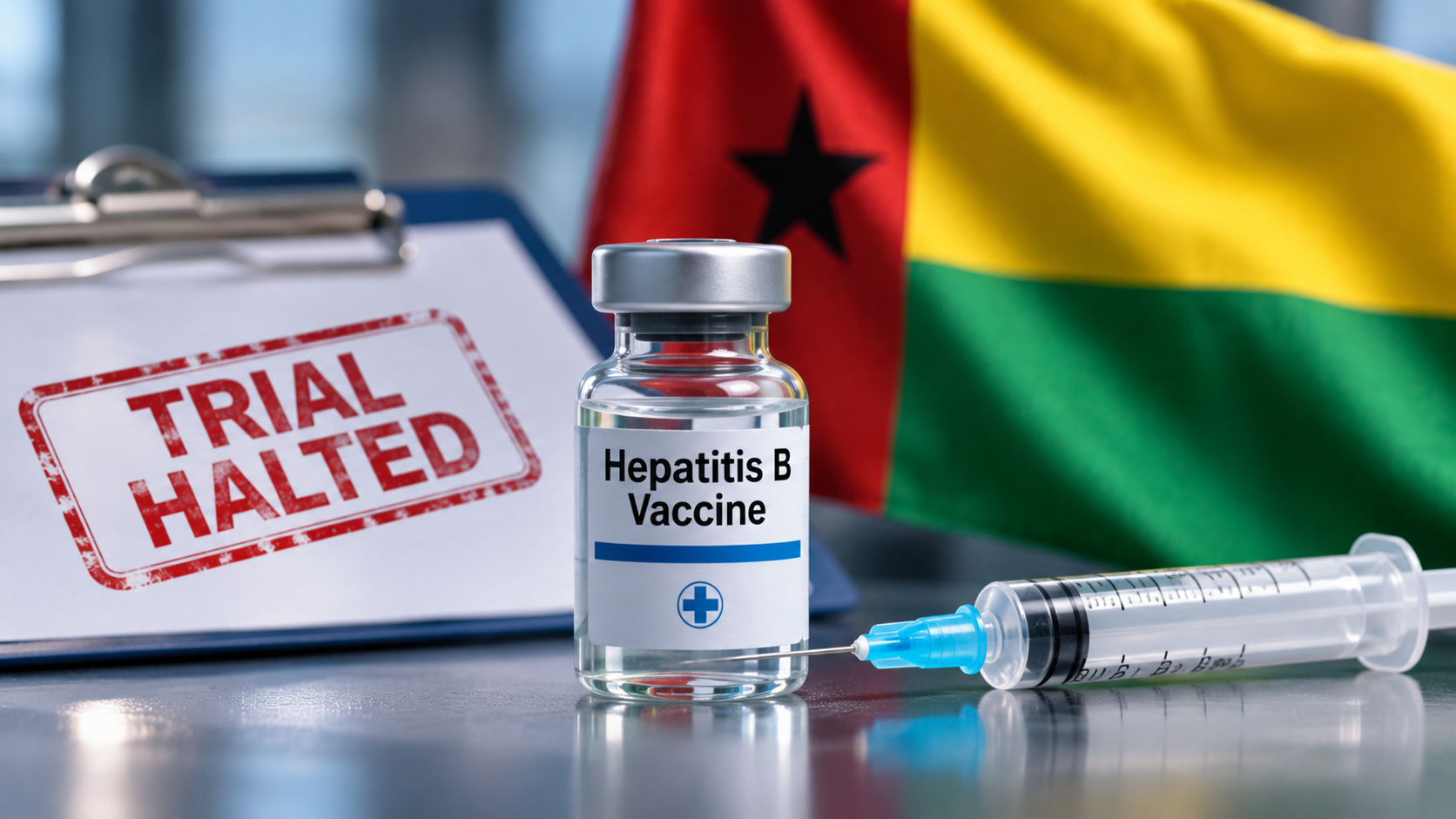
Guinea-Bissau has halted a controversial hepatitis B vaccine trial involving thousands of newborn babies after researchers failed to secure government approval.
The US-funded study planned to compare health outcomes among infants vaccinated at birth and those vaccinated six weeks later.
However, health experts raised serious concerns about delaying a vaccine that protects babies from a potentially life-threatening infection.
According to Al Jazeera, the project faced growing criticism over its design, ethical standards and approval process.
Researchers involved in the study have defended their approach. They argue that the trial could have provided important information about vaccine safety and wider health outcomes.
Why did Guinea-Bissau stop the vaccine trial?
The Guinea-Bissau hepatitis B vaccine trial faced government scrutiny after concerns emerged about its approval and safety procedures.
In January, authorities paused the project and launched a review with the World Health Organization (WHO) and Africa Centres for Disease Control and Prevention (Africa CDC).
The investigation examined whether the research met national requirements.
Meanwhile, questions emerged over whether the country’s transitional government had authorised the study.
In October, Health Minister Quinhin Nantote disputed reports that officials had approved an updated research proposal.
Police later searched facilities linked to the project in Bissau and seized vaccine supplies.
Researcher Frederik Schaltz-Buchholzer subsequently confirmed that the trial would not proceed because it lacked the necessary government approval.
However, authorities have not publicly released a detailed final explanation of the decision.
What was the hepatitis B vaccine trial testing?
The study planned to involve approximately 14,000 newborn babies in Guinea-Bissau.
Researchers wanted to compare two groups over five years.
One group would receive the hepatitis B vaccine immediately after birth. The second group would receive its first dose six weeks later.
The researchers planned to assess overall health outcomes, including possible effects beyond protection against hepatitis B.
The project received $1.6 million in funding from the US Centers for Disease Control and Prevention (CDC).
The funding was approved under US Health Secretary Robert F Kennedy Jr.
However, the study attracted criticism because thousands of infants would receive their first vaccine dose later than the WHO recommends.
Why did health experts oppose the study?
The WHO recommends giving newborn babies their first hepatitis B vaccine dose within 24 hours of birth.
Early vaccination helps prevent transmission of the virus from mother to child.
This protection is particularly important because infants face a high risk of developing chronic hepatitis B if infected.
Chronic infection can cause serious liver disease, including cirrhosis and liver cancer.
According to Al Jazeera, the WHO described the proposed trial as unethical.
Critics argued that researchers should not delay a proven preventive measure to study broader health outcomes.
Former Guinea-Bissau Health Minister Magda Robalo also questioned the study’s ethical approach.
She argued that children should not be denied access to an intervention known to prevent serious illness.
However, the researchers rejected accusations of wrongdoing and defended the scientific purpose of their work.
Researchers defend the vaccine study
The trial was organised by the Bandim Health Project, a research programme based in Guinea-Bissau and linked to the University of Southern Denmark.
Researchers Christine Stabell Benn and Peter Aaby have conducted health studies in the country for decades.
Their work has examined the wider effects of childhood vaccination on health and mortality.
The researchers argued that their proposed study was not intended to question whether the hepatitis B vaccine prevents infection.
Instead, they wanted to investigate whether vaccination timing could influence other health outcomes.
They also said the study could provide valuable evidence before Guinea-Bissau introduces universal hepatitis B vaccination at birth.
However, critics questioned whether the research design adequately protected participating infants.
Some experts also raised concerns about the proposed open-label approach, which would allow researchers to know when each child received the vaccine.
Hepatitis B remains a major health concern
Hepatitis B is a viral infection that affects the liver.
The virus can spread through infected blood and other bodily fluids. Mothers can also transmit it to their babies during childbirth.
Although some people recover from the infection, others develop chronic hepatitis B.
Long-term infection can increase the risk of liver failure and liver cancer.
Guinea-Bissau faces a particularly serious hepatitis B burden.
According to the Al Jazeera report, estimates suggest that around one-fifth of the country’s population lives with the infection.
The country currently allows infants to receive their first hepatitis B vaccine dose at around six weeks because of limited vaccine availability.
However, authorities aim to introduce universal vaccination at birth from 2028.
The WHO recommends a birth dose followed by additional vaccine doses to provide lasting protection.
What happens after the trial’s cancellation?
The cancellation raises questions about research oversight and vaccine access in Guinea-Bissau.
Authorities have investigated whether the proposed study met the country’s legal and ethical requirements.
Meanwhile, researchers involved in the project have expressed disappointment over its cancellation.
They maintain that the study could have contributed to scientific understanding of childhood vaccination.
However, health experts continue to stress the importance of protecting newborn babies from hepatitis B.
The controversy also highlights broader challenges facing public health research in countries with limited medical resources.
For Guinea-Bissau, expanding access to timely hepatitis B vaccination remains an important public health priority.