
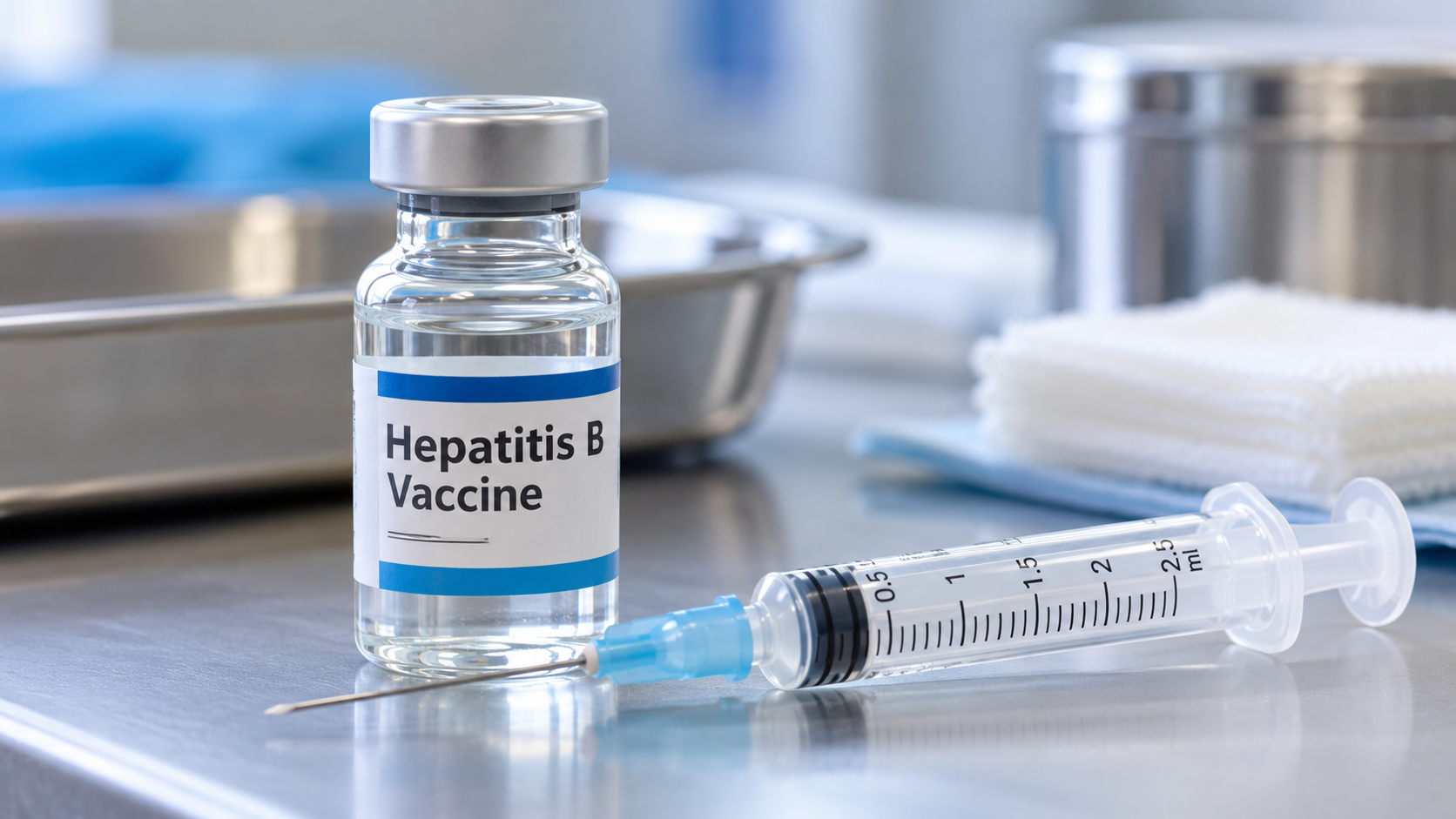
A controversial Guinea-Bissau hepatitis B vaccine trial involving 14,000 newborns has received approval to proceed, according to media reports.
The US-funded study will delay hepatitis B vaccination for half of the participating babies by six weeks.
The Guardian reported that officials in Guinea-Bissau and an ethics committee in Denmark approved the project last week.
However, scientists and public health experts have raised concerns about the risks to newborns.
Guinea-Bissau hepatitis B vaccine trial receives approval
The United States Department of Health is funding the $1.6 million study. Danish researchers will carry out the project.
Under the proposed plan, around 7,000 newborns will not receive the hepatitis B vaccine during their first six weeks.
The other half will form a comparison group.
Researchers aim to examine the effects of different vaccination schedules.
However, critics warn that delaying vaccination could leave babies exposed to preventable infections.
The study faced strong criticism earlier this year. As a result, authorities paused the project for review in January.
Now, according to Africanews, both Danish ethics authorities and officials in Guinea-Bissau have approved the research.
Scientists raise concerns over newborn safety
The study has sparked debate because hepatitis B vaccination helps protect babies against infection.
Hepatitis B can pass from an infected mother to her child during birth.
Moreover, babies who contract the virus face a high risk of developing chronic infection.
Over time, chronic hepatitis B can cause serious liver problems.
Critics argue that delaying an established preventive measure raises ethical concerns.
They also question whether researchers can justify the potential risks to newborn participants.
Meanwhile, supporters of the research want to examine how vaccination timing affects health outcomes.
Nevertheless, the approvals have not ended the debate over the study’s safety.
Africa CDC opposes hepatitis B study
The Africa Centres for Disease Control and Prevention has opposed the proposed trial.
According to The Guardian, the organisation said discussions between the United States and Guinea-Bissau were continuing.
It also indicated that further details would follow.
The controversy has drawn attention to US Health Secretary Robert F. Kennedy Jr.
Kennedy has publicly questioned aspects of vaccination policy.
However, the available reporting does not establish that he personally designed the study.
Hepatitis B remains widespread in Guinea-Bissau
Guinea-Bissau faces a serious hepatitis B challenge.
According to World Health Organization figures cited in the reporting, more than 12% of adults have chronic hepatitis B.
In addition, around 2% of children under five have the infection.
That rate remains far above the global target of less than 0.1%.
These figures have increased concerns about delaying vaccination among newborns.
Meanwhile, Guinea-Bissau plans to introduce universal hepatitis B vaccination for newborns in 2028.
Vaccine trial raises wider ethical questions
The approval has renewed debate about medical research involving newborn babies.
Infants cannot make their own medical decisions. Therefore, parents, doctors and research committees must carefully assess potential risks.
Researchers must also explain the study clearly and obtain informed parental consent.
Furthermore, independent oversight can help protect participants throughout the project.
Although the trial has reportedly received approval, questions remain about its implementation and monitoring.
The debate highlights the challenge of balancing scientific research with patient safety.
It also raises wider questions about protecting vulnerable participants in countries facing serious public health challenges.