
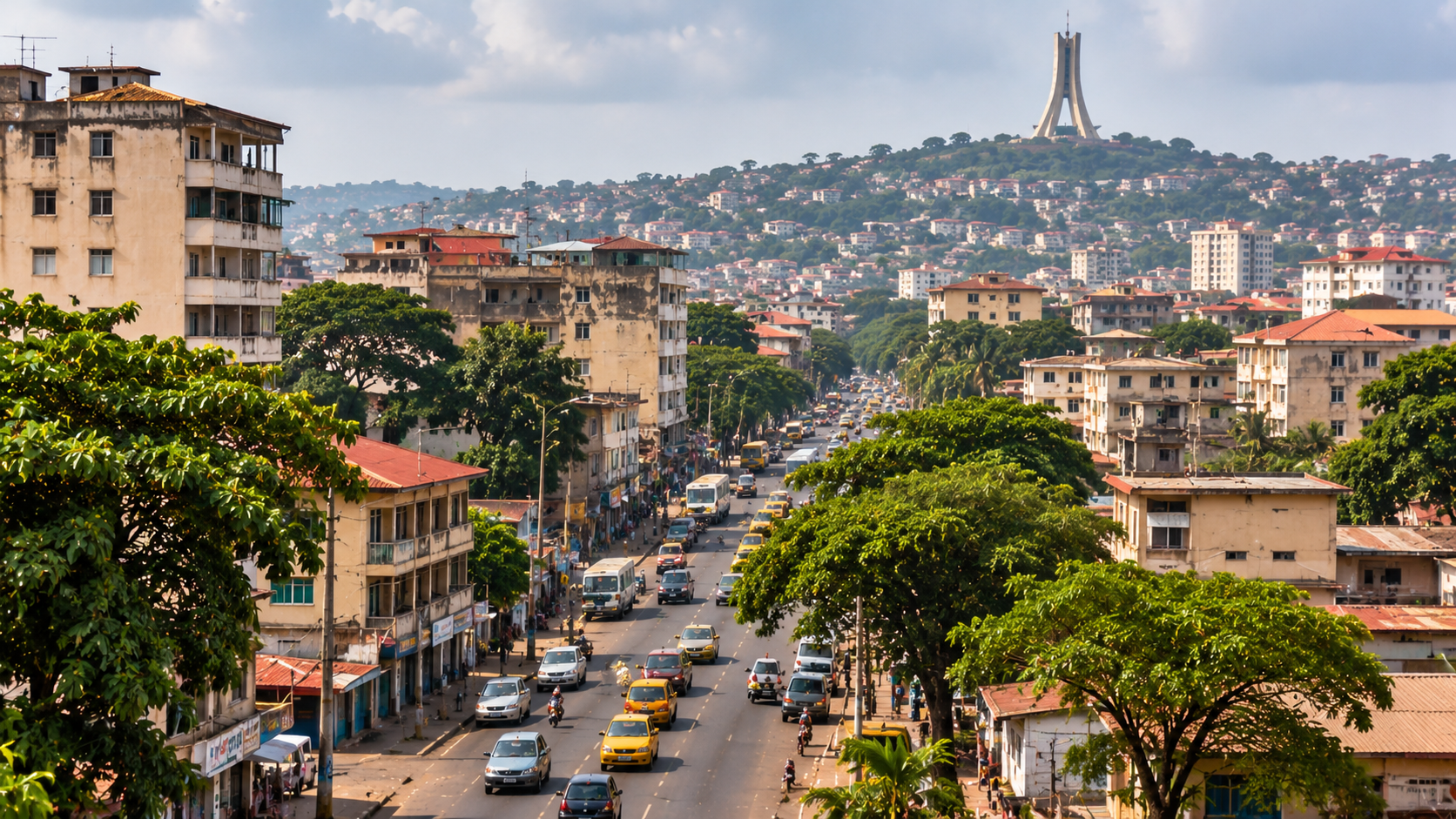
The Guinea garbage crisis is worsening in Conakry, where waste is piling up across streets following the closure of a landfill that collapsed and killed 36 people.
Mountains of rubbish are spreading across Guinea’s capital, Conakry, raising serious public health concerns.
The waste crisis began after authorities permanently closed the Dar-es-Salam landfill following a deadly collapse in August 2026.
According to Africanews and AFP, heavy rainfall triggered a waste landslide that killed 36 people.
Since then, rubbish collection has slowed across the capital.
As a result, residents are struggling with overflowing waste, unpleasant smells and growing fears of disease.
Guinea garbage crisis spreads across Conakry
Large piles of rubbish now line major roads in Conakry.
Waste has also accumulated outside homes, beneath bridges and along pavements.
In some areas, dirty liquid flows from the rubbish onto nearby roads.
Meanwhile, flies gather around the waste.
Residents say the conditions have made everyday life increasingly difficult.
The growing rubbish problem also raises concerns about sanitation.
Health risks could increase if authorities cannot restore regular waste collection.
Why did Guinea close the Dar-es-Salam landfill?
Guinean authorities closed the Dar-es-Salam landfill after a deadly disaster in August.
Heavy rainfall triggered a landslide involving accumulated rubbish at the site.
The collapse swept away nearby makeshift homes.
At least 36 people died.
Following the disaster, authorities decided to close the landfill permanently.
However, the closure disrupted Conakry’s waste disposal system.
Without an effective replacement, rubbish began accumulating across the city.
Conakry residents fear disease outbreaks
Residents are increasingly concerned about the health risks linked to uncollected waste.
Mariam Bayo, a Conakry resident, told AFP that rubbish had become unbearable in her neighbourhood.
She described strong smells and worms around the waste.
Bayo also expressed concern about possible disease outbreaks.
According to her, sanitation workers previously collected rubbish twice a week.
However, some neighbourhoods now wait up to three weeks for collection.
Consequently, residents have started looking for alternative ways to dispose of household waste.
Some have resorted to burning rubbish.
Others leave their waste along roadsides.
These practices can create additional environmental and health risks.
Guinea waste collectors face major challenges
The garbage crisis has also affected private waste collection businesses.
Collectors now face long journeys to alternative disposal sites.
One major destination is Baritode, in the Coyah area.
However, the journey from Conakry can take several hours.
Traffic congestion makes the situation even more difficult.
Oumar Pathe Bah, who operates a waste collection business, told AFP that trucks can spend most of the day travelling to and from Baritode.
As a result, collectors struggle to complete their normal rounds.
This has reduced the number of households they can serve.
Bah said his business previously had more than 1,000 customers.
However, he now estimates that fewer than 500 remain.
The disruption has also created financial difficulties for waste collection operators.
Conakry produces around 3,000 tonnes of waste daily
Conakry produces approximately 3,000 tonnes of waste every day, according to the report.
Managing this volume requires reliable collection services and disposal facilities.
However, the closure of the Dar-es-Salam landfill has placed additional pressure on the system.
The Baritode site was intended to serve as a major alternative.
Yet its distance and difficult transport conditions have limited its use.
Meanwhile, waste management companies say they need better infrastructure.
Siriman Conde, from BCEIP Environnement, said operators lack a suitable destination for waste that cannot be recycled.
He stressed the importance of developing a modern, controlled landfill.
Without such facilities, Conakry may continue facing serious sanitation challenges.
Guinea begins rehabilitation of closed landfill
Guinean authorities have started rehabilitation work at the former Dar-es-Salam landfill.
The project aims to stabilise and decontaminate approximately 7.2 million tonnes of accumulated waste.
Once the work is completed, authorities plan to transform the site into a public park.
The project could eventually provide new public space for residents.
However, the rehabilitation process will require careful waste management.
Meanwhile, a new disposal facility is under construction at Baritode.
Authorities hope the new site will improve waste management capacity.
The report did not provide a confirmed completion date.
Public health concerns grow in Guinea’s capital
The accumulation of waste has raised fears about possible disease outbreaks.
Poor sanitation can increase exposure to harmful bacteria and contaminated water.
In particular, unmanaged waste may contribute to conditions that allow diseases such as cholera to spread.
However, the report did not confirm a cholera outbreak linked to the current crisis.
Residents are also concerned about pollution and declining living conditions.
Meanwhile, businesses and households continue dealing with unreliable collection services.
The situation highlights the importance of improving urban waste management.
What happens next for Conakry’s garbage crisis?
Guinea faces the challenge of restoring reliable rubbish collection while developing safer disposal facilities.
Authorities have begun rehabilitating the closed landfill and constructing a replacement site.
However, residents continue to experience significant disruption.
Waste collection companies also need better access to disposal facilities.
Until these challenges are addressed, rubbish may continue accumulating across Conakry.
The Guinea garbage crisis highlights the urgent need for safer waste management and stronger public health protection.