
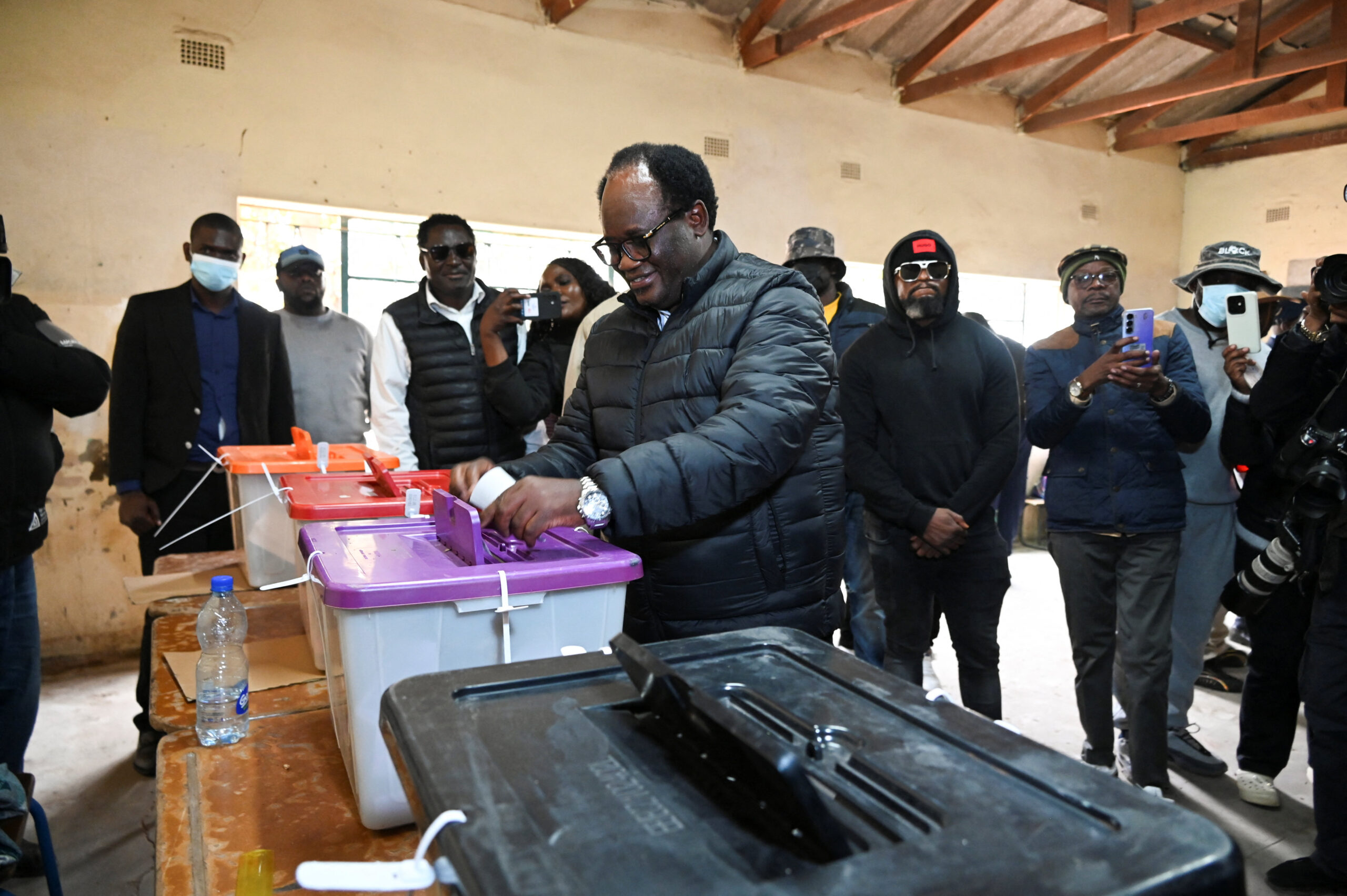
Zambian President Hakainde Hichilema has won a second term in office, securing about 60 percent of valid votes in an election that also delivered a stronger-than-expected result for opposition challenger Brian Mundubile.
Results released by the electoral commission early Tuesday showed Mundubile taking about 38 percent of the vote, capitalising on public frustration over persistent economic hardship despite improvements in Zambia’s broader economic outlook.
Hichilema, 64, was making his seventh bid for the presidency and had been widely expected to win, aided by the advantages of incumbency. Mundubile, by contrast, was running for president for the first time.
Hichilema campaigned heavily on his economic record since taking office in 2021, when Zambia was grappling with a pandemic-era debt crisis. His government has pointed to improving macroeconomic indicators and progress in stabilising the economy.
Mundubile argued that those gains had yet to translate into meaningful improvements in daily life for many Zambians, focusing his campaign on cost-of-living pressures and public frustration over lingering hardship.
Zambia, one of Africa’s major copper producers, has also attracted growing strategic attention from China and the United States because of its critical mineral resources.
Tensions rise after election
The run-up to the August 13 vote was relatively calm, but tensions escalated quickly after polls closed.
On election night, authorities arrested 11 people, including senior opposition figures, during a raid that involved an exchange of gunfire. Mundubile was present at the scene.
The following day, the electoral commission suspended vote-counting for several hours after reports of attacks on polling staff and the theft of ballot papers.
Mundubile later said he had received information suggesting that results forms from polling stations may have been altered and called for an urgent independent investigation.
Hichilema’s camp rejected the allegations, accusing the opposition leader of making false claims.
The opposition is not expected to accept the result without challenge and could take the dispute to court.
Greg Musiker, a Zambia analyst at advisory firm Signal Risk, said a legal challenge was possible but was unlikely to succeed.
He added that isolated political violence could occur in the coming days, though widespread unrest was not expected.
Hichilema’s re-election gives him another term to consolidate Zambia’s economic recovery while confronting the domestic pressures that helped fuel Mundubile’s unexpectedly strong showing.um.