
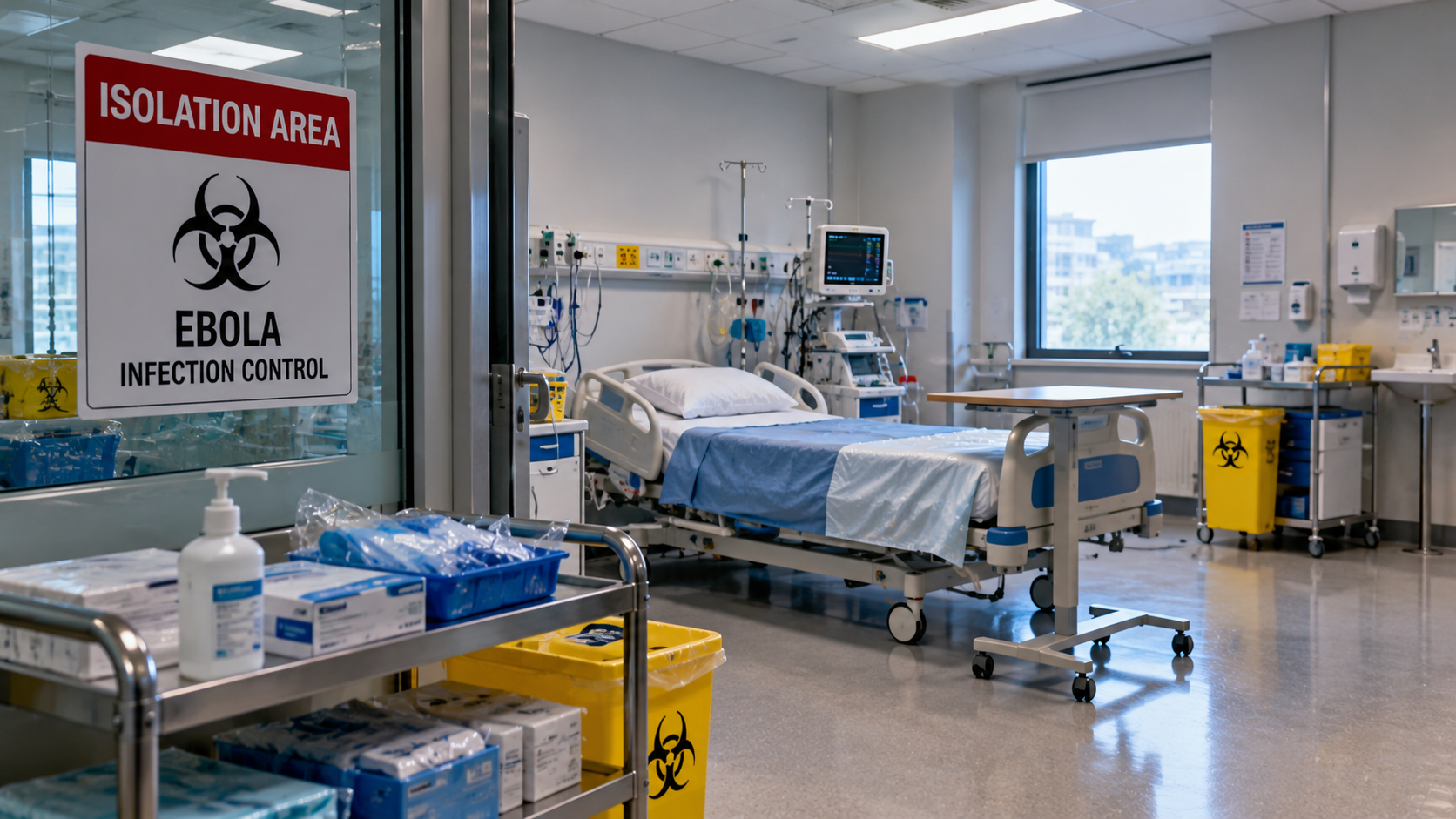
Kenya has confirmed its eighth Ebola case, raising concerns over the spread of the deadly virus from the Democratic Republic of Congo (DR Congo) into neighbouring countries.
Kenyan health authorities announced the latest infection on Monday, October 19, after one person tested positive among 38 people screened the previous day.
According to Al Jazeera, citing AFP, AP and Reuters, the latest patient is a 49-year-old man believed to have been exposed to Kenya’s first confirmed Ebola patient earlier this month.
The country remains on heightened alert as health officials work to contain the outbreak and prevent further transmission.
Kenya Ebola outbreak reaches eight confirmed cases
Kenya’s Director-General for Health, Patrick Amoth, confirmed that the latest patient was not a healthcare worker.
The 49-year-old man reportedly worked as a patient attendant, cleaning utensils and linens.
He developed a fever, headache and muscle pain on Saturday before being quarantined and tested for Ebola.
Health authorities believe he was exposed to Kenya’s first confirmed Ebola patient, who travelled from DR Congo to Nairobi and died at a hospital on October 5.
The latest infection brings Kenya’s total number of confirmed cases to eight.
Healthcare workers among those infected
Kenya’s Ministry of Health reported four additional Ebola cases on Saturday, bringing the total at that time to seven.
Three of those infected were healthcare workers who had treated the country’s first Ebola patient.
The fourth patient was a relative of the deceased man, according to the ministry.
The infections have highlighted the risks facing medical personnel and close contacts of Ebola patients.
Health authorities continue to monitor potential exposures as part of efforts to limit further transmission.
DR Congo Ebola outbreak records thousands of deaths
The outbreak originated in the Democratic Republic of Congo, where the virus has spread across several provinces.
According to the figures reported by Al Jazeera, DR Congo has recorded at least 9,400 Ebola cases and more than 4,500 deaths since the outbreak began in May 2026.
The outbreak has become the deadliest in the country’s history.
Ituri province in eastern DR Congo remains the epicentre, accounting for nearly three-quarters of confirmed infections.
Meanwhile, authorities announced on Sunday that Ebola had reached North Ubangi, becoming the eighth province affected by the outbreak.
North Kivu has also experienced substantial transmission, according to the World Health Organization.
DR Congo introduces new restrictions to contain Ebola
Authorities in North Kivu are introducing additional measures to reduce the spread of the virus.
According to DR Congo’s state-run ACP news agency, a one-week restriction on entry into North Kivu from Ituri was scheduled to begin on Monday.
Officials also plan to limit passenger numbers in vehicles and on motorcycles.
Large public gatherings are expected to be suspended as part of the containment measures.
The restrictions aim to reduce opportunities for transmission between communities and provinces.
Bundibugyo Ebola strain raises regional concerns
The current outbreak involves the Bundibugyo strain of Ebola, one of the viruses responsible for Ebola disease in humans.
Unlike the Zaire strain, for which approved vaccines exist, there is currently no licensed vaccine specifically targeting the Bundibugyo strain.
There is also no approved virus-specific treatment for this strain, although supportive medical care remains important for patients.
The spread of infections beyond DR Congo has increased concerns about cross-border transmission.
Neighbouring Uganda previously recorded 20 confirmed cases, including 15 imported from DR Congo, and two deaths.
Uganda was declared Ebola-free in August.
Kenya strengthens vigilance amid regional outbreak
Kenya remains on heightened alert following the detection of eight Ebola cases.
The infections, including those involving healthcare workers and people connected to the first patient, underline the importance of identifying contacts and responding quickly to suspected cases.
Meanwhile, authorities in DR Congo are introducing additional restrictions as the outbreak continues to affect communities across the country.
The regional situation remains a significant public health challenge, with efforts focused on preventing further infections and protecting healthcare workers and vulnerable communities.