
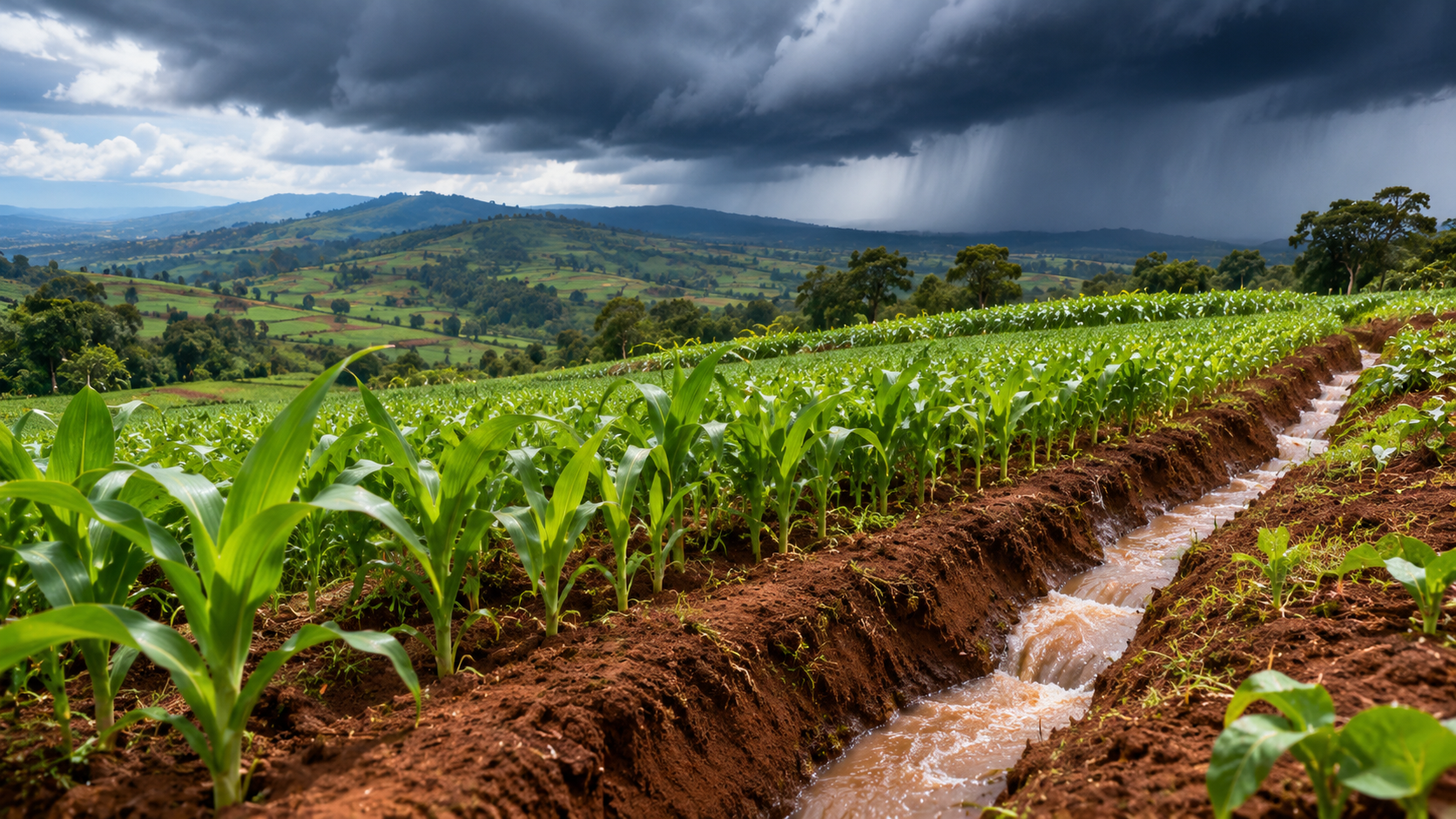
Kenyan farmers are taking steps to protect their crops and farmland as concerns grow over potentially heavy El Niño rains.
In central Kenya, farmers are digging trenches and improving drainage to prevent flooding and soil erosion.
According to Africanews and the Associated Press (AP), many farmers fear a repeat of the destructive rainfall that damaged their farms in 2024.
Meanwhile, Kenya’s Meteorological Department continues to monitor weather conditions and provide updates.
Kenyan farmers work to prevent soil erosion
In Limuru, Kiambu County, farmer Elizabeth Itotia is preparing her five-acre farm for the coming rainy season.
Two years ago, heavy rainfall washed away much of the fertile topsoil on her land.
As a result, she suffered significant damage to her farmland.
This time, Itotia is taking preventive measures.
She is digging trenches to control rainwater runoff and reduce the risk of soil erosion.
The trenches can help direct excess water away from vulnerable areas.
Consequently, they may reduce the amount of fertile soil lost during heavy rainfall.
Coffee farmers fear another poor harvest
Farmers in nearby Nyeri County are also preparing for potentially destructive rains.
In Karatina, coffee farmer Moses Muhoro remembers the damage caused by flooding in 2024.
The floods washed away fertile topsoil and reduced his farm’s productivity.
As a result, his coffee harvest suffered.
In 2025, Muhoro’s production fell to just 30% of the previous year’s output.
The sharp decline shows how severe rainfall can affect farms long after floodwaters disappear.
Furthermore, damaged soil can make it harder for farmers to restore normal crop production.
For coffee growers, protecting farmland is therefore essential for future harvests.
El Niño raises concerns across East Africa
El Niño is a climate pattern linked to unusually warm ocean temperatures in the tropical Pacific.
The phenomenon can influence rainfall and weather conditions in different parts of the world.
In East Africa, some El Niño events have brought unusually heavy rainfall and flooding.
However, the effects vary between events and locations.
Kenyan farmers are concerned that intense downpours could once again damage crops and wash away valuable soil.
Meanwhile, the Kenya Meteorological Department is monitoring weather developments.
The agency says it will issue updates as necessary.
The report does not confirm that destructive flooding will occur during the coming rainy season.
Protecting farmland becomes a priority
Soil erosion remains a major concern for farmers exposed to heavy rainfall.
When rainwater flows rapidly across farmland, it can carry away nutrients and fertile topsoil.
Consequently, crops may struggle to grow even after the rains stop.
Farmers can reduce these risks by improving drainage and managing water runoff.
In addition, protecting soil helps maintain agricultural productivity over time.
For farmers such as Itotia and Muhoro, these preparations are especially important after previous losses.
Their experiences highlight the challenges of farming in areas vulnerable to extreme weather.
Farmers hope to avoid another damaging season
Kenyan farmers are now focusing on protecting their land before heavier rains arrive.
Many have already experienced the financial and agricultural consequences of flooding.
As a result, preventive measures have become an important part of their preparations.
However, the severity of the coming rains remains uncertain.
Weather monitoring and timely forecasts will help farmers decide how to protect their crops.
For now, farmers in central Kenya hope their efforts will prevent another season of severe soil erosion and reduced harvests.