
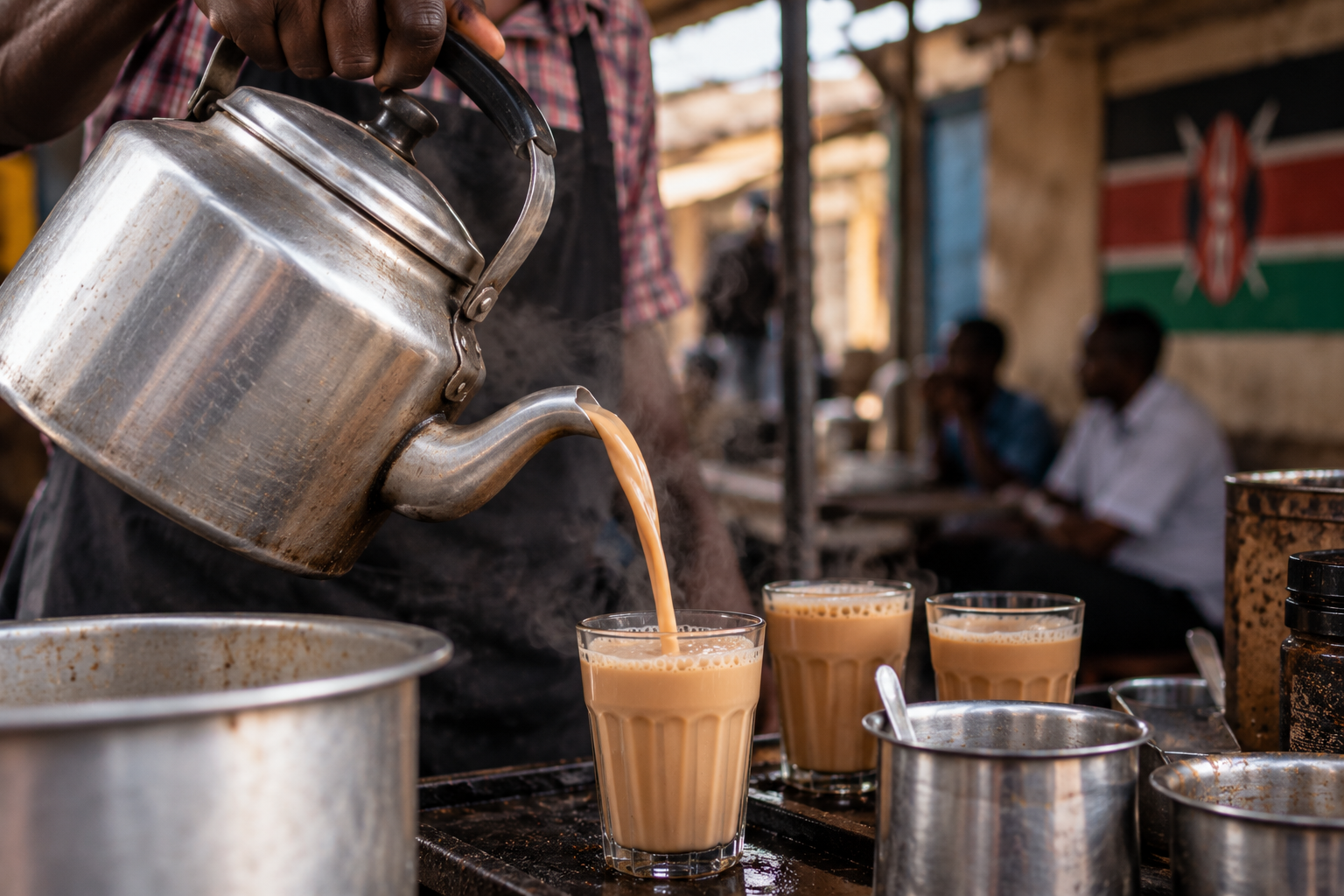
Illustration: AI-generated with OpenAI
Kenya is facing a milk shortage that is disrupting one of the country’s most familiar daily traditions: chai.
Fresh milk has become harder to find in some supermarkets, while prices have risen and some retailers have limited how much customers can buy.
The government says drought and poor pasture conditions have reduced milk production. Kenya’s dairy regulator has also acknowledged supply constraints and low stock levels.
Kenya milk shortage hits chai drinkers
Chai is deeply embedded in everyday life in Kenya.
The popular drink is typically prepared by boiling tea with generous amounts of milk. Ginger and other spices are sometimes added.
It is commonly served at breakfast, meetings and social gatherings, with many Kenyans drinking several cups throughout the day.
The shortage is now affecting restaurants as well as households.
One Nairobi restaurant owner said she would normally buy more than 70 packets of fresh milk. She said some customers had switched to black tea, while others simply did not want tea without milk.
Why is Kenya running short of milk?
Drought is one of the main factors behind the shortage.
Delayed seasonal rains have reduced grazing areas available to dairy cattle.
At the same time, the Consumer Federation of Kenya says the cost of animal feed has risen by 45%.
Official figures also show a decline in supplies reaching processors.
Formal milk deliveries fell from 84.4 million litres in June to 81.3 million litres in July, a drop of 3.7%. Preliminary figures suggest deliveries fell further in August.
Milk prices rise in Kenya
Consumers are also paying more.
Fresh milk prices have increased from around 70 Kenyan shillings to 80 shillings per litre, according to the consumer federation.
Some shoppers say they have struggled to find fresh milk at supermarkets even as prices continue to rise.
The shortage has particularly affected fresh pasteurised milk. Longer-life UHT milk has been less affected.
Kenya considers milk imports
The government is looking at several measures to increase supply.
Officials are considering duty-free imports of yellow maize to provide more feed for dairy farmers.
Authorities are also examining ways to better preserve excess milk during periods of high production.
Meanwhile, Kenya could temporarily import milk from neighbouring countries to ease the shortage.
For Kenya’s chai lovers, that could help bring some relief.