
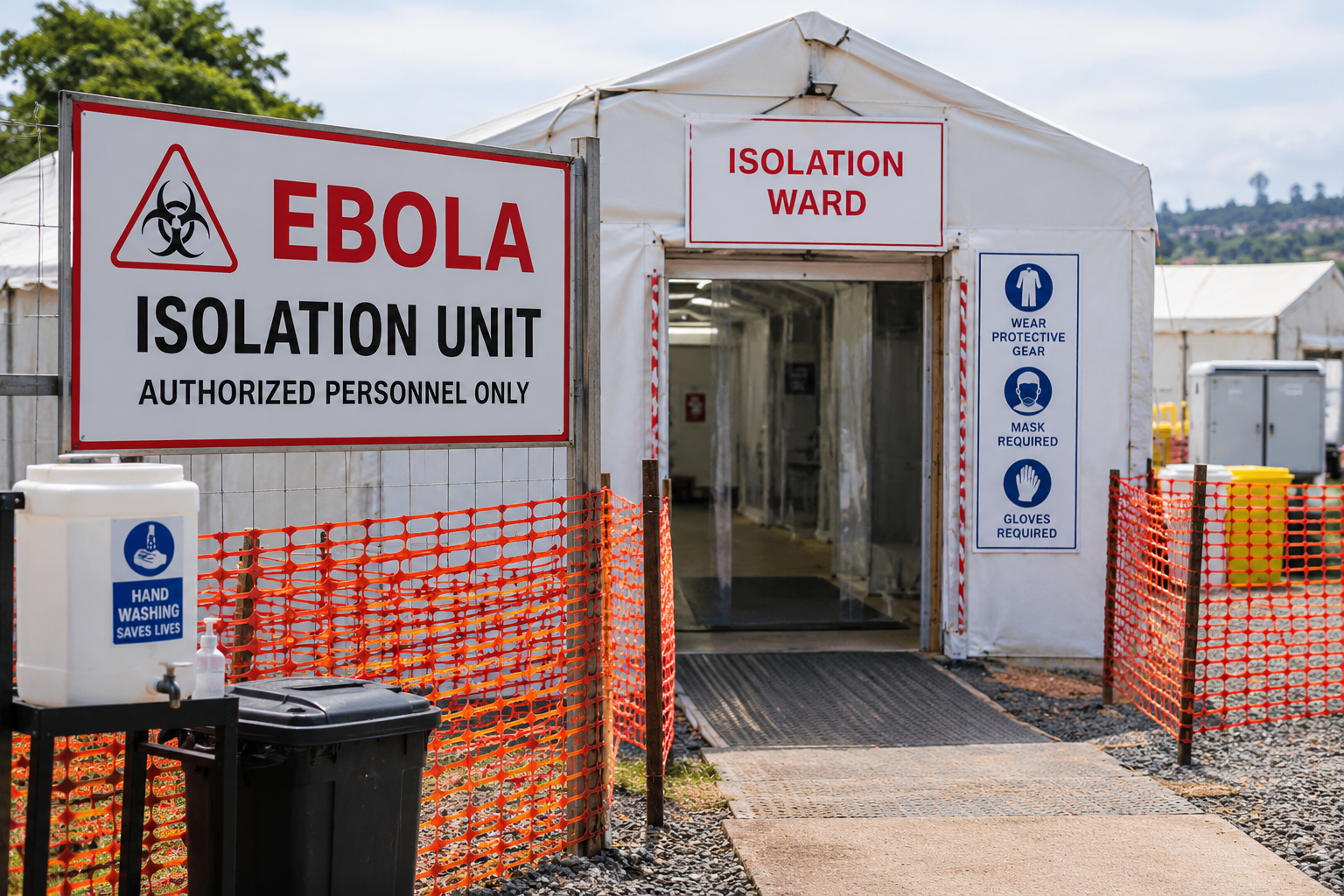
Kenya has confirmed a third Ebola case as health officials work to prevent the virus from spreading further.
The latest patient is a 65-year-old woman who is closely related to the country’s first two confirmed cases.
According to Africanews and the Associated Press, the woman had been in quarantine since October 6.
She later developed symptoms, including fever, a sore throat and fatigue.
However, Kenyan authorities say there is currently no evidence of community transmission.
Kenya’s third Ebola case linked to earlier patients
The latest case is linked to Kenya’s first two confirmed Ebola infections.
Kenya recorded its first reported Ebola case earlier this month.
The patient was a 40-year-old businessman who had travelled from the Democratic Republic of Congo.
He died on October 5.
A second case involving another relative was confirmed several days later.
The third patient was already under quarantine when she developed symptoms.
Therefore, health officials believe the known cases remain linked to the same family.
Health officials trace 127 contacts
Kenya’s Health Ministry has identified 130 people who may have had contact with infected patients.
So far, authorities have traced and quarantined 127 of them.
However, three contacts remain unaccounted for.
Health workers are continuing efforts to locate those individuals.
Contact tracing helps officials identify possible infections before the virus spreads further.
In addition, quarantine measures allow health teams to monitor people who may have been exposed.
Kenya says public risk remains low
Despite the third confirmed case, Kenyan authorities say the risk to the wider public remains low.
The ministry reports no evidence of community transmission.
This means officials have not identified wider spread beyond the known chain of infections.
However, health workers remain on alert.
Ebola can spread through direct contact with the blood or other bodily fluids of an infected person who has symptoms.
It can also spread through contaminated materials.
Therefore, early detection and careful infection control remain important.
Ebola outbreak in DR Congo raises regional concerns
The Kenyan cases have emerged amid a reported Ebola outbreak in neighbouring DR Congo.
Africanews reports that the outbreak has infected more than 9,000 people and caused over 4,300 deaths.
However, these figures require independent confirmation from international health authorities.
The reported outbreak involves the Bundibugyo species of Ebola virus.
Unlike some other Ebola viruses, Bundibugyo does not currently have a licensed, species-specific vaccine.
Nevertheless, patients can receive supportive medical care to improve their chances of recovery.
Authorities continue Ebola surveillance
Kenya is continuing contact tracing, quarantine and health monitoring.
Officials are also working to identify the three remaining contacts.
For now, the government says the confirmed infections are linked and that no wider community transmission has been detected.
However, health authorities remain focused on preventing further cases.
The situation highlights the importance of rapid detection and cooperation between countries during disease outbreaks.