
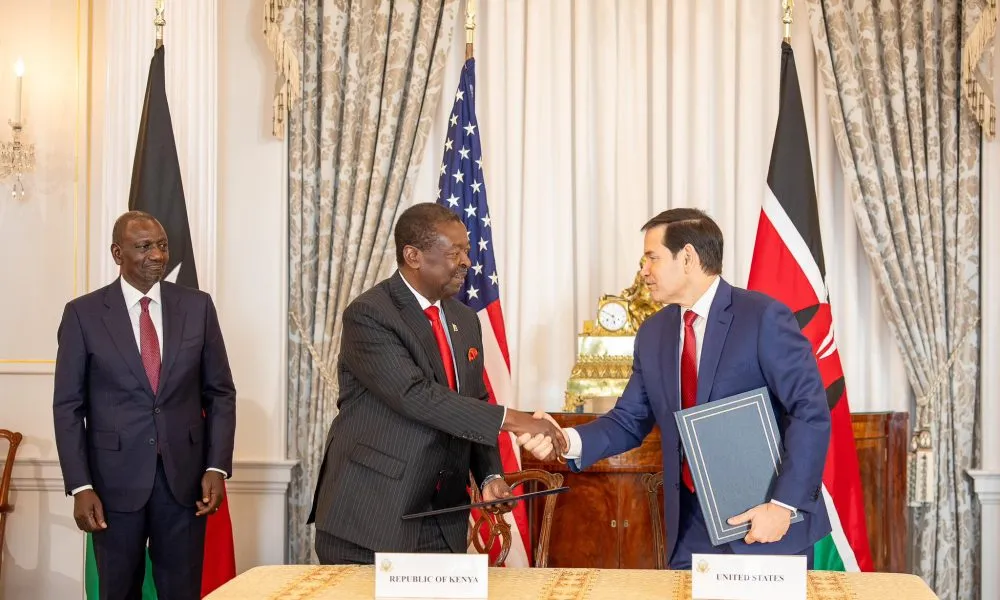
A Kenyan court has temporarily halted the implementation of a $2.5bn (£1.9bn) health aid agreement with the United States over concerns it could expose sensitive personal medical data.
The decision follows a petition by a consumer rights group seeking to block what it described as the unlawful transfer and sharing of Kenyans’ health information under the deal.
In its interim ruling, the High Court barred Kenyan authorities from taking any steps to operationalise the agreement “insofar as it provides for or facilitates the transfer, sharing or dissemination of medical, epidemiological or sensitive personal health data” until the full case is heard.
The pact, signed last week under Donald Trump’s administration as part of a wider overhaul of US foreign aid, is framed as a new global health financing model. Washington is shifting from routing funds through aid agencies to signing direct, long-term agreements with governments, which are required to increase their own health spending.
Under the Kenya deal, the US would provide $1.7bn while the Kenyan government would contribute about $850m and gradually assume a larger share of costs. At the signing ceremony, US Secretary of State Marco Rubio hailed it as a “landmark agreement”. Similar arrangements have since been concluded with Rwanda, Lesotho, Liberia and Uganda.
But critics in Kenya warn that the pact could open the door for foreign access to highly sensitive records, including HIV status, tuberculosis treatment histories and vaccination data.
The Consumer Federation of Kenya (Cofek), one of the petitioners, argued that the country risked surrendering strategic control of its health system “if pharmaceuticals for emerging diseases and digital infrastructure (including cloud storage of raw data) are externally controlled”.
Accepting the case, the High Court ordered that implementation of the agreement be frozen while the challenge proceeds. The matter is next due in court on 12 February.
The government has moved to calm public concern. President William Ruto said on Wednesday that the attorney-general had scrutinised the agreement “with a tooth comb” to ensure that “the law that prevails on data that belongs to the people of Kenya is the Kenyan law”.
US officials have yet to publicly respond to the data privacy complaints.